Washington, D.C. experienced a winter season that combined persistent cold with moderate snowfall, resulting in conditions that stood out despite totals falling slightly below average. The season ultimately delivered 10.6 inches of snow at Reagan National Airport, the city’s official measurement site.
While not among the most severe winters on record, the prolonged cold helped snow remain on the ground longer than usual. According to Capital Weather Gang reporting, the season ranked as the coldest in more than two decades, shaping both public perception and forecast performance.
Forecasting efforts ahead of the season pointed toward near-average snowfall. Many projections overshot the final total, though a small number of participants in an annual prediction contest came remarkably close, including two who matched the observed figure exactly.
Forecast Accuracy Varied Widely among Participants and Professionals
The Capital Weather Gang’s annual snowfall contest drew nearly 800 reader entries, reflecting a wide range of expectations for the 2025–2026 winter. The most common prediction range was 12 to 18 inches, followed by 6 to 12 inches, which ultimately contained the observed total. Forecasts overall ranged from zero to more than 60 inches.
Two participants, Brian Kane and Steve Musser, correctly forecast the exact seasonal snowfall of 10.6 inches. According to reporting from The Washington Post, nine additional readers came within 0.1 inches of the final measurement, underscoring the difficulty of precise seasonal forecasting.
Among professional contributors, Amudalat Ajasa recorded the closest estimate at 10.8 inches, just 0.2 inches above the observed total. Jason Samenow followed with a forecast of 11.1 inches. The broader group of Capital Weather Gang contributors averaged 14.1 inches in their projections, placing their consensus on the higher end of the official outlook range of 8 to 14 inches.
External forecasts showed similar variability. ABC7 produced the most accurate television outlook, predicting 10 to 15 inches. In the private sector, Judah Cohen of Verisk AER matched the exact seasonal total, while AccuWeather’s Paul Pastelok projected 11 inches, according to the same report.

Persistent Cold Shaped the Season despite Modest Snowfall Totals
Although snowfall totals were slightly below the long-term average of 13.7 inches, temperature patterns played a defining role in how the winter was experienced. Washington, D.C. recorded an average temperature of 35.6 degrees from December through February, which is 4.1 degrees below normal. According to Capital Weather Gang, this marked the coldest winter in the city since 2002–2003.
Each of the three core winter months registered below-normal temperatures, an uncommon occurrence. Early in the season, snowfall appeared on track to meet expectations, with 1.5 inches in December and 7 inches in January, the latter exceeding the monthly average by 2 inches.
However, snowfall declined in the latter half of the winter. February brought only 1.1 inches compared to a typical 5 inches, while March recorded 1 inch, about half the norm. The uneven distribution contributed to the overall below-average seasonal total.
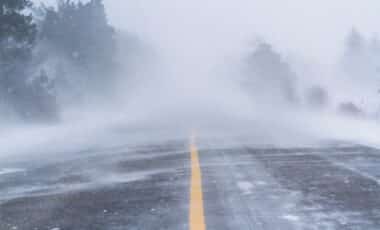
A significant portion of the winter’s snow came from a single late-January event known as the “Snowcrete” storm. This system deposited dense, icy snow that lingered for weeks, aided by the sustained cold. According to The Washington Post, remnants of the storm, including hardened snow piles, remained visible well after the event.
Across the broader region, snowfall totals followed a similar pattern. Washington Dulles International Airport recorded 18.5 inches, about 2.5 inches below average, while Damascus, Maryland, received 25.5 inches, also slightly under typical levels.