
The 2026 World Cup is expected to inject £7.6 billion into the UK economy, offering a boost to pubs, restaurants, hospitality, and transport sectors. Yet economists warn the tournament could also trigger widespread absenteeism, with millions of workers planning to call in sick or work remotely after late-night matches.
World Cup spending set to lift hospitality and transport
Analysis by money.co.uk suggests the biggest winners will be Britain’s hospitality businesses. Food and beverage companies could see a £4.2 billion revenue boost, a 9.3% increase compared with a typical summer. Accommodation providers may enjoy even higher proportional gains, with spending rising 25.2%, generating an additional £3.5 billion.
Rail and transport operators are also expected to benefit, with a £1.8 billion uplift as fans travel to pubs, screenings, and social events. Sports, recreation, and creative sectors are likely to see increased activity surrounding the tournament.
The surge in consumer spending comes at a critical time for the UK economy, which contracted by 0.1% in April. Rising energy costs and cautious household budgets have left many businesses vulnerable, making the World Cup’s economic impact especially significant.
Sickies and remote working could offset World Cup gains
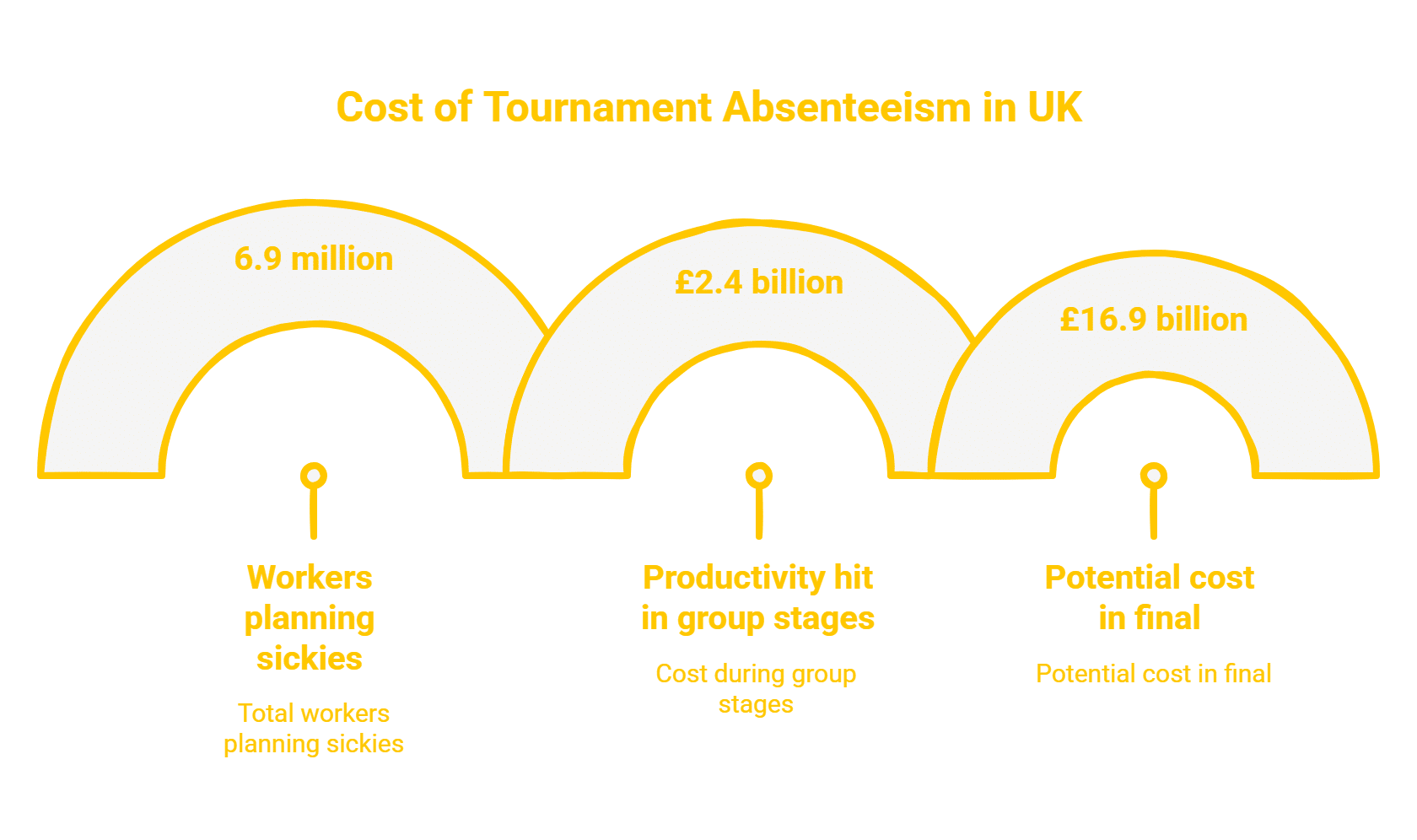
However, the tournament may also cost employers billions in lost output. A survey by Allsopp’s Brewery found that one in five Britons plan to pull a ‘sickie’ after at least one match, equating to almost 6.9 million workers. This could result in a £2.4 billion hit to productivity during the group stages alone.
If England progresses to the final, absenteeism could cost the economy as much as £16.9 billion. Remote working arrangements may compound the problem, with 61% of fans saying they would work from home if it allowed them to watch matches. VoucherCodes research predicts this could wipe out 2.5 million working days, equivalent to £875 million in lost output.
Pubs set for record profits during World Cup
Late-night matches are expected to drive record sales. Government licensing rules will allow pubs to stay open during England and Scotland fixtures, potentially leading to the sale of 55 million extra pints if England reach the final. Research from Opinium suggests football fans could spend an additional £600 million in pubs over the tournament, with younger generations driving much of the increase.
Jamie Allsopp of Allsopp’s Brewery said: “This is going to be one of the biggest periods ever for pubs, and it comes at a crucial time when VAT has been choking the industry.”
Mixed impact across the UK economy
While hospitality and transport benefit, other sectors could lose out. Retail and wholesale are forecast to see a £6.3 billion decline, while broadcast and film industries may lose £650 million as audiences focus on football coverage.
Policymakers face a balancing act: the World Cup promises a welcome economic lift during weak growth but also a summer of disrupted working patterns. As pubs prepare for record sales, many employers will be watching the fixture list with trepidation.