The polar vortex could weaken as early as November, potentially bringing colder conditions to the UK sooner than previously anticipated. Forecasters are monitoring changes in Arctic winds as El Niño continues to influence weather patterns around the world.
The development has raised questions about whether Britain could experience an early spell of freezing weather. Although changes in the polar vortex can affect temperatures across Europe, experts caution that their consequences for individual countries cannot yet be predicted with certainty.
NASA Forecasts Indicate Weakening Arctic Winds in Early November
According to The Independent, experts now expect the polar vortex to weaken as early as November, rather than January 2027, as previously anticipated. The shift has drawn attention to the possibility of colder weather developing earlier in the winter season.
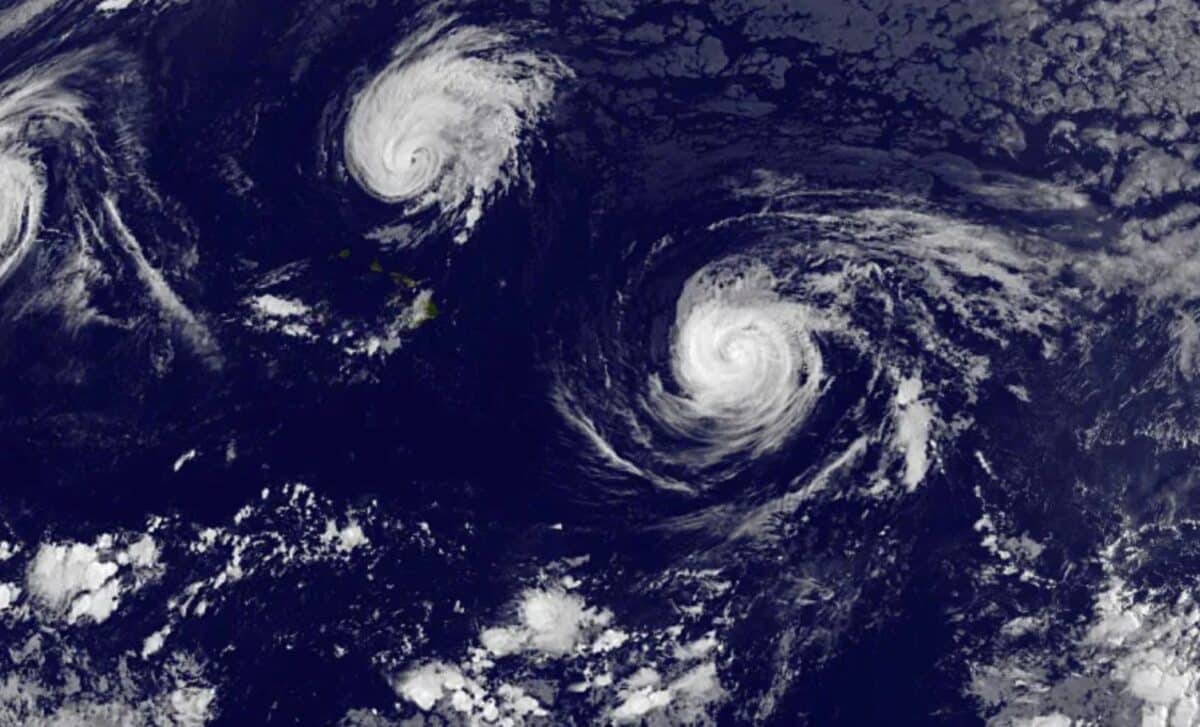
The polar vortex is a large ring of cold, circulating winds situated high above the Arctic. When this circulation remains strong, it helps contain extremely cold air around the North Pole. When it weakens, changes in atmospheric circulation can allow Arctic air to move southwards towards North America and Europe.
Forecasts from NASA indicate a decline in wind strength over several days. The circulation is expected to weaken to 12.04 metres per second (26.9 mph) on 31 October, followed by 9.15 metres per second (20.5 mph) on 1 November and 4.15 metres per second (9.3 mph) on 3 November.
One phenomenon associated with weakening the polar vortex is sudden stratospheric warming, which can disrupt its circulation and sometimes reverse the direction of its winds. According to the Met Office, sudden stratospheric warming can cause the jet stream to become more winding, encouraging the formation of large “areas of blocking” high pressure. These systems commonly develop over the North Atlantic and Scandinavia, creating conditions in which northern Europe, including Britain, may experience prolonged periods of dry, cold weather.
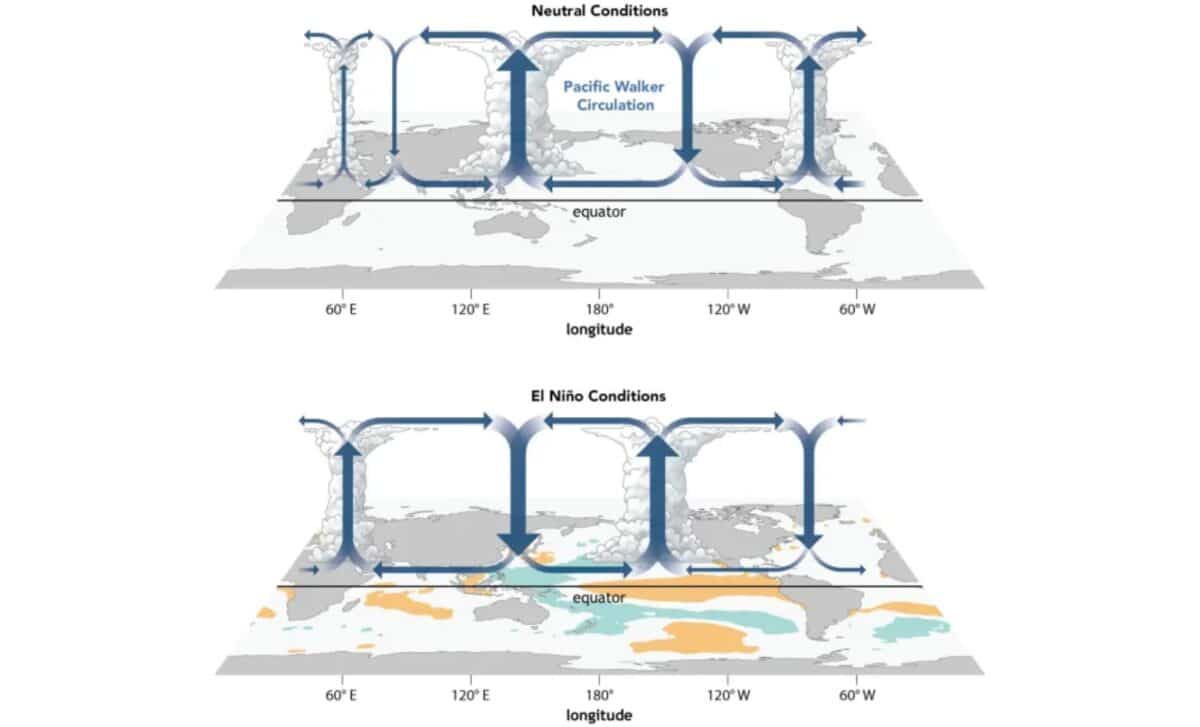
El Niño Adds Uncertainty to Britain’s Winter Outlook
The potential weakening of the polar vortex comes as El Niño continues to affect global weather conditions. The phenomenon develops when sea-surface temperatures across the central and eastern tropical Pacific become significantly warmer than average, altering atmospheric circulation across the planet.
According to the Met Office, El Niño is associated with an increased risk of cold snaps in the UK. The phenomenon has also contributed to global temperature patterns, including the hottest summer on record reported in the source material.
Changes in the polar vortex can produce contrasting conditions across Europe. While northern regions may experience colder and drier weather under blocking high pressure, southern Europe can become milder, wetter and windier.
Along the boundary between these weather systems, cold easterly winds can develop. In some circumstances, falling temperatures bring snowfall, as occurred during the cold spell of early 2018.
Yet predicting such developments remains difficult. Forecasters can generally identify individual sudden stratospheric warming events reliably only about a week before they occur. Even when an event develops, its influence on British weather typically takes several weeks to emerge.
For now, the forecast weakening of Arctic winds provides an indication of changing atmospheric conditions, rather than confirmation of freezing temperatures or snowfall across the UK in November.