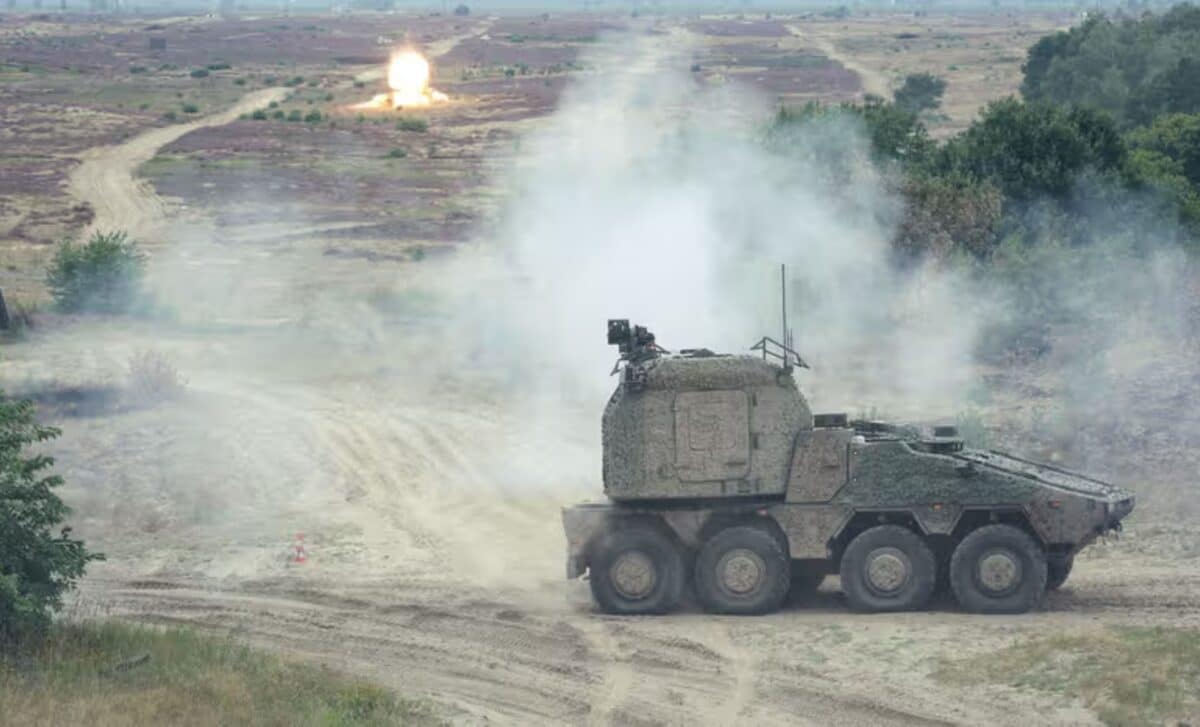
The British Army will acquire 72 new RCH 155 remote-controlled howitzers under a contract worth nearly £1 billion, as the government moves to restore artillery capability lost after donations to Ukraine. The procurement forms part of a broader UK-Germany defence partnership and is expected to support more than 500 jobs across Britain.
First deliveries of the new systems are scheduled for 2028, according to the UK Ministry of Defence. The RCH 155 will replace the AS90 artillery systems that Britain transferred to Ukraine in 2023, while the Archer system will remain in interim service until the new vehicles enter operational use later this decade.
The agreement was awarded by the Organisation for Joint Armament Cooperation (OCCAR) on behalf of the British Army to ARTEC GmbH, a joint venture between KNDS and Rheinmetall. According to Reuters, the contract also includes training and in-service support for the vehicles.
New Artillery Systems to Restore British Army Capability
The RCH 155 is mounted on a BOXER armoured chassis and is designed to combine mobility with long-range firepower. According to the Ministry of Defence, the system can fire eight rounds per minute at targets up to 70 kilometres away while travelling at speeds of up to 100km/h between firing positions.
The automated turret allows the system to be operated by a crew of two soldiers from inside the vehicle compartment. British officials said the platform’s mobility and automation are intended to improve battlefield survivability and operational flexibility.
Defence Secretary John Healey said the investment was intended both to strengthen NATO capability and support domestic industry. “By securing next-generation artillery with Germany, not only are we rearming to strengthen NATO against growing Russian aggression but also creating highly skilled jobs here in Britain,” he said in the government’s announcement.
Lieutenant General Simon Hamilton, Deputy Chief of the General Staff, described the contract as a major step in rebuilding Britain’s artillery strength after the transfer of AS90 systems to Ukraine. He said the Army had recognised the “gap in our warfighting capability” created by those donations and called the agreement “the first significant milestone in replenishing this capability”.
According to The Times, the 72 howitzers are considered sufficient to equip a division-sized force of roughly 25,000 troops. Germany is also procuring the same artillery system, reflecting wider efforts to improve interoperability between NATO allies.
Manufacturing Programme to Support Jobs in Britain
The procurement programme includes substantial industrial work in the UK. Rheinmetall will manufacture the weapon systems (including the barrel, breech, recoil system and trunnions) at its facility in Telford, while KNDS UK will build the BOXER drive modules in Stockport.
According to the Ministry of Defence, British steel supplied by Sheffield Forgemasters will be used in production. The government said the programme would create 100 new skilled jobs at Rheinmetall’s Telford site, support another 100 jobs in Stockport and sustain around 300 additional jobs across the wider supply chain.
German Defence Minister Boris Pistorius said the procurement demonstrated practical cooperation between Britain and Germany under the Trinity House Agreement signed in October 2024. He said the agreement would improve interoperability within NATO and strengthen long-term military cooperation between the two countries.
The contract follows earlier agreements signed over the past year, including a £52 million Early Capability Demonstrator contract agreed in December 2025 and a further £53 million procurement contract for long-lead items earlier this year. According to Reuters, Britain has pledged a significant increase in defence spending, though a wider defence investment plan remains under discussion.