Oil markets gave back much of their recent gains on Tuesday after Iran and Israel said they had halted attacks on each other. The move eased some immediate concerns about disruptions to global energy supplies, although both sides indicated that hostilities could resume.
The decline followed a sharp rise in crude prices a day earlier, when renewed military activity in the Middle East pushed markets higher. Traders continue to monitor developments around regional shipping routes and oil production, with uncertainty remaining a key factor.
Oil prices fell during Tuesday trading after Iran and Israel announced a pause in attacks following an appeal from U.S. President Donald Trump. According to Reuters, Brent crude futures were down $1.55, or 1.6%, at $92.70 a barrel, while U.S. West Texas Intermediate fell $1.93, or 2.1%, to $89.37 a barrel.
The retreat came after a volatile period for energy markets. On Monday, oil prices had surged roughly 5% as renewed Israeli strikes on Iran and attacks in Lebanon raised concerns that the conflict could widen further. According to Times of India, Brent crude has risen about 31% since the conflict began more than 100 days ago, while WTI has gained around 37% over the same period.
Markets React to Pause in Hostilities
Despite Tuesday’s decline, analysts noted that the situation remains fragile. Iran and Israel both stated that attacks had stopped, but each side also warned that military action could resume under certain conditions.
According to Reuters, PVM Oil Associates analyst Tamas Varga said the market had experienced similar moments before, with hopes for an end to hostilities later challenged by renewed fighting. He also noted that, in the absence of other major market drivers, the announcement of a halt in attacks contributed to lower prices.
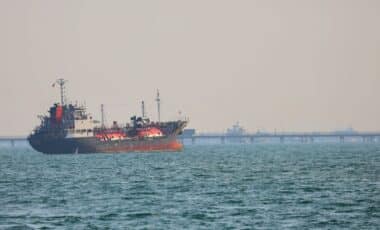
Supply concerns have not disappeared. Reuters reported that Tehran continues to block most shipping through the Strait of Hormuz, a route that previously carried around one-fifth of global crude oil and liquefied natural gas shipments. Washington has also maintained a blockade of Iranian ports.
At the same time, weaker demand signals from Asia have added pressure to prices. Reuters reported that China’s crude imports fell 29% last month to their lowest level in eight years, with refiners drawing on reserves as imports declined.
Shipping Disruptions and Supply Outlook Remain in Focus
Attention remains centered on the Strait of Hormuz and other regional shipping corridors. According to Times of India, investors are concerned that restrictions affecting maritime traffic could persist for longer than initially expected.
The report noted that Iran’s Revolutionary Guards’ Quds Force described plans for a security belt stretching from the Strait of Hormuz to the Bab El-Mandeb Strait and across parts of the Gulf and Red Sea region. Separately, Yemen’s Houthi movement said it would ban ships linked to Israel from the Red Sea following renewed Israeli military actions against Iran.
Oil markets are also watching production decisions. According to The Wall Street Journal, Rystad Energy said OPEC+ could eventually begin unwinding official production cuts agreed in 2022 after voluntary reductions are fully reversed. The firm noted that future market conditions, inventory rebuilding, and supply growth could influence that process.
For now, crude prices remain highly sensitive to developments in the Middle East, where military actions, shipping restrictions, and production policies continue to shape market sentiment.