
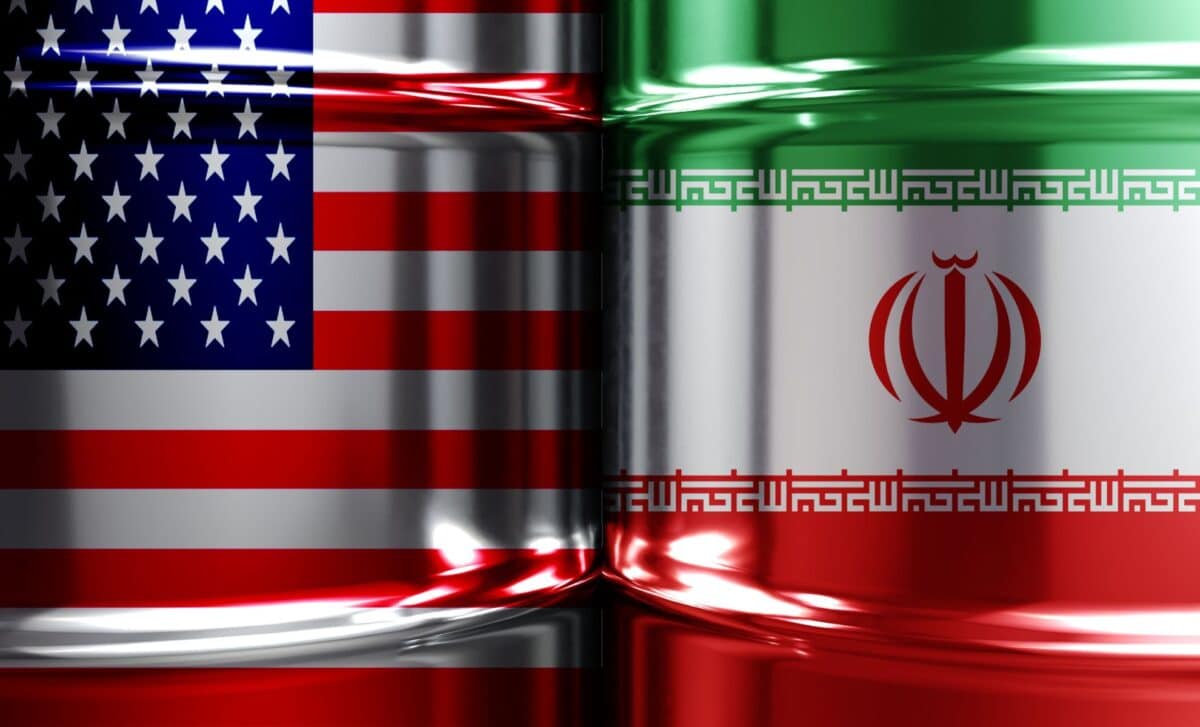
Progress in high-level talks between the United States and Iran helped push oil prices lower on Monday, reversing earlier gains driven by concerns over Middle East tensions and shipping disruptions.
Markets reacted after officials involved in negotiations in Switzerland reported encouraging developments, while Iranian representatives said agreements had been reached on issues affecting the country’s oil exports. The shift in sentiment reduced immediate fears of a major supply shortage in global energy markets.
The talks come as traders continue to monitor the Strait of Hormuz, a critical route for global oil and natural gas shipments. Recent uncertainty surrounding the waterway had contributed to volatility in crude markets and fuel prices.
At the same time, investors are assessing how quickly oil production and exports from the region can recover following recent disruptions, with several countries signaling additional supplies to customers.
Diplomatic Progress Pushes Crude Prices Lower
Oil prices retreated after the first round of high-level U.S.-Iran discussions concluded in Switzerland. According to Reuters, Iranian Foreign Minister Abbas Araqchi said his country had secured waivers for oil and petrochemical exports, the release of some frozen assets, and the launch of a reconstruction and development plan.
Brent crude, the international benchmark, fell as optimism surrounding the talks reduced concerns about supply shortages. Reuters reported that Brent crude was down 61 cents at $79.96 a barrel by 0815 GMT after earlier rising to $82.30 at the start of trading.
The New York Times also reported that Brent crude fell more than 1 percent to around $79 a barrel for September delivery, while West Texas Intermediate crude traded near $75 a barrel for August delivery.
According to a joint statement from mediators Pakistan and Qatar cited by The New York Times, “encouraging progress” was made during the opening session. Araqchi separately described the talks as having produced “major progress” toward ending the fighting in Lebanon.
Market participants remain focused on developments in the Strait of Hormuz, which normally carries as much as one-fifth of the world’s oil supply. Earlier uncertainty surrounding the waterway had supported higher prices before the diplomatic developments altered market sentiment.

Supply Recovery Remains a Key Market Focus
Beyond the negotiations, traders are closely watching the pace at which regional oil exports can return to normal levels.
According to Reuters, Iran has resumed oil exports that had been blocked earlier this month because of a U.S. naval blockade. Giovanni Staunovo, an analyst at UBS, told Reuters that the return of those barrels represents additional supply for the market.
The head of the National Iranian Oil Company said that more than 25 million barrels of Iranian oil had passed through the virtual blockade line since Monday, Reuters reported.
Other producers have also increased availability. Reuters reported that the United Arab Emirates, Kuwait, and Iraq have offered more oil to customers during the past week. Iraq is planning to gradually restore crude production to between 4.2 million and 4.3 million barrels per day, according to a statement from the country’s deputy oil minister for upstream affairs.
Analysts continue to caution that restoring supply will not be straightforward. Reuters cited ANZ as expecting between 2 million and 3 million barrels per day to be restored during the first four weeks, while noting that recovery efforts will remain challenging and that full restoration is unlikely this year.
Meanwhile, fuel prices in the United States showed modest movement. According to The New York Times, the national average gasoline price fell to $3.93 per gallon on Monday, while diesel averaged $5.01 per gallon. Despite those declines, both remain significantly higher than they were before the conflict began.