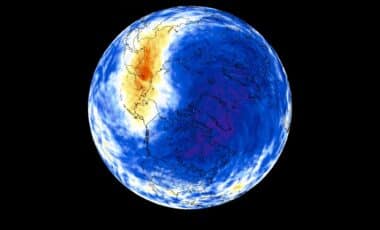
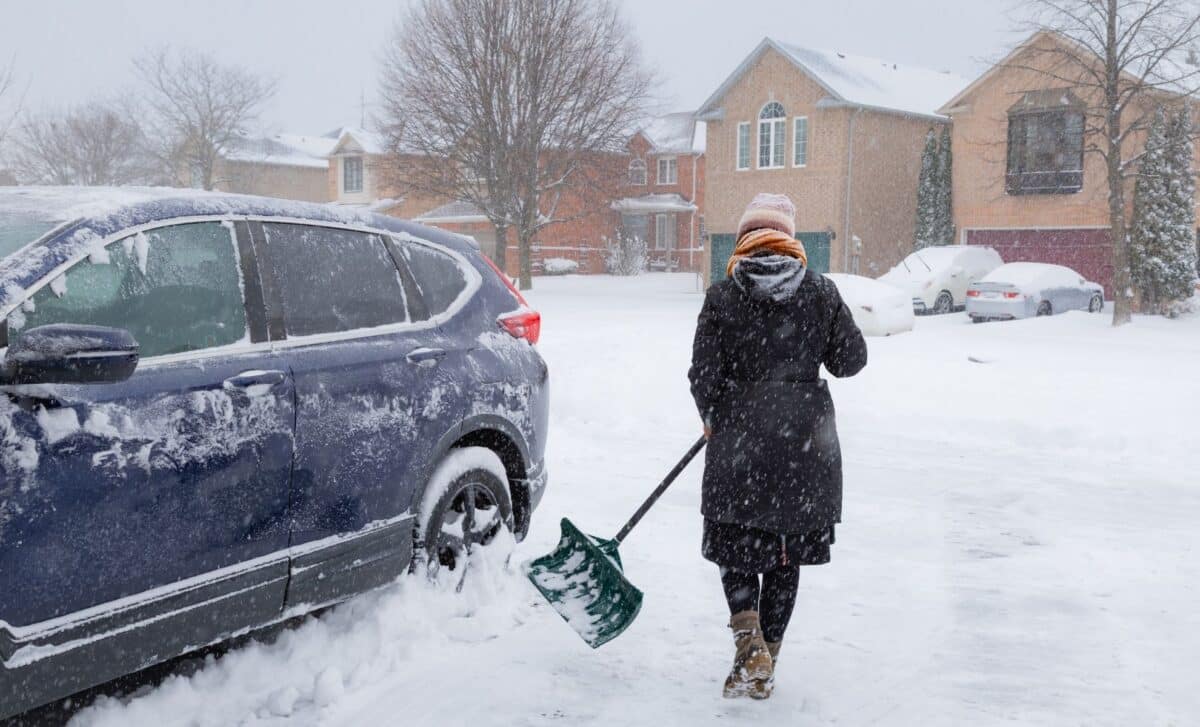
The 2026–2027 winter outlook from The Old Farmer’s Almanac indicates that much of the United States may experience near-normal or warmer-than-normal temperatures, while some areas are expected to see colder conditions and above-average snowfall. The forecast identifies parts of the Northeast, Appalachians, Intermountain West, Pacific Northwest, and Alaska as regions where snow could be more frequent.
Seasonal forecasts provide broad patterns rather than individual storm predictions, and different forecasting groups can highlight different regional trends. According to the National Oceanic and Atmospheric Administration (NOAA), a strengthening El Niño is expected to influence winter 2026–2027 patterns, with impacts varying across the country.
A Winter of Contrasts Across the United States
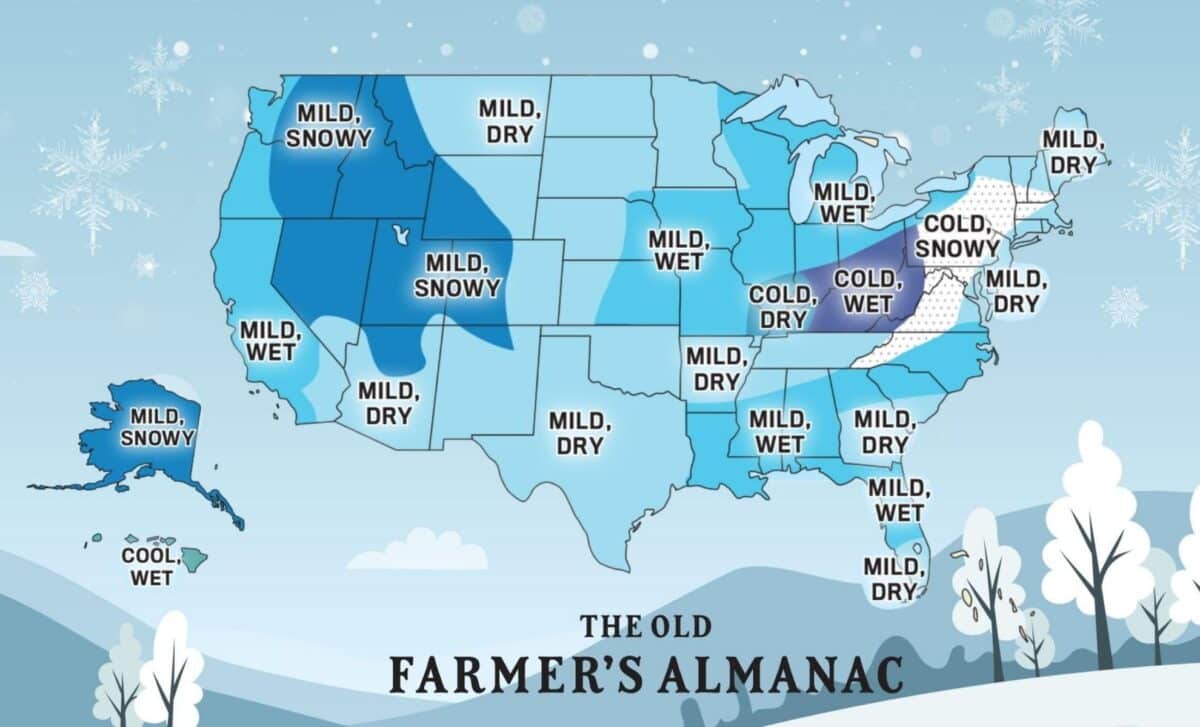
According to The Old Farmer’s Almanac, the colder areas are expected to form a corridor extending from central New England through the Appalachians and into the Ohio Valley. While many parts of the country are forecast to experience milder conditions, these regions are identified as locations where temperatures could remain below normal.
Snowfall patterns are also expected to vary widely. The Almanac forecasts above-normal snowfall across parts of the Northeast, especially southern areas of the region, as well as across the Appalachians, where northern sections could experience some of the snowiest conditions. The Intermountain Region, including parts of Idaho, Utah, Wyoming, Montana, Nevada, and Colorado, is also forecast to receive above-normal snowfall.
The Pacific Northwest is expected to have above-normal precipitation and snowfall, while Alaska is projected to receive more snow than average despite temperatures remaining above normal. According to The Old Farmer’s Almanac, the strongest winter periods in some snowy regions may occur around mid-January and February, depending on the location.
Other parts of the country are expected to experience a milder season. The Southeast, Deep South, Florida, Texas, and much of the Desert Southwest are forecast to have warmer conditions, with snowfall generally near normal or below normal. The Great Lakes and Upper Midwest may also see warmer overall conditions, though winter weather periods remain possible.
El Niño Shapes Broader Seasonal Expectations
The winter outlook arrives as climate forecasters monitor a developing El Niño event in the Pacific Ocean. According to NOAA’s Climate Prediction Center, El Niño conditions are present and are expected to strengthen, with a greater than 90 percent chance of becoming a very strong event during fall and winter 2026–2027.
NOAA’s seasonal outlook generally favors above-normal temperatures across much of the United States, including parts of the West, central regions, the Great Lakes, and the Northeast. The agency also expects increased chances of above-normal precipitation across parts of the southern United States and the Southwest.
The two forecasts use different methods and emphasize different regional signals. The Old Farmer’s Almanac states that its outlook combines historical weather patterns, solar activity, climate information, and large-scale climate signals. NOAA relies on climate observations, computer models, and statistical forecasting methods to estimate temperature and precipitation patterns.
According to NOAA, seasonal outlooks describe the probability of broad temperature and precipitation trends over periods of several months and are not designed to predict individual storms. The competing forecasts point to a winter season where conditions may differ significantly depending on location, with some regions facing increased snowfall while others experience a generally warmer pattern.