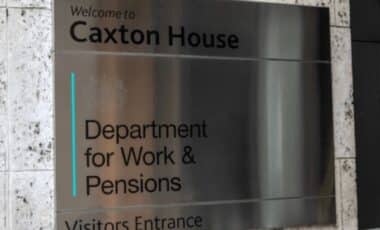

The Department for Work and Pensions has confirmed the full list of reasons why Universal Credit claimants can face benefit sanctions, with official figures showing penalties have risen sharply in recent months. According to the latest government data, failures linked to mandatory interviews account for the vast majority of sanctions issued.
The figures come as scrutiny grows over the scale of sanctions under the current welfare system. Data published by the DWP shows that monthly adverse sanction decisions have exceeded 60,000 on several occasions since Labour entered government, surpassing previous records set in early 2024.
Universal Credit was introduced to replace several legacy benefits and includes work-related conditions for many claimants. People receiving the benefit may face sanctions if the DWP decides they have not met obligations outlined in their claimant commitment, including attending interviews or carrying out work-search activities.
According to the government, deductions can also be made from Universal Credit payments for reasons including rent arrears, utility debts, child maintenance and overpayments connected to older benefits such as Housing Benefit, ESA and JSA.
Mandatory Interviews Remain the Leading Cause of Sanctions
Official DWP figures show that failures linked to mandatory interviews represent by far the largest category of sanctions. According to the department’s latest statistics, “failure to attend or participate in a mandatory interview” accounted for 578,758 sanctions from May 2016 onwards.
A closely related category, “failed to comply with an interview requirement”, recorded 567,776 sanctions over the same period. Combined, interview-related breaches make up the overwhelming majority of penalties imposed on claimants.
The DWP also stated that around 90% of all adverse sanction decisions over the past year were connected to mandatory interviews. A further 5% were linked to claimants failing to meet availability-for-work requirements.
Other reasons listed by the department include failing to participate in employment programmes, not carrying out required work-search activity, leaving employment voluntarily and failing to apply for jobs. Smaller categories include failing to maintain a CV, refusing an offer of paid work and failing to attend a skills assessment.
According to the figures, 21,639 sanctions were issued for failing to undertake all required work-search actions, while 9,538 related to reasons for leaving previous employment. The DWP also recorded 5,968 sanctions where claimants had voluntarily left work. The full list of reasons confirmed by the DWP includes:
- Failure to attend mandatory interview
- Failure to participate in mandatory interview
- Failed to comply with an interview requirement
- Availability for work
- Employment programmes
- Failed to participate in an employment programme
- Failed to undertake all work search action
- Reason for leaving previous employment
- Failed to comply with a work focused interview requirement
- Left work voluntarily
- Failed to undertake particular specific work preparation action
- Lost work because of misconduct
- Failed to apply for a job
- Failed to comply with an interview requirement self-employed
- Other
- Failed to undertake particular specific work search action
- Lost pay voluntarily
- Loss of pay through misconduct
- Failed to accept an offer of paid work
- Failed to maintain a CV
- Failed to be available to take up work
- Failed to attend skills assessment
- Failed to participate in training
- Failed to participate in work experience or work placement
- Failed to comply with requirement to provide evidence
- Failed to comply with requirement to confirm compliance
- Failed to comply with requirement to report specified change in circumstances relevant to work-related requirements
- Failed to improve personal presentation
Sanction Rates Rise as Conditionality Rules Remain in Place
The latest DWP data shows that sanction rates have continued to rise. In November 2025, 5.9% of Universal Credit claimants within conditionality groups where sanctions could apply were undergoing a sanction on the official count date.
According to the department, this represented an increase of 0.3 percentage points compared with August 2025 and a rise of 0.2 percentage points over the previous 12 months.
The number of claimants subject to work-related conditionality has remained broadly stable at around two million people. The DWP said that 24.5% of all Universal Credit claimants were in categories where sanctions may be imposed.
Monthly sanction decisions have also reached levels not previously recorded before the change of government. The highest monthly figure before Labour took office stood at 57,276 adverse decisions in January 2024. Since then, sanctions exceeded 60,000 on three separate occasions, including 64,866 in January 2025 and 63,025 in October 2025, according to the DWP.
The department states that claimants are expected to keep their claimant commitments updated and report changes in circumstances. Failure to comply with those requirements can result in reduced Universal Credit payments through the sanctions system.