The latest figures suggest the housing market remains stable rather than buoyant, with lower mortgage rates offering some support to buyers even as affordability pressures continue. Industry figures say the pace of activity remains measured, reflecting ongoing caution among households.
The June increase follows several months of weaker price movements after the outbreak of the Iran conflict, which contributed to higher inflation expectations and pushed mortgage costs upwards. According to Lloyds, average property prices rose by 0.2% compared with May, the first monthly increase since February, while annual growth accelerated slightly from 0.5% to 0.6%.
Although borrowing costs have eased from recent highs, affordability continues to limit demand for many prospective buyers. Amanda Bryden, head of mortgages at Lloyds, said recent price trends continue to reflect wider economic uncertainty, including the effect of global events on inflation and expectations for interest rates. She added that lower borrowing costs should provide some support for demand, although affordability remains an important consideration for the market.
Mortgage Costs Ease but Buyers Remain Cautious
Several property specialists described the latest figures as evidence of resilience rather than a return to rapid price growth. According to The Independent, Tom Bill, head of UK residential research at Knight Frank, said house prices were “going sideways” while transactions had declined because mortgage rates increased following the start of the Middle East conflict.
Other industry representatives pointed to gradual improvements in lending conditions. Mark Harris, chief executive of mortgage broker SPF Private Clients, said lenders continue to reduce mortgage rates slowly, encouraging borrowing activity. He also noted that buyers remain disciplined in negotiations, with the modest increase in average prices indicating that purchasers are unwilling to pay more than necessary.
Nicky Stevenson, managing director at Fine & Country, described the monthly rise as modest but appropriate in the current market, saying steady price movements are preferable while buyers continue to manage affordability pressures and changing mortgage conditions. Jason Tebb, president of OnTheMarket, also said easing mortgage rates are helping borrowers adapt to current conditions, while those who need to move continue to buy and sell homes.
Regional Picture Remains Uneven Across the UK
Regional differences remain pronounced, with northern parts of the UK continuing to outperform southern regions. According to Lloyds, Northern Ireland recorded the strongest annual house price growth at 7.4%, taking the average property value to £229,000. Scotland followed with annual growth of 3.9%, where the average home price reached £223,277.
Within England, the strongest annual increases were concentrated in the North East, where prices rose by 2.8% to £181,133, and the North West, where values increased by 2.4% to £248,218. Wales recorded annual growth of 0.9%, with an average property price of £231,142.
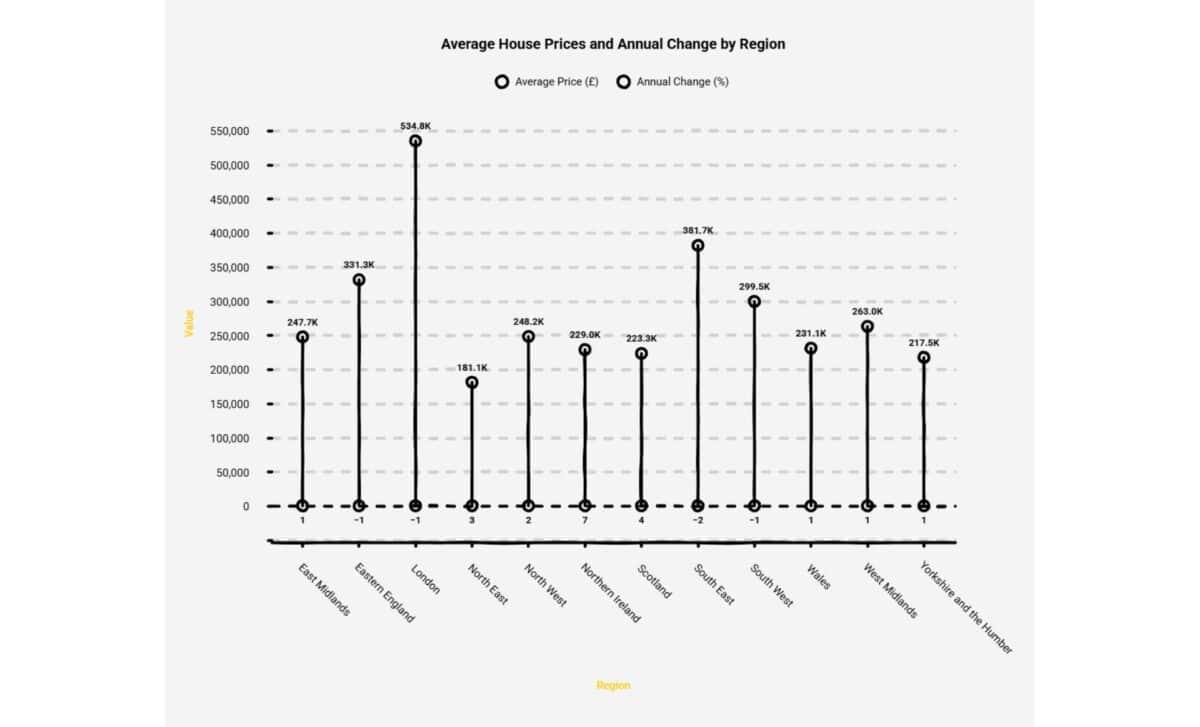
By contrast, southern regions continued to experience annual declines. The South East recorded the largest fall, with prices down 2% to an average of £381,654. London also remained below last year’s level, with average property values declining by 1.1% to £534,831. Eastern England and the South West likewise posted annual decreases.
The house price index itself has also undergone a significant change. The long-running measure, previously published under the Halifax name, now carries the Lloyds brand after Lloyds Banking Group announced that the Halifax brand will gradually disappear from high streets and customer accounts following 173 years of use.