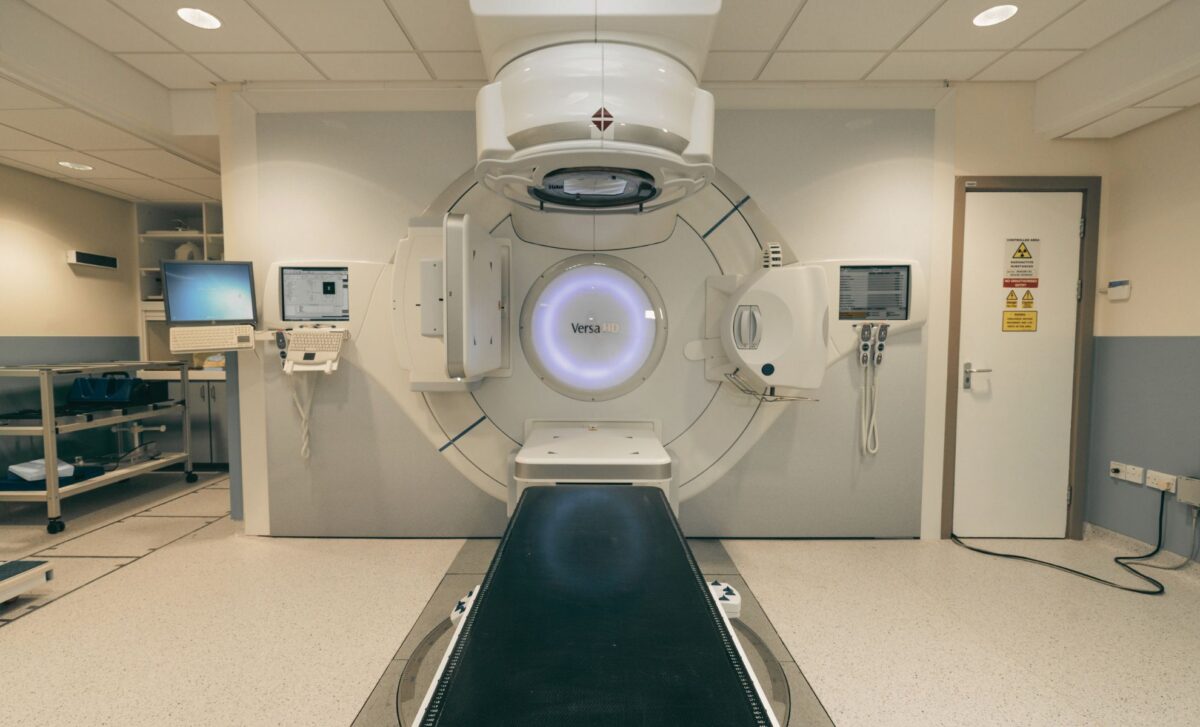
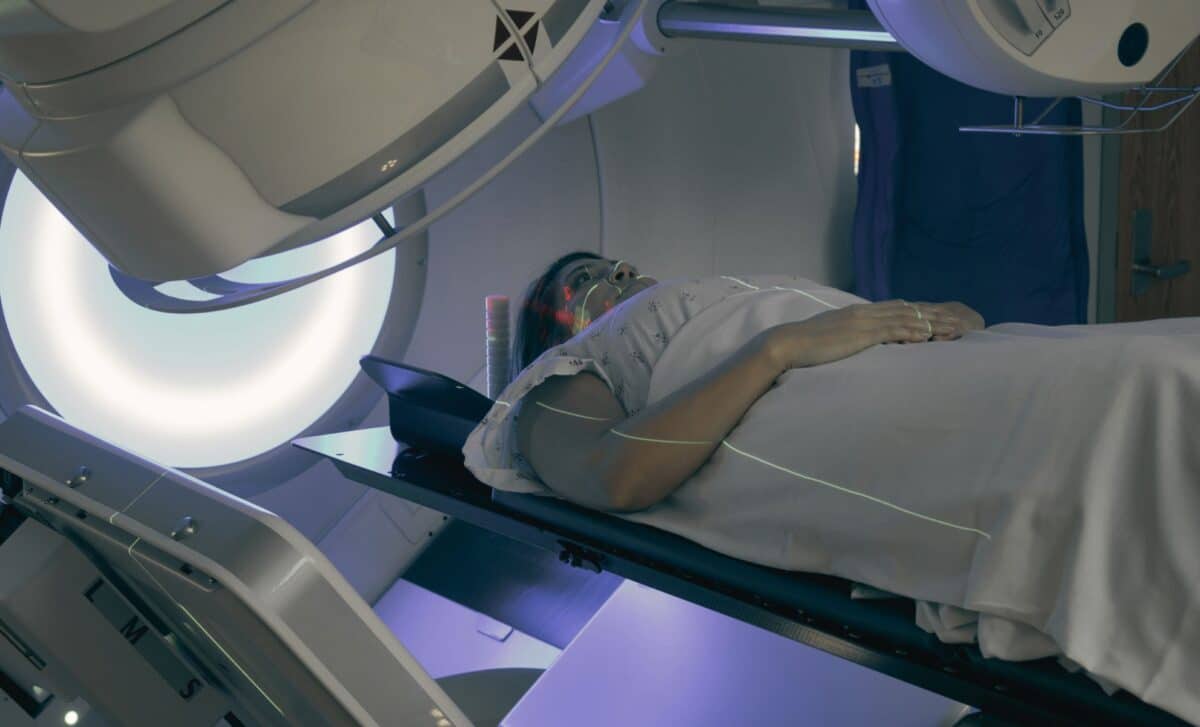
The FAST-Forward Boost trial is examining whether patients who need an additional dose of radiation after breast cancer surgery can receive it safely over one week. The research will compare cancer recurrence and side effects between shorter and standard treatment schedules, with findings intended to inform future NHS care.
NHS Trial Compares Five-Day Radiotherapy With Three-Week Treatment
According to the Birmingham Mail, the Department of Health and Social Care has confirmed that the trial is taking place at 39 hospitals across the UK. The programme focuses on patients requiring a radiotherapy boost, an additional dose directed at the area where their tumour was removed.
The Institute of Cancer Research states that the study aims to recruit 4,830 patients, who will be allocated to one of three treatment groups. One group will receive the standard 15-day course, while the other two will undergo five days of radiotherapy using different boost doses.
Of those participants, 1,610 will receive the standard treatment and 3,220 will receive one of the shorter courses. Researchers will assess whether the five-day approach can match the longer schedule in preventing cancer from returning while monitoring potential side effects.
Health Secretary Yvette Cooper welcomed the programme, describing it as an example of British research being used to improve cancer treatment.
“This programme is aiming to radically shorten the treatment times for breast cancer – to support patients and save more lives,” she said.
Participants will undergo regular assessments during and after treatment. The first 345 patients will also receive additional monitoring for early side effects, including changes affecting the skin, breast and oesophagus.
Previous Research Supports Shorter Treatment, but Questions Remain
The FAST-Forward Boost study builds on earlier British research that changed how breast cancer radiotherapy is delivered.
According to a paper published in Clinical Oncology in July 2025, the original FAST-Forward trial demonstrated that five daily radiotherapy sessions could provide cancer control and normal tissue outcomes comparable to the established 15-session course.
Ten-year follow-up data reported local cancer recurrence rates of 3.6% among patients receiving 40 Gy over 15 sessions, compared with 2.0% among those receiving 26 Gy over five sessions.
Around 60% of breast cancer patients requiring radiotherapy can now complete treatment within one week. Yet more than 10,000 people annually still require longer courses, including some patients needing an additional boost dose.
FAST-Forward Boost is investigating whether that extra radiation can be delivered within the same five-day schedule without compromising treatment outcomes.
The study will also examine fatigue, quality of life, financial costs and the environmental impact of radiotherapy appointments. Researchers will monitor lung toxicity and assess treatment outcomes for patients receiving radiation to regional lymph nodes.
The trial is funded by the National Institute for Health and Care Research and led by Dr Anna Kirby of the Royal Marsden NHS Foundation Trust.
Its primary analysis is planned for 2034, with earlier findings expected on treatment side effects. Until those results are available, the shorter boost schedules remain under clinical investigation.