

England’s National Health Service is losing specialist staff to private ADHD and autism clinics as approximately 810,000 children and adults await diagnostic assessments, raising concerns about the health system’s ability to maintain services for patients who cannot afford private care.
NHS Staffing Shortages Are Already Restricting Access to Care
The movement of psychologists, psychiatrists, nurses, and other specialists into private healthcare is placing additional strain on NHS neurodevelopmental services, according to The Guardian, which reported the growing workforce problem on October 9, 2026.
Private providers have expanded rapidly as demand for attention deficit hyperactivity disorder (ADHD) and autism assessments has outpaced the capacity of public services. Many patients face lengthy delays, while independent clinics offer an alternative route to diagnosis.
For NHS organizations, the consequences extend beyond competition for patients. When experienced clinicians leave, public services lose the personnel needed to assess new referrals and manage existing waiting lists.
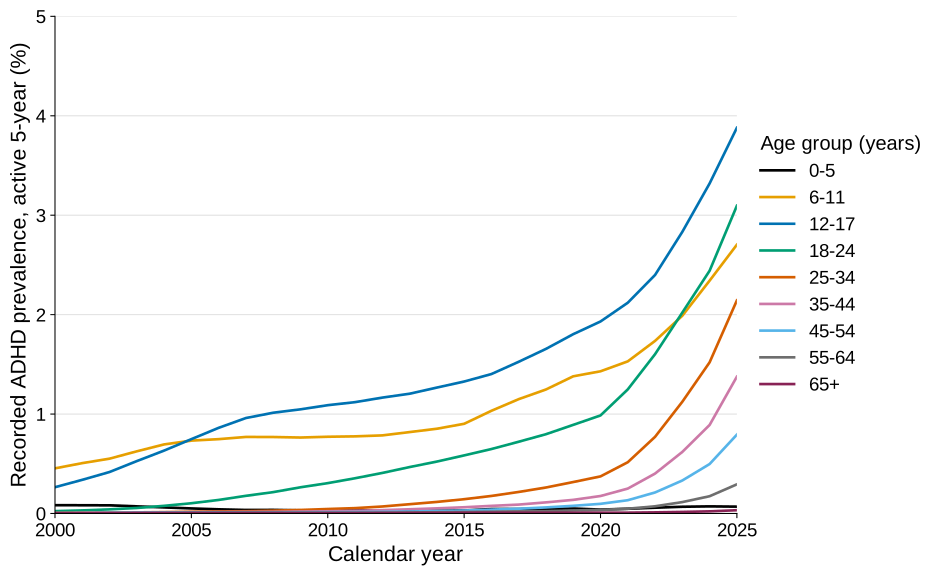
Source: Clinical Practice Research Datalink (CPRD).
The impact has become particularly visible at Herefordshire and Worcestershire Health and Care NHS Trust, where staffing losses recently forced restrictions on access to neurodevelopmental services for children and teenagers.
A paper presented to the trust’s board reported:
“Neurodevelopmental staffing is reduced significantly, with the majority of leavers choosing to take up employment with ISP [independent sector providers] and RtC [Right to Choose] providers for ND [neurodiversity].”
The trust responded in September by limiting access for patients under 18 to those with the most serious symptoms. Normal service was scheduled to resume on Monday, October 12.
The backlog remains substantial. A total of 1,298 patients have already waited at least two years for an ADHD or autism assessment through the trust.
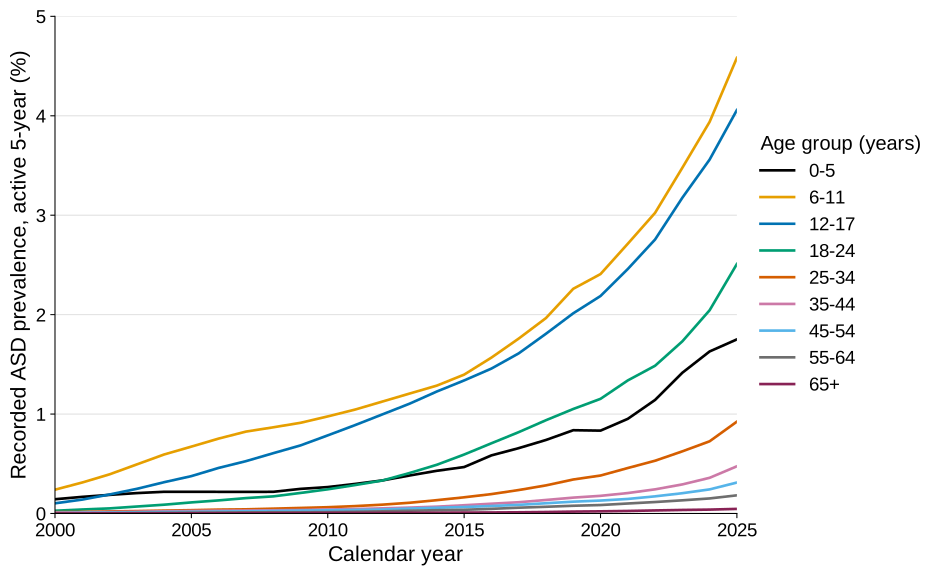
Source: CPRD.
Private ADHD Clinics Face Expanded Regulatory Oversight
The staffing concerns coincide with a significant change in how England oversees private neurodevelopmental assessments.
The Care Quality Commission (CQC) announced on October 9 that it would begin regulating private clinics that provide ADHD and autism diagnostic assessments without offering treatment.
Until now, this category of assessment-only provider has fallen outside the CQC’s registration requirements, creating a gap in regulatory oversight. Services providing diagnosis and treatment were already subject to regulation.
Adrian James, the CQC’s interim inspector of mental health care, said:
“This new responsibility will … close a significant gap in our oversight, meaning that people receiving these diagnoses can have far greater confidence in the service they are receiving.”
The announcement followed a government-commissioned review of mental health and neurodiversity led by Professor Peter Fonagy.
The review raised concerns about the quality and consistency of assessments across a rapidly expanding private market. It also identified potential financial incentives for providers to diagnose or treat people who do not meet the relevant clinical criteria.
These findings do not establish that private providers generally issue inappropriate diagnoses. They do, however, reinforce the case for consistent standards across organizations assessing patients for neurodevelopmental conditions.
Health Secretary Yvette Cooper said the tighter regulation means “people can be confident that assessments are high quality and that the NHS is not being overcharged by independent or private providers”.
The regulatory expansion aims to bring assessment-only clinics under the same oversight framework already applied to other diagnostic and treatment services.
The Right to Choose System Is Changing the ADHD Workforce
One factor behind the growing private market is England’s Right to Choose pathway, which allows eligible NHS patients to receive publicly funded ADHD or autism assessments from qualifying independent providers.
The arrangement gives patients an alternative when local NHS services face long waiting times. It also means private organizations can deliver assessments financed through the public healthcare system.
For clinicians, these providers offer employment opportunities outside traditional NHS services, sometimes while continuing to treat NHS-funded patients.
This has created a workforce increasingly distributed between public and independent organizations.
Rebecca Gray, director of the NHS Alliance’s mental health network, described the changing employment landscape.
“We’re increasingly dealing with one ADHD workforce spread across different providers, both in the NHS and private sector,” she said.
Gray also noted that the private market’s growth, combined with shorter waiting times at some independent services, makes these organizations attractive workplaces for NHS professionals.
The result is a complicated relationship between the two sectors. Independent providers can increase assessment capacity, but their recruitment of NHS-trained specialists may simultaneously reduce staffing levels within public services.
That tension becomes more pronounced when local NHS teams are already struggling to maintain routine appointments.