
Millions of UK households own a games console, and from July 1, playing them could cost even more as energy bills rise. Ofgem has confirmed a 13% increase to the energy price cap for the period covering July to September 2026, pushing costs for everyday appliances higher.
How the Price Cap Affects Consoles
The energy price cap sets the maximum rate per unit and standing charge for customers on standard variable tariffs who haven’t signed a fixed-rate deal. From July 1, households paying by Direct Debit in England, Scotland, and Wales will see electricity costs rise to 26.11p per kilowatt hour, up from 24.67p.
Ofgem says the increase is largely due to higher wholesale gas prices, driven by ongoing tensions in the Middle East. While the rise is significant, the regulator notes that prices remain well below the 2022 peak, when bills were capped at £2,500.
How Much Consoles Add to Bills
Games consoles have become a multi-billion-pound industry since hitting the mass market in the 1970s. Prices range from around £240 for a basic Nintendo Switch to £790 for a PlayStation 5 Pro. Beyond the console itself, energy usage is an often-overlooked cost.
Research from MIDiA shows console gamers spend an average of 10 hours per week gaming, roughly 1 hour 26 minutes per day. Citizens Advice calculates that under the current price cap, this level of use adds about £15.48 per year to energy bills.
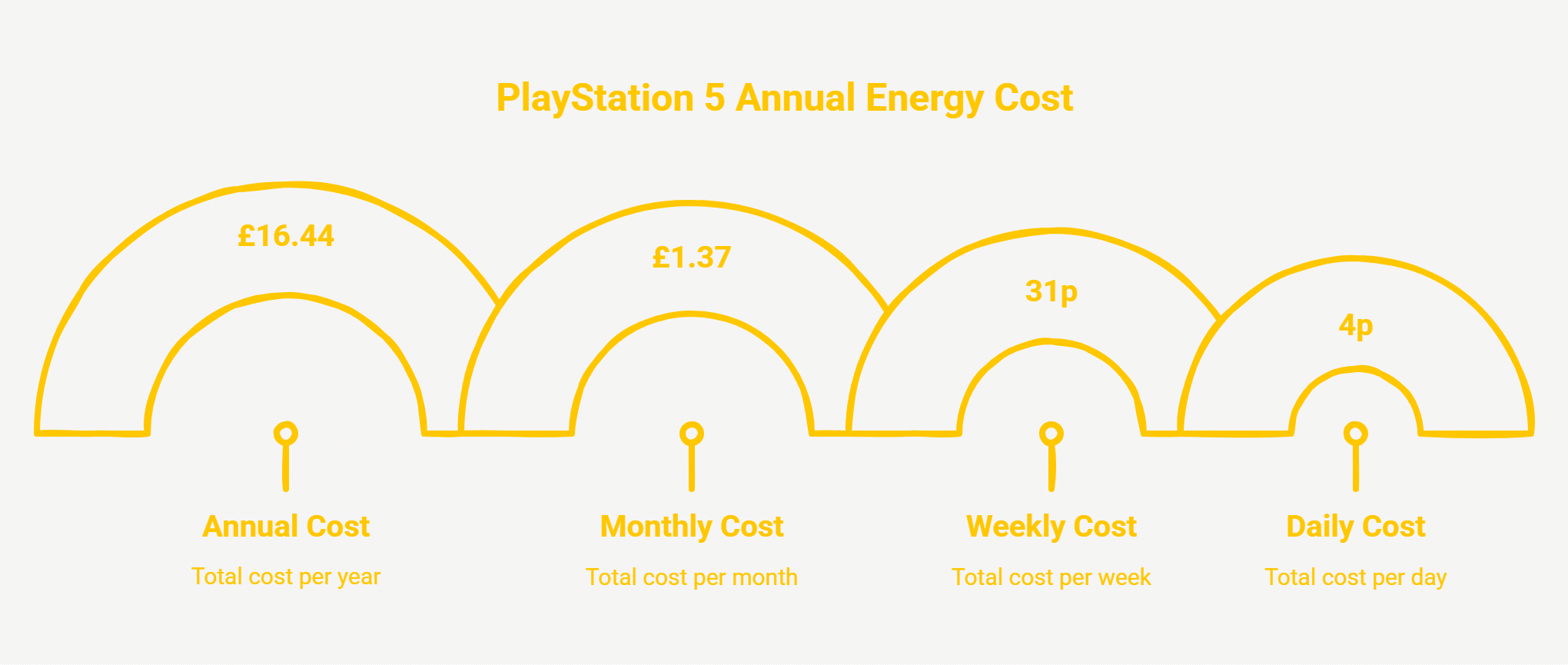
From July 1, that cost rises slightly to around £16.44 per year, equivalent to 4p per day, 31p per week, or £1.37 per month. These estimates assume the console is actively used; costs can increase if the console is left on standby or charging controllers.
Protecting Yourself From Price Hikes
Actual costs vary by household and device, and the daily standing charge—covering all electricity usage—will drop slightly to 57.19p per day from July 1. One way to shield yourself from price fluctuations is to switch to a fixed-rate tariff. Currently, about 40% of UK accounts, or 22 million households, are on fixed tariffs and will be unaffected by the July price rise.
Gaming may seem harmless, but even small daily energy use adds up over the year. For families with multiple consoles, controllers, and other gaming peripherals, these costs could become noticeable, especially with energy prices trending upward.
As consoles remain a central part of home entertainment, understanding their contribution to energy bills can help households plan ahead and avoid surprises when the new price cap comes into effect.