The developments marked the most significant deterioration in relations since the two countries signed a memorandum of understanding on June 17 aimed at reopening the strategic waterway and ending their conflict. The renewed uncertainty pushed crude benchmarks to their highest levels in about two weeks while financial markets across Asia reacted unevenly.
The latest military exchange followed attacks on commercial shipping near one of the world’s most important energy corridors. According to Reuters, U.S. officials said American strikes targeted sites along Iran’s coast after Iranian attacks on commercial vessels transiting the Strait of Hormuz. Iran later responded with drone and ballistic missile attacks on Bahrain and Kuwait, where U.S. military facilities are located.
Strait of Hormuz Tensions Drive Oil Higher
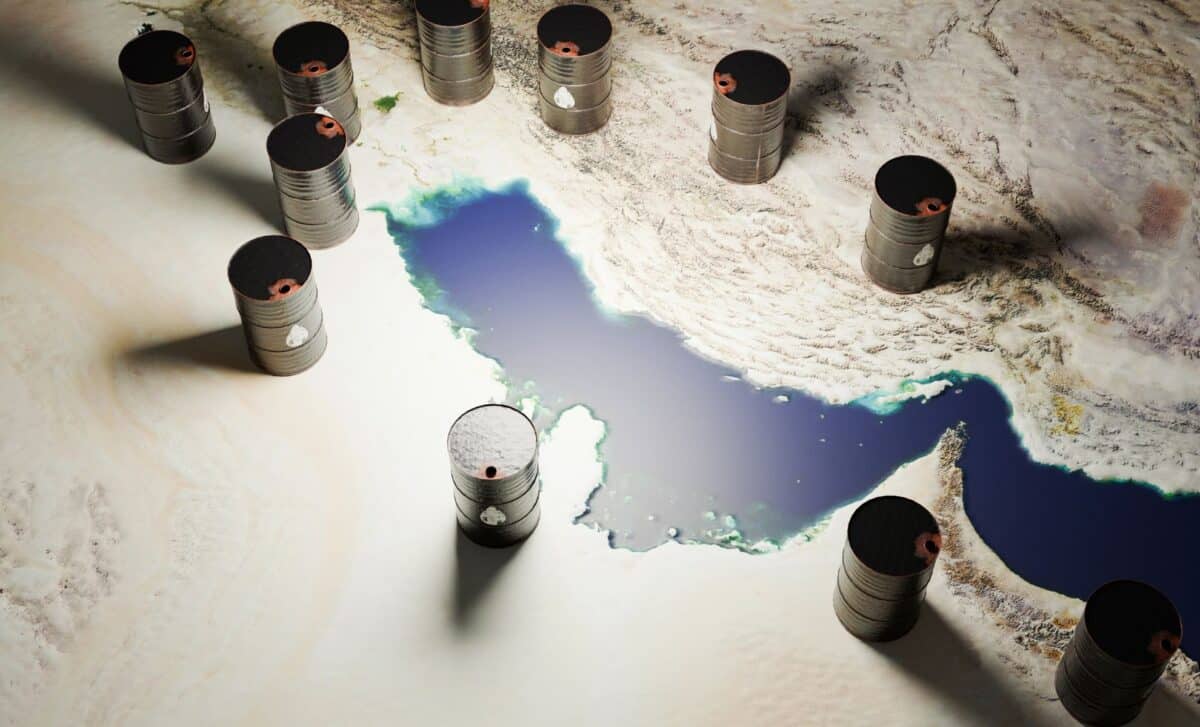
Oil prices rose as traders reassessed the risks surrounding energy supplies from the Middle East. According to Reuters, Brent crude futures climbed more than 5% to $77.98 a barrel, while U.S. West Texas Intermediate gained more than 5% to $74.14, reaching their highest levels since June 23.
The market reaction followed Washington’s decision to reinstate restrictions on Iranian oil sales. According to Dow Jones, the U.S. Treasury revoked the temporary authorization that had permitted Iran to export crude legally after the Islamic Revolutionary Guard Corps launched missiles and drones at ships near the Strait of Hormuz.
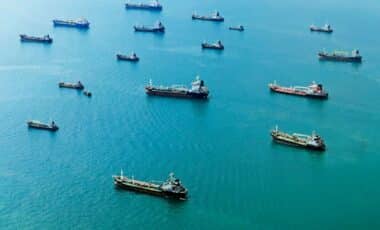
The attacks also renewed concern over commercial navigation through the waterway, which carries roughly one-fifth of global oil supplies. Reuters reported that four oil and gas tankers either decided not to transit the strait or were forced to turn back after Iran declared that only a designated shipping route would be considered safe. According to Reuters, Qatar also blamed Iran for attacks on several vessels, including a liquefied natural gas carrier that reported a drone strike and an engine-room fire.
John Oh, a sustainable and energy economist at Commonwealth Bank of Australia, said the ship attacks highlighted the risks surrounding the timely resumption of oil flows. He also warned that reported attacks involving a Qatari LNG carrier raised fresh questions about whether safe passage along the Omani coast could continue.
Financial Markets React as Geopolitical Uncertainty Deepens
The rise in crude prices came alongside mixed trading across Asia-Pacific equity markets. According to Dow Jones, Hong Kong’s Hang Seng Index gained 3.1% while China’s Shanghai Composite was little changed. Japan’s Nikkei Stock Average fell 1.6%, Taiwan’s Taiex advanced 0.6%, and South Korea’s Kospi dropped 5.5% after swinging between gains and losses earlier in the session.
Trading in South Korea became volatile enough for the Korea Exchange to briefly activate market curbs on both the Kospi and the technology-focused Kosdaq index.
Investors were also responding to broader concerns beyond geopolitical developments. Skye Masters, head of markets research at National Australia Bank, said the dominant theme for equities had become a rotation away from chipmakers. She noted that semiconductor stocks came under selling pressure after a strong quarter as investors took profits and shifted toward other sectors.
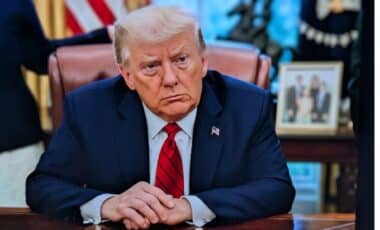
The renewed military escalation also influenced expectations in commodity markets. Reuters reported that President Donald Trump declared the interim agreement with Iran was “over” ahead of a NATO summit, adding that he did not want to engage with Tehran. The statement added to uncertainty surrounding the future of negotiations and reinforced market concerns about the security of oil supplies moving through the Strait of Hormuz.