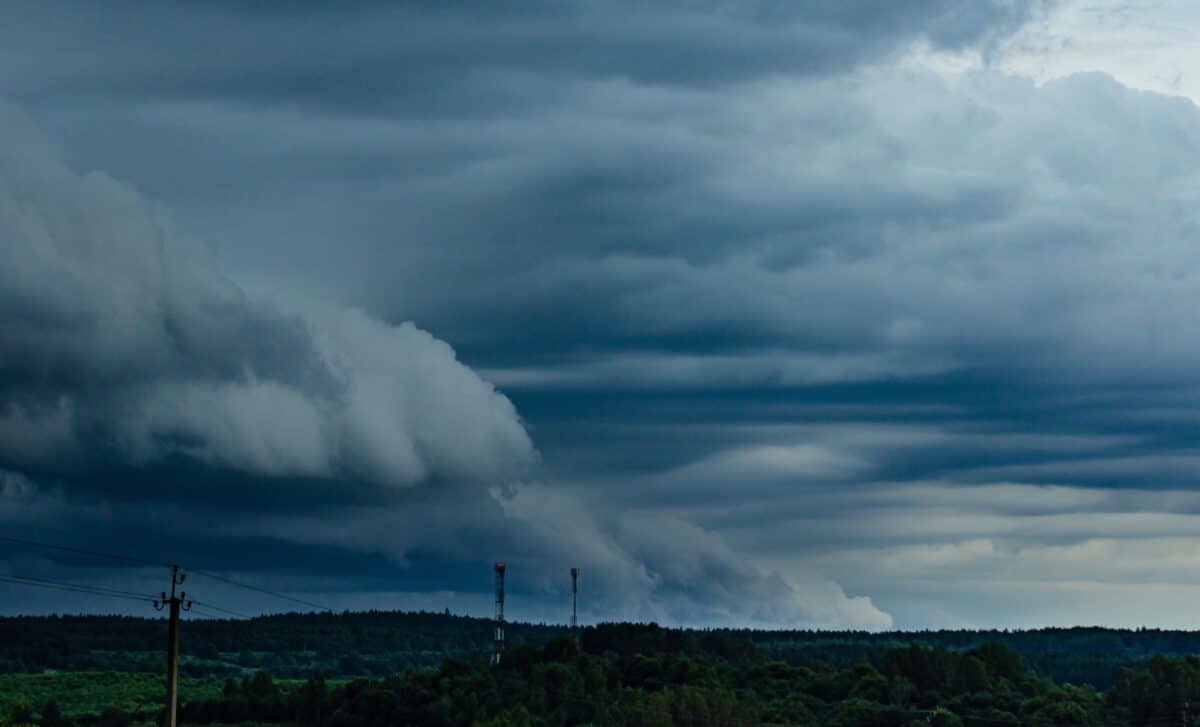
The new system arrives while recovery work from Lala is still under way. Roads, utility lines and homes were damaged by the hurricane, and some communities remain especially vulnerable because the ground is already saturated from last week’s rainfall.
Heavy Rain Poses the Main Threat as Moke Passes South
At 11 a.m. HST on Saturday, Moke was centered near latitude 14.9 north and longitude 151.1 west and was moving west-northwest at about 12 mph. According to the Hawaiʻi Emergency Management Agency, maximum sustained winds were near 50 mph, with little change in strength expected Saturday before gradual weakening begins Sunday.
The storm’s center is forecast to pass south of the Big Island on Sunday before moving well south of the smaller main Hawaiian Islands early next week. No coastal watches or warnings were in effect at the time of the latest state update, although residents across the islands were advised to keep monitoring the system.
Rain remains the main concern. The Hawaiʻi Emergency Management Agency said Moke could produce 5 to 10 inches across the Big Island, with isolated maximum amounts of 15 inches. Eastern Maui could receive 3 to 6 inches, while western Maui and the remaining islands may see up to 1 or 2 inches as moisture is drawn northward from the storm.
Those totals could trigger life-threatening flooding and mudslides, particularly across the windward and southeast portions of the Big Island. Steep terrain and areas recently affected by Lala face particular concern. Gusty winds are also expected late Saturday and Sunday, especially over higher terrain, while storm-generated swells are forecast to reach exposed east- and south-facing shores.
Recovery From Hurricane Lala Remains Incomplete
Moke is approaching less than a week after Lala brought severe flooding and landslides to parts of the Big Island. According to CNN, Lala dropped more than three and a half feet of rain on the island’s mountains, sending mud, water, rocks and debris into communities including Naʻalehu.
A 93-year-old woman died from storm-related injuries, according to information cited by CNN from the Hawaii Police Department. Police were also investigating the death of a man in his 60s whose death may have been connected to the storm.
More than 100 homes were lost on the Big Island, Hawaii Gov. Josh Green said last week. In a Saturday video reported by The Guardian, Green said Lala had already caused at least $43 million in infrastructure damage on the island and another $4.6 million in damage to homes.
Crews have continued clearing fallen trees and utility poles, while roads damaged by floodwater are only beginning to be rebuilt. Thousands of residents were still without power as preparations for Moke intensified.
Hawaii Volcanoes National Park also closed at 5 p.m. Friday ahead of the new storm. The park said it still lacked power, internet and phone service following Lala, while many employees were continuing to recover from the hurricane.
State officials have urged residents, particularly those in flood-prone areas, to prepare before conditions worsen. Emergency planning has included supplies, hotel rooms and continued monitoring of water levels at Wahiawa Dam, which rose more than 20 feet after Lala.