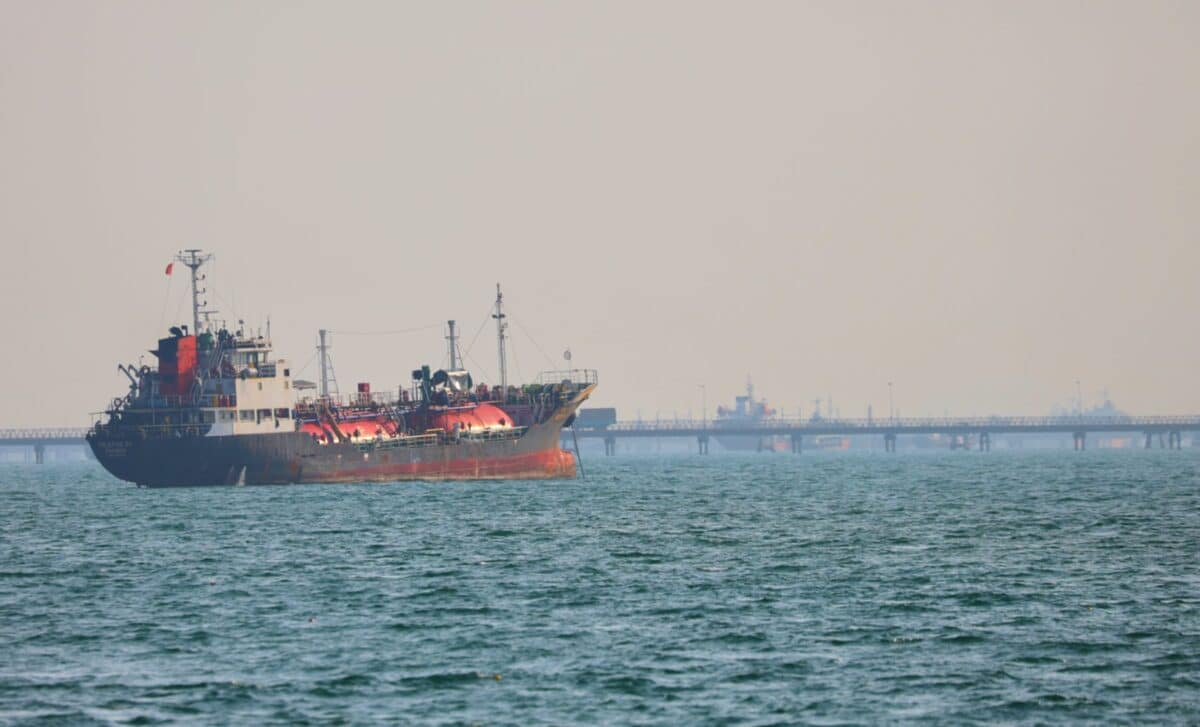
The decline in crude prices comes as more tankers resume transits through one of the world’s most important energy shipping routes. Market analysts say improving supply conditions and recovering vessel movements have reduced fears of a prolonged energy shock, although geopolitical tensions remain unresolved.
Oil markets moved lower on Thursday as Brent crude dropped to $72.24 per barrel, slightly below the level seen on February 27, the day before the United States and Israel launched missile strikes on Tehran. According to The Guardian, Brent crude has fallen by more than 20% over the course of this month.
Another sign of easing market pressure came from the futures curve. Brent crude for August delivery traded below the September contract, which stood at $73.59 per barrel. According to the report, this pricing structure signals that traders see sufficient short-term oil supply.
Shipping activity has also recovered. CNN and MarineTraffic data, cited by The Guardian, showed that vessel traffic through the Strait of Hormuz doubled over the previous 24 hours, reaching its highest level since late February. The waterway remains one of the world’s most important routes for global oil exports, making tanker movements a closely watched indicator of supply conditions.
Ipek Ozkardeskaya, senior analyst at Swissquote, said that reports of vessels once again crossing the Strait of Hormuz with their satellite tracking systems switched on helped weigh on oil prices. She also said that strategic inventory releases, reduced demand from China, and a growing number of tankers quietly leaving the Persian Gulf with tracking systems disabled had contributed to a modest oversupply in several key markets.
Increased Tanker Movements Ease Immediate Supply Concerns
The resumption of shipping activity has become one of the clearest signals that concerns over major supply disruptions have eased. According to The Guardian, a Liberian-registered oil tanker exited the Strait of Hormuz on Thursday using a new route near Oman that has been promoted by a United Nations maritime agency despite threats issued by Iran’s Revolutionary Guards.
Susannah Streeter, chief investment strategist at Wealth Club, said fears of a prolonged global energy shortage triggered by the Iran conflict are fading as oil prices continue moving back toward pre-crisis levels. She added that investors remain cautious because weaker economic growth in Europe is coinciding with the effects of a record-breaking heatwave.
Streeter also noted that oil-producing nations have increased production while infrastructure repairs continue, helping improve supply conditions. At the same time, energy-efficiency measures introduced during the recent crisis and concerns about slowing global growth have contributed to weaker sentiment across the energy sector.
Geopolitical Risks Remain despite Lower Oil Prices
Although oil prices have declined, diplomatic tensions continue to shape the broader outlook. According to The Guardian, Iran and the United States remain divided over the terms of their interim agreement signed last week, which established a 60-day period for negotiations on a permanent peace arrangement.
Lebanon has also emerged as a potential source of renewed instability. Israel carried out an airstrike in southern Lebanon on Wednesday that killed two people, according to the country’s state-run news agency. The strike marked Israel’s first military action in Lebanon since the latest ceasefire took effect on Saturday.
Looking ahead, Ozkardeskaya said oil prices are likely to fluctuate between $60 and $80 per barrel in the coming weeks. She said geopolitical risks remain present, China is expected to return to the oil market as tensions ease, and countries are likely to begin replenishing their strategic reserves, absorbing part of the additional supply.