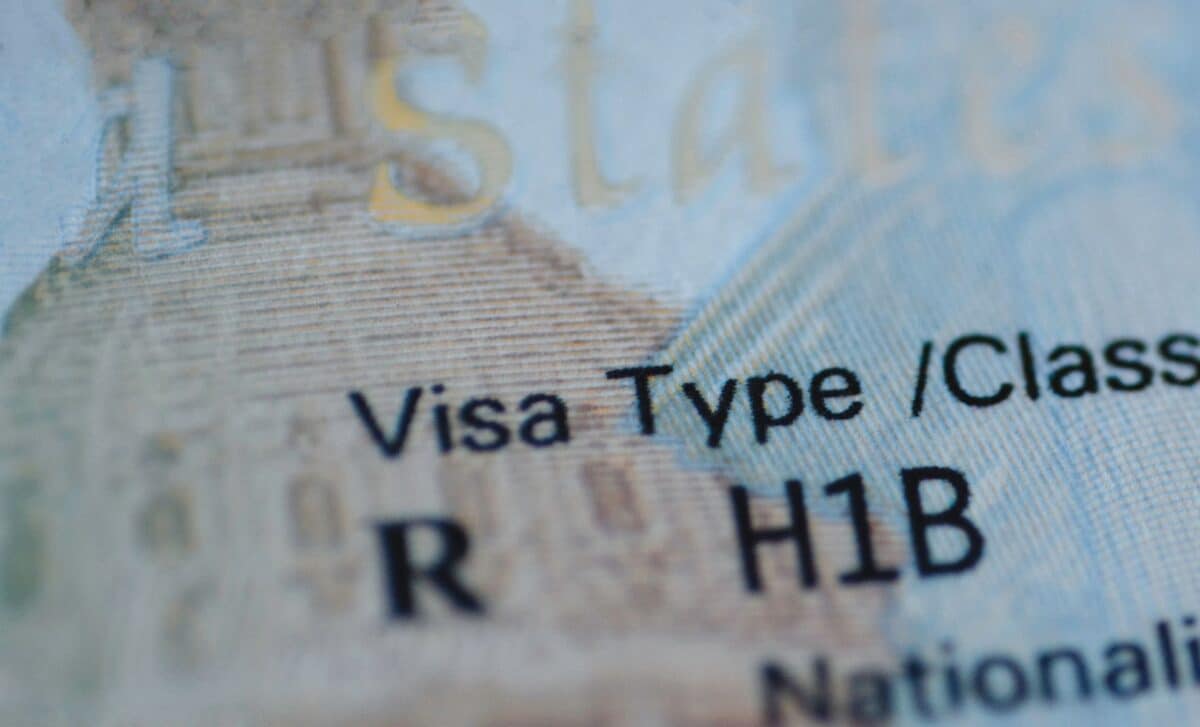
The Department of Homeland Security proposed the fee in August 2026 as an additional charge on cap-subject H-1B petitions, on top of existing immigration fees. The proposal has opened a debate over how employers might respond to a six-figure increase in the cost of seeking specialized foreign workers and whether DHS assumptions about future filing volumes will hold.
The H-1B program allows U.S. employers to temporarily hire foreign professionals for specialty occupations that generally require at least a bachelor’s degree or equivalent experience. It is used across technology, engineering, finance, health care, consulting and higher education, making changes to its costs relevant well beyond the technology sector.
Filing Declines Could Change the Government’s Revenue Calculation
DHS based its revenue estimate on approximately 85,000 cap-subject H-1B petitions each year, reflecting the regular annual cap of 65,000 and an additional 20,000 visas available to beneficiaries with qualifying U.S. advanced degrees. Under that assumption, the department estimates that the proposed fee would generate about $8.8 billion annually.
The CCIA Research Center reached a different result by examining how lower demand could affect both fee collections and federal tax receipts. According to CCIA, the government would collect more through the new fee than it would lose in associated tax revenue only if H-1B filings declined by less than about one-quarter.
Under scenarios involving a 36% to 38% decline in filings, the organization estimates that overall federal receipts would be $32 billion to $38 billion lower over a decade. In a scenario involving a 75% decline, the estimated reduction reaches $142 billion.
The analysis measures overall federal receipts rather than the amount collected through H-1B fees alone. It incorporates projected federal tax revenue associated with H-1B workers who would otherwise be employed in the United States.
DHS and Technology Industry Representatives Differ Over the Fee
DHS says the $103,265 charge is intended to help recover costs associated with administering the legal immigration system across multiple federal agencies. The department also argues that employers using the H-1B program generally have the resources to absorb the additional expense.
CCIA disputes the assumption that filing levels would remain unchanged. According to the association, its analysis drew partly on registration declines following a separate $100,000 payment imposed on certain H-1B petitions in 2025.
“DHS should reconsider an H-1B fee whose revenue projections depend on assuming no significant reduction in applications despite creating six-figure cost increases per application,” CCIA chief economist Trevor Wagener said.
The White House has defended the policy on different grounds. Spokesperson Lauren Bis told Newsweek that the fee was intended to discourage companies from “spamming the system” and to focus H-1B use on highly specialized temporary labor. The proposed $103,265 fee remains subject to the federal rulemaking process. Its eventual effect on federal receipts depends on how employers respond to the additional cost, the central point on which the DHS assumptions and CCIA scenarios differ.