A government-backed review has warned that millions of people across the UK are not saving enough for retirement, raising concerns about future financial insecurity. The Pensions Commission said the number of under-saving workers could rise from 15 million to 19 million without policy changes.
The findings point to growing pressure on the pension system as the population ages and more workers rely on private savings rather than traditional salary-based pensions. Women, low and middle earners, and self-employed workers were identified among the groups most exposed to the risks.
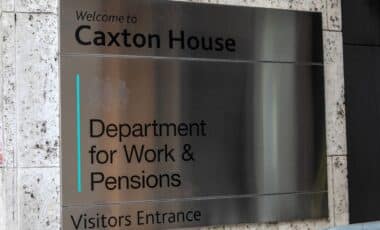
The interim report, published on May 19, comes as ministers and industry groups debate how to adapt pension rules to changing work patterns and longer retirements. According to the Department for Work and Pensions, the commission was re-established in 2025 to examine why future retirees are projected to be financially worse off than current pensioners.
Millions Under-Saving as Retirement Pressures Increase
The Pensions Commission said around 45% of working-age adults are currently not saving into a pension at all, despite nearly half of them being employed. According to the commission’s report, many low and middle earners are contributing only the minimum amount required through automatic enrollment schemes, leaving them with limited retirement income prospects.
The report warned that demographic shifts are intensifying the challenge. The share of the UK population aged over 65 is projected to rise from 19% today to 28% by 2075. At the same time, the number of people aged 75 or older is expected to double between 2025 and 2075.
The commission also highlighted concerns about pension withdrawals. Around three in ten private pension pots are being accessed at the earliest possible opportunity, with roughly half withdrawn entirely. According to the report, nearly half of those lump sums are spent on major purchases such as cars, vacations, or home renovations.
Pensions Commissioner Baroness Jeannie Drake said the country needed “a renewed national settlement on pensions” to address the long-term savings gap. She added that future recommendations would focus on creating a pension system “fit for decades to come.” The report also stated that spending on pensioner benefits, including the state pension, could rise from about 6% of GDP in 2024-25 to approximately 9% by the early 2070s.
Women and Self-Employed Workers Among Hardest Hit
The commission identified several groups facing particularly sharp retirement risks. Self-employed workers were singled out as one of the least protected categories within the current system. According to the findings, only 4% of wholly self-employed workers are actively saving for retirement.
The report noted that self-employed workers are excluded from automatic enrollment arrangements used in workplace pensions. It said the “inertia-based pension-saving system” does not currently reach many workers who need it most.
Women were also found to hold significantly lower pension wealth than men approaching retirement age. According to the commission, median uncrystallized private pension wealth among people in their late 50s stood at £156,000 for men between 2020 and 2022, compared with £81,000 for women.
Minister for Pensions Torsten Bell said the UK had “got back into the pension saving habit,” though he warned that “the job is only half done.” He said many workers still are not saving enough to avoid financial hardship later in life.
Industry organizations and charities broadly supported the commission’s findings. According to Age UK, stronger coordination between state pensions and private savings systems will be needed to prevent low-income workers from “falling through the cracks” as retirement approaches.