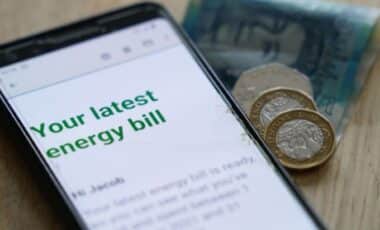
Millions of households across Britain will see fixed daily charges removed from their gas bills under plans announced by Chancellor John Healey ahead of Wednesday’s Budget. The government intends to introduce the change in 2027, or as soon as possible afterwards, with 60% of households expected to save an average of £45 annually.
The reform will affect around 23 million homes and change how customers pay for their gas supply. Rather than charging households a fixed daily fee regardless of consumption, suppliers will recover those costs through the price of gas used, leaving some customers paying less and others facing higher bills.
How Removing Gas Standing Charges Will Affect Household Bills
Standing charges are fixed daily payments that cover the costs of connecting properties to gas and electricity networks. Customers pay them regardless of how much energy they consume, meaning households can incur charges even when they use no gas.
According to BBC Verify, the average gas standing charge currently stands at just under 30p per day, equivalent to approximately £108 annually. These charges vary slightly depending on the region and payment method.
Under the proposed system, those fixed costs will instead be incorporated into the unit price of gas. The Treasury estimates that 60% of account-holding households will save an average of £45 annually, with households consuming relatively little gas benefiting most.
Higher-consumption households, including some living in larger properties, could face increased costs because they would pay more through their usage. The change will not remove standing charges from electricity bills. According to Reuters, electricity standing charges currently cost households around £200 annually under the regulated energy price cap.
Ofgem, Britain’s energy regulator, has been asked to implement the gas reform in 2027 or as soon as possible afterwards. The Treasury has also indicated that targeted measures will be introduced for a small number of households affected by the changes. The announcement follows a review requested by Prime Minister Andy Burnham, who told MPs last week that ministers were examining ways to remove standing charges from gas bills.
Energy Bill Reforms Announced Ahead of a Difficult Budget
The announcement comes as the government faces continued pressure over household energy costs, inflation and public borrowing.
According to the BBC, the current energy price cap places a typical household’s annual gas and electricity bill at £1,723. Energy consultancy Cornwall Insight has suggested that the cap could rise by 16% on 1 January 2027, largely because of the conflict in the Middle East.
The government has already introduced a temporary removal of VAT from electricity bills, which took effect on 1 October. That measure reduced the October energy price cap by £45 annually compared with what it otherwise would have been.
Healey described gas standing charges as “unfair and outdated”, saying their removal would give millions of households some financial relief. Prime Minister Andy Burnham also backed the policy, arguing that abolishing the charges would give people greater control over their bills and make the energy market fairer.
Greg Jackson, founder and chief executive of Octopus Energy Group, welcomed the announcement, saying customers would benefit from lower standing charges and potentially greater savings if they switched to heat pumps.
Healey is scheduled to deliver his first Budget to the House of Commons at 12.30pm GMT on Wednesday, with further measures expected to address the cost of living. The Treasury has indicated that additional support for poorer households with energy bills is being considered, alongside another freeze in fuel duty. The full Budget will set out the government’s wider tax and spending plans.