
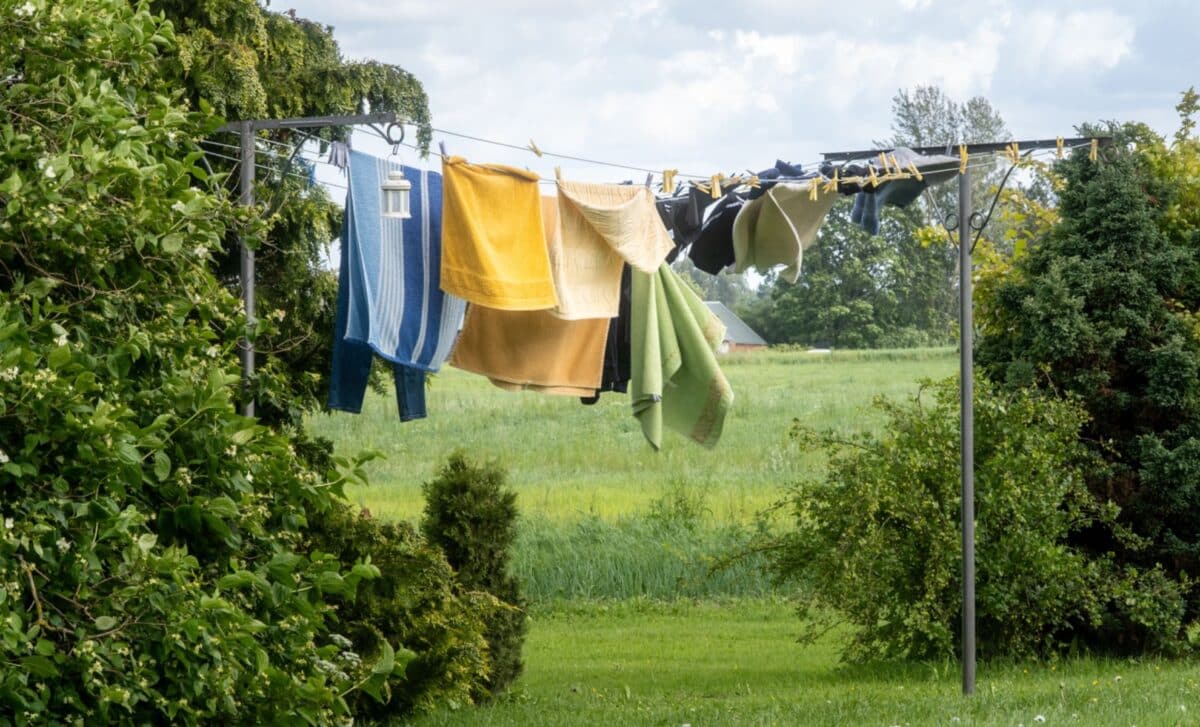
Warm weather across parts of the UK is bringing conditions that many associate with faster laundry drying. Health and cleaning advice issued during the current hot spell suggests that some households may want to make different choices.
People affected by hay fever are being urged to avoid drying washing outside over the coming days, as elevated pollen levels could lead to pollen collecting on fabrics and worsening symptoms indoors.
The warning comes as temperatures in parts of the UK have been forecast to reach around 30C during the Bank Holiday period. According to the Met Office, several regions are also expected to experience high or very high pollen levels.
For many households, sunny conditions often mean washing lines and outdoor drying racks return to use. Yet advice from experts and public health guidance suggests that warm, breezy weather can also increase exposure to airborne pollen in everyday routines.
High Pollen Forecasts Prompt Advice to Dry Laundry Indoors
According to the forecasts, high pollen levels were expected across South West England, Wales, the West Midlands, the East Midlands, the East of England, London and South East England during the Bank Holiday period. Forecasts for Tuesday (May 26), indicated very high pollen levels across South West England, London and South East England. Experts say this matters because wet fabrics may trap pollen while drying outdoors.
Nigel Bearman, founder of cleaning company Daily Poppins, said hanging clothing, bedding and towels outside during high pollen conditions can contribute to allergy discomfort. He stated that wet laundry behaves “like a sponge”, absorbing airborne pollen that later settles into fibres as items dry.
According to Bearman, once the laundry is brought inside, pollen can remain on bedding, clothing and household surfaces and may continue affecting people after outdoor exposure has ended.
The reports also noted that materials including cotton, linen and towels may capture pollen easily. Outdoor drying spaces such as balconies, garden lines and drying racks remain exposed to airborne particles during warm conditions.
NHS Guidance Highlights Ways to Reduce Hay Fever Exposure at Home
Advice to keep laundry indoors during periods of elevated pollen is also reflected in public health guidance. According to NHS recommendations, hay fever sufferers may benefit from avoiding outdoor drying of clothes and bed linen because fabrics can collect pollen.
Additional measures suggested by the NHS include wearing wraparound sunglasses outdoors, showering and changing clothes after spending time outside, and reducing pollen indoors through regular vacuuming and dusting with a damp cloth.
The guidance also advises keeping windows and doors closed as much as possible and limiting activities that may increase exposure, including cutting or walking on grass. Fresh flowers indoors and exposure to smoke may also worsen symptoms. Pets can carry pollen indoors on their fur, and pharmacists may offer advice on symptom management, including antihistamine tablets, nasal sprays and eye drops.
For households planning to make the most of the current warm weather, the recommendation is straightforward: for those affected by seasonal allergies, indoor drying may offer a more comfortable alternative while pollen levels remain elevated.