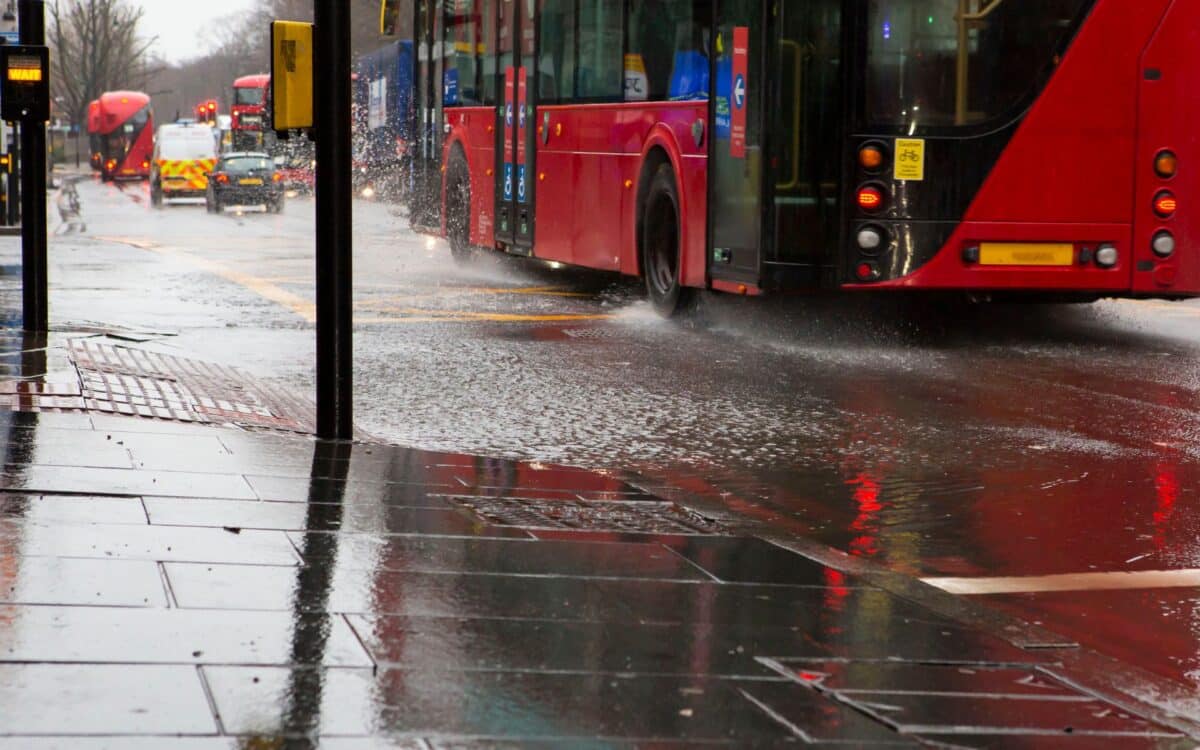
The Met Office has released its seasonal outlook for September, October, and November, predicting above-average rainfall and wind for large parts of the UK. The forecast, developed in collaboration with the Environment Agency, suggests a higher probability of wetter and windier conditions compared to the 30-year average, reflecting broader shifts in the country’s climate patterns.
The current assessment does not provide detailed projections at the local scale, and much of the expected impact will depend on regional variations in rainfall distribution. Mirror reports that while more rain is expected overall, the picture remains mixed and doesn’t reveal much about localised outcomes.
Regional Variation Expected in Autumn Rainfall
The Met Office cautions that despite the overall wet trend, rainfall will “vary significantly across the regions”, with flood dangers depending on multiple factors. As Will Lang, the agency’s chief meteorologist, explained:
There is an increased likelihood of westerly weather patterns, which typically bring more rainfall to western and northern parts of the UK, while eastern and southern areas may experience drier conditions than the national average suggests.
This means the distribution of rain could be uneven—creating a situation where some areas experience persistent drought, while others face flooding. Lang also made it clear that the projected rainfall is unlikely to fully reverse the damage done by the UK’s record-breaking dry summer.
We’re going to need more rain than that – he said.
Flood Risk Persists Despite Increased Rainfall
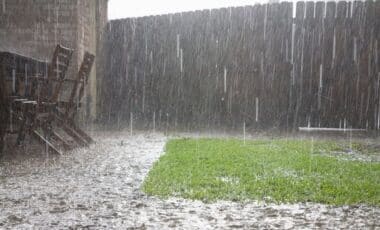
Heavy rains falling on dry, compacted ground—especially after long periods of drought—can increase flood risk rather than reduce it. As Caroline Douglass, executive director for flood and coastal risk management at the Environment Agency, warned:
What we want is nice, steady, flowing rain that wets things up really nicely, not flood events, not a sudden rainfall everywhere. But we know it never works out like we’d like… Certainly, it isn’t an end to a drought yet.
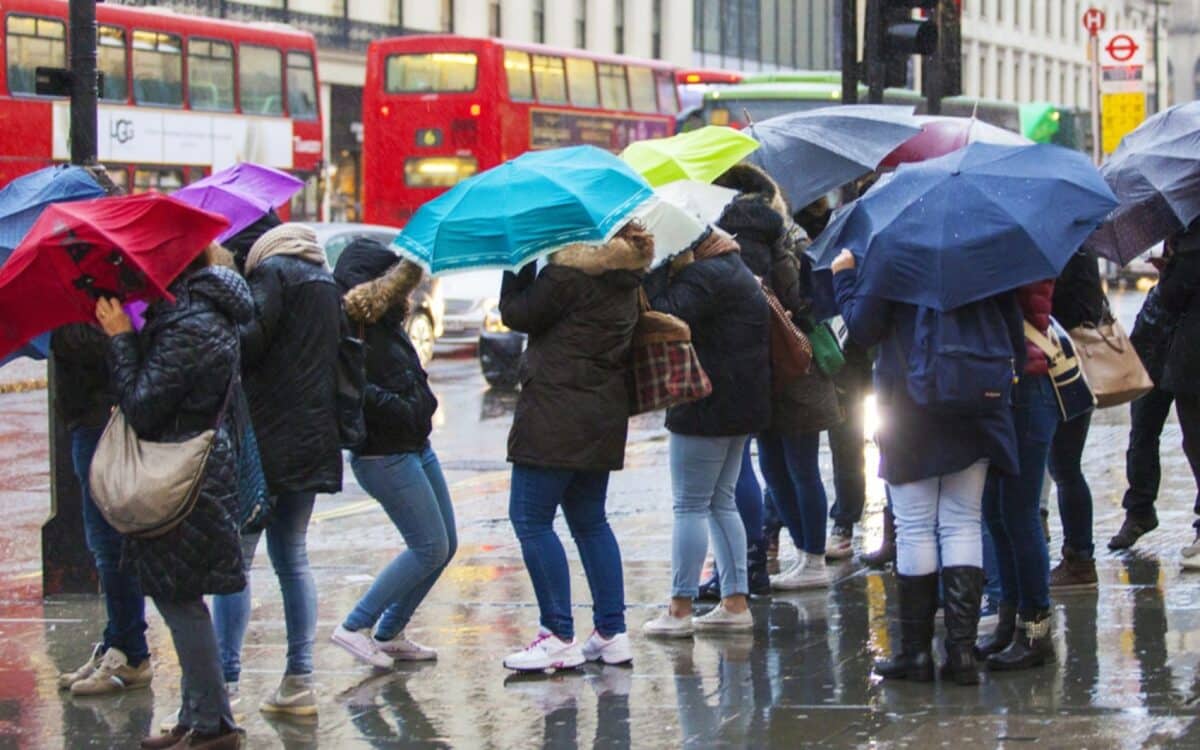
She also highlighted environmental consequences that often go unnoticed:
Initial bursts of heavy rain on parched, hard ground can trigger flooding but can also carry pollutants into waterways, causing fish kills.
Douglass confirmed that drought conditions may continue into winter in some areas:
It’s entirely a possibility. If we don’t get the rainfall in the locations that are already in drought or prolonged dry weather, then you could have drought status continuing in those particular locations. It really is going to be dependent on where the rain lands.
This raises the unusual scenario where parts of the UK may simultaneously face drought and flooding, depending on localised rainfall.
Long-Term Warming Trends Shaping the Seasonal Outlook
The Met Office also noted a strong likelihood of a warmer-than-average autumn, continuing a trend seen in most recent years. Lang linked this to the changing climate baseline:
We tend to get that for most seasonal forecasts these days and that’s really a reflection mainly of our warming climate, and how much things have changed just in the last 30 years.
This warming trend means that even “typical” forecasts today may not match what was considered normal a generation ago, especially in terms of temperature and precipitation patterns.
Government Efforts Ramp Up as Storm Season Nears
In response to these risks, the Government’s Flood Resilience Taskforce—launched last year—is increasing efforts to strengthen UK flood defences before winter. Officials met virtually on Monday to review ongoing measures and accelerate preparations.
Between March 2024 and March 2025, approximately 27,500 properties across 145 schemes are scheduled to benefit from enhanced flood protection. The Environment Agency remains on track to reach its target of 52,000 properties by March 2026. These improvements are funded under the government’s £2.65 billion investment in new and upgraded defences nationwide.
As we head into autumn, we need to think about flood risk even though drought is still being felt in some parts of the country,” said Douglass. “Working with our partners in the Floods Resilience Taskforce, we will continue to ensure the nation’s flood resilience is bolstered by delivering new flood and coastal defences in towns and cities across the country.
Preparing for the Unpredictable
Officials stress that personal preparedness remains essential. While infrastructure can reduce overall risk, it cannot eliminate it. Residents are encouraged to sign up for flood warnings, avoid driving through floodwaters, and use services like the National Flood Forum and local authorities to better understand local risks.
We know we cannot prevent flooding in all scenarios – Douglass added.
We know that it can still happen, and we need to make sure that people are prepared.