
Thousands of disabled people in Scotland could qualify for a Blue Badge without undergoing a mobility assessment, but many may not realize they meet the eligibility criteria. The scheme allows people with certain disabilities and health conditions to park closer to their destinations, making everyday journeys easier.
The 11 Groups Who Automatically Qualify for a Blue Badge
More than 235,700 people in Scotland currently hold a Blue Badge, according to the Daily Record. The parking scheme supports people with severe mobility difficulties, visual impairments and certain disabilities that affect their ability to travel safely.
Scotland’s eligibility rules identify 11 circumstances in which applicants qualify automatically, provided they supply the required evidence.
These include:
- Children under 16 with an eligibility letter from their visual impairment care team.
- People aged 16 or older who are registered or certified as severely sight impaired.
- Recipients of the higher-rate mobility component of Disability Living Allowance (DLA).
- Personal Independence Payment (PIP) recipients awarded at least eight points for moving around.
- PIP recipients awarded 12 points for planning and following a journey.
- PIP recipients previously awarded higher-rate DLA mobility indefinitely or for life.
- PIP recipients previously receiving higher-rate DLA mobility who are appealing their PIP decision.
- Adult Disability Payment (ADP) recipients awarded at least eight moving-around points, 12 journey-planning points, or enhanced mobility without reference to points.
- Children receiving the higher-rate mobility component of Child Disability Payment (CDP).
- Recipients of the War Pensioners’ Mobility Supplement.
- People awarded a lump sum under tariffs 1–8 of the Armed Forces Compensation Scheme who are certified as having a permanent and substantial disability.
Qualifying automatically removes the need for a separate mobility assessment, although applicants must still complete the application process.
Other People Who May Also Qualify
Automatic eligibility is not the only way to obtain a Blue Badge. People who do not meet the criteria may still qualify following an assessment of their circumstances.
This includes people with a substantial disability expected to last at least 12 months that prevents them from walking or makes them virtually unable to walk. Drivers with severe disabilities affecting both arms may also qualify if they cannot use parking meters.
Parents and guardians caring for children under three can apply if the child needs to be kept close to a vehicle for medical treatment or uses bulky medical equipment that cannot easily be carried around.
People with certain mental health conditions may also be eligible if they have difficulty recognizing the dangers of traffic when making journeys.
The Scottish Government guidance states:
“If you have a mental condition that means you lack awareness about the danger of traffic, you cannot apply online. You should phone your local council’s Blue Badge team for a paper application form.”
Applicants who do not automatically qualify may be asked to attend a mobility assessment and meet with a healthcare professional.
Where Blue Badge Holders Can Park
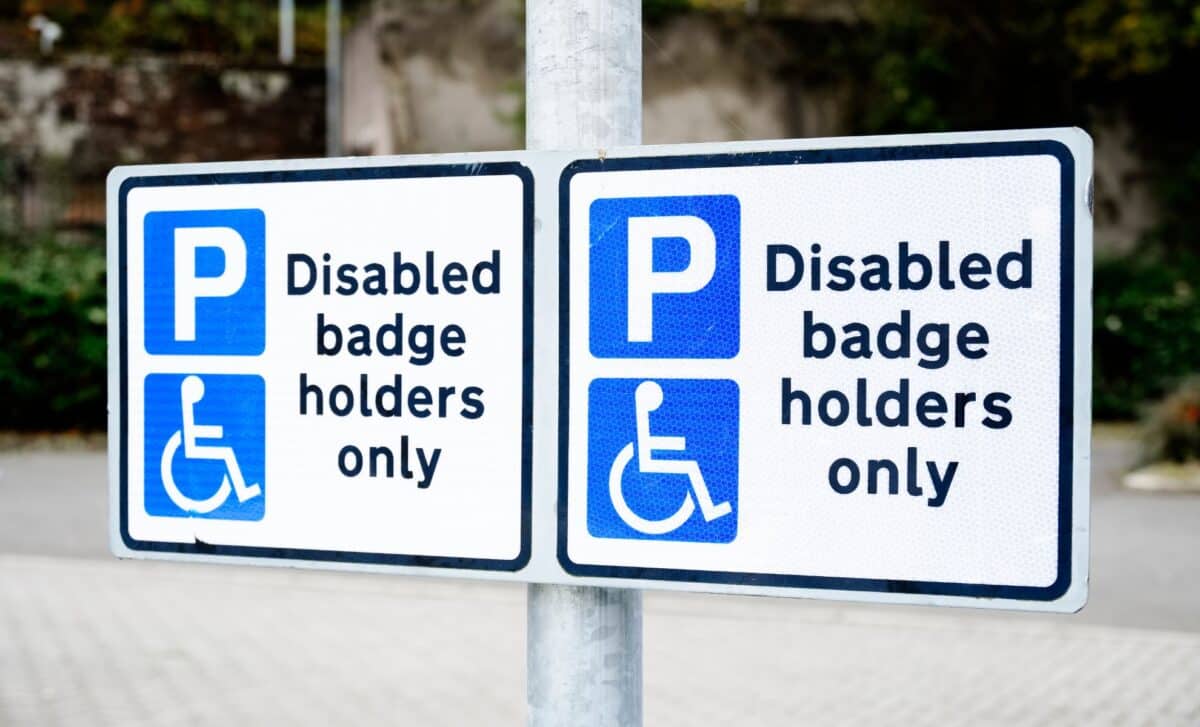
The permit allows holders to park free of charge in designated disabled parking spaces and certain restricted areas.
These include on-street parking meters, pay-and-display bays and single or double yellow lines, provided there are no loading restrictions.
Blue Badge holders can also use their permits in most other countries, although parking rules vary. Those travelling in England or Wales must use the parking clock supplied with their badge where required to display their arrival time.
How to Apply for a Blue Badge
Applications in Scotland are handled by local councils, which assess eligibility, determine the fee and issue decisions.
Applicants generally need a recent digital photograph showing their head and shoulders, proof of identity, such as a passport or driving licence, and proof of address, such as a Council Tax bill or government letter. Evidence of benefit entitlement may also be required.
Applicants must provide their National Insurance number and, when renewing, details of their existing Blue Badge.
There is no fixed processing time for applications or renewals. Some cases can take around 12 weeks, although processing is usually completed in approximately 10 working days.
Full application guidance is available through the Scottish Government’s mygov.scot website, while local councils handle applications and confirm the final decision.