
A new consultation published by Ofcom suggests Royal Mail could offer a ‘social tariff’ to people on Universal Credit, Pension Credit and other qualifying benefits. The idea echoes existing arrangements in telecoms, where discounts are provided to those in financial hardship.
If approved, the measure could offer direct relief for households struggling with basic postage costs. It also signals a rare intervention in the UK’s postal system at a time when usage patterns are shifting, and delivery performance has come under fire.
Social Tariff Model Could Include Free Stamps or Significant Discounts
According to Ofcom, the idea under review is a targeted discount scheme that would support customers facing affordability issues when sending letters. Similar to broadband and mobile tariffs already in place, the postal version would provide eligible individuals with free or discounted postage, potentially reducing stamp costs by up to 50%.
One model includes offering a limited number of first and second class stamps free of charge per month. Another would introduce a flat-rate discount for those who meet qualifying criteria. To be eligible, individuals may need to be in receipt of Universal Credit, Pension Credit, or suffer from health conditions that impact their mobility or daily life.
The move comes in response to rising postage costs over the last four years. The price of a first class stamp has doubled from 85p to £1.70 since 2019. While second class stamp prices remain capped under inflation rules until 2027, they have still increased from 66p to 87p during the same period. Ofcom noted that while prices have surged, they remain lower than in many European countries. In Italy, for instance, a first class stamp currently costs the equivalent of £2.61, and in Denmark, £4.55.
Despite the comparatively low average monthly spend of £2.60 on postal services, according to Ofcom’s research, some users, particularly benefit recipients and those housebound or chronically ill, reported affordability concerns. Two-thirds of people surveyed admitted they now send fewer letters due to cost pressures, suggesting a broader trend away from traditional postal use.
Non-Eligible Customers May Face Higher Prices as Costs Are Passed On
While the proposal offers relief for some, Ofcom acknowledged that the financial burden of implementing the scheme would likely fall on Royal Mail, which may pass on the cost to other customers. The regulator stated: “Clearly there would be a cost to setting up and running a scheme, which it is anticipated would be borne by Royal Mail and recovered through its prices for people and businesses not eligible for the scheme.”
This would likely affect small businesses and customers not on means-tested benefits, potentially widening the cost disparity in postal services. According to Ofcom, a single book of four first class stamps now costs £6.80, while a pack of eight costs £13.60, figures that may increase if the scheme moves forward.
In addition to the stamp-based approach, Ofcom is also considering limited freepost options for sending letters to certain government addresses, such as the Department for Work and Pensions or the NHS. However, it noted that such a measure might be “too narrow” in reach to address the broader affordability issue.
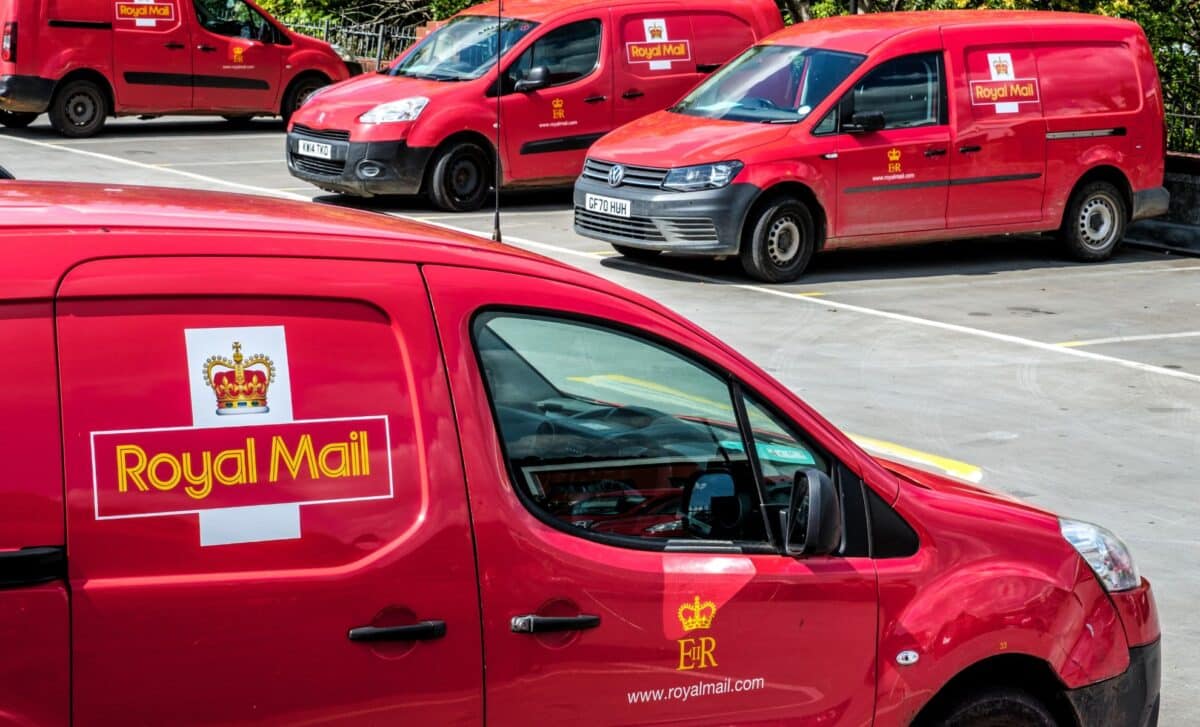
Royal Mail, now owned by Czech investor Daniel Křetínský’s International Distributions Services, has come under repeated scrutiny for failing to meet delivery targets. Ofcom recently fined the company £21 million for performance failings, on top of a £10.5 million penalty the year before.
Ofcom is expected to publish its next findings and a possible formal proposal by March 2026. Until then, the consultation remains open, as the regulator weighs cost, fairness, and operational feasibility.