
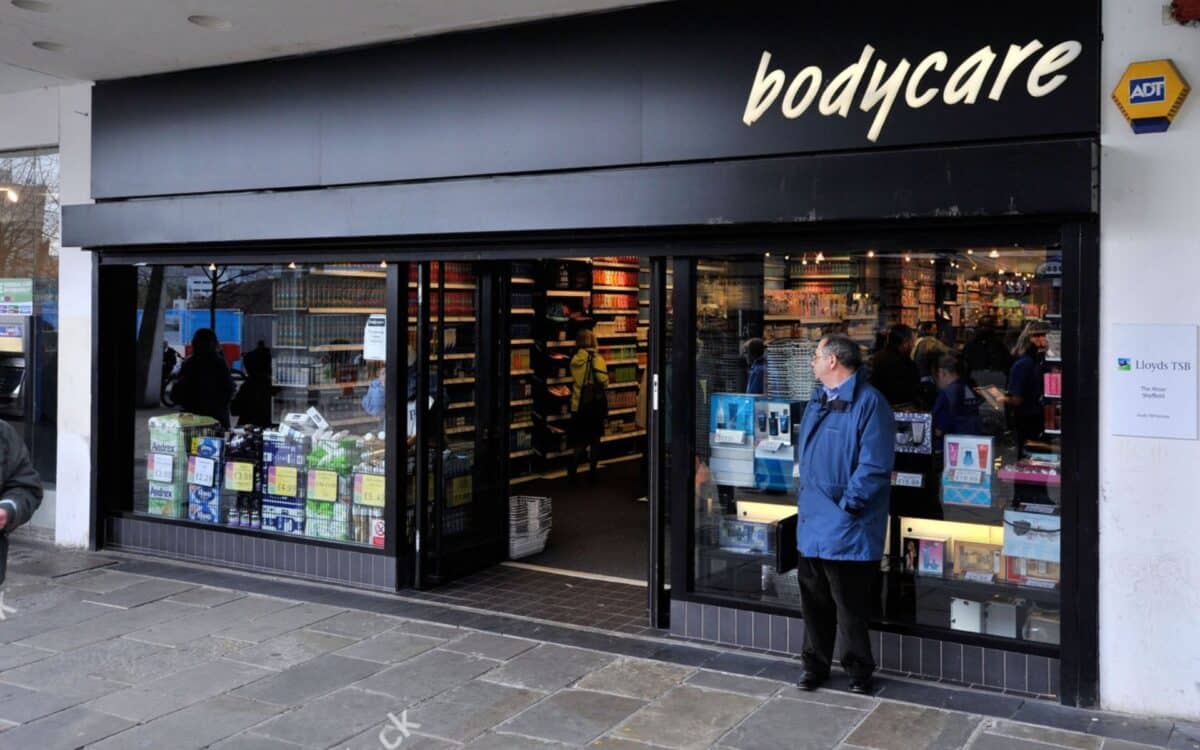
High street health and beauty chain Bodycare has gone into administration, forcing the immediate closure of 32 UK stores and resulting in the redundancy of 450 staff. The company, which operates 147 outlets and employs around 1,500 people, confirmed that the majority of its shops will continue trading while various options are being explored.
According to a report by the BBC, Bodycare has struggled to absorb rising operating costs and declining consumer spending, prompting the need for immediate restructuring. The announcement adds to a growing list of retailers impacted by economic pressures affecting the UK high street over the past year.
32 Stores Shut Down With Immediate Effect
The business, which was founded in Lancashire in 1970, has been a staple of the UK high street for over 50 years. Known for its no-nonsense warehouse-style displays, Bodycare operates 147 physical stores and employs around 1,500 people.
Now, 32 locations have been shuttered without delay. These include major towns and cities across England, Scotland and Wales:
Beverley, Cameron Toll, Cannock, Clydebank, Cramlington, Croydon, Darwen, Dumfries, Edinburgh, Erdington, Falkirk, Hemel Hempstead, Kirkcaldy, Loughborough, Lytham St Annes, Macclesfield, Maidstone, Morecambe, Newport, Northfield, Paisley, Parkhead, Perth, Port Talbot, Rhyl, Royton, Scunthorpe, Stourbridge, Tamworth, West Bromwich, Wood Green, Wrexham.
The closures represent not just a business decision but a major blow to hundreds of local high streets—and the communities that rely on them for affordable personal care goods.
Rising Costs, Vanishing Margins
According to Nick Holloway, managing director at Interpath and joint administrator for Bodycare:
These remain challenging times for high street retailers as rising costs and reduced consumer spending continue to weigh heavily on trading.
He added:
Unfortunately for Bodycare, which was also contending with a significant funding gap and increasing creditor pressure, these challenges proved too difficult to overcome.
Holloway’s comments reflect broader issues hammering brick-and-mortar chains: rising rents, increased labor costs, and intensified competition—all while consumer budgets are being stretched thin.
A High Street Model That Stopped Evolving
Bodycare had long operated on a formula that once made sense: floor-to-ceiling shelves, bright fluorescent lighting, and a utilitarian presentation of goods—from giant tubs of moisturiser to pyramids of washing powder and stacks of toilet paper in shop windows.
Retail analyst Catherine Shuttleworth pointed out how vulnerable this value segment of retail has become:
Its administration highlights how tough the value sector of retail is finding both trading conditions and the cost of operating on UK high streets.
Competition is fierce for every pound spent by shoppers on health and beauty products – she added.
And that competition is strong—from Boots to B&M.
She also noted that Bodycare struggled to respond to the shift toward online shopping and social media-led beauty trends, with younger shoppers increasingly turning to TikTok for product inspiration.
Bodycare’s Limited Digital Transition
Despite its large physical footprint, Bodycare failed to develop a robust online presence. The business lagged behind in a market where omnichannel strategies are now essential for survival.
Analyst Natalie Berg explained:
In today’s market, standing still is falling behind. You have to continuously evolve if you want to stay relevant to your customers.
That failure to evolve has put even heritage names like Bodycare in a precarious position. Its operating model, based heavily on in-store promotions and bulk discounts, lost traction as convenience and delivery gained priority.
A Sector Under Siege
Bodycare’s collapse comes shortly after Poundland narrowly avoided administration, and amid ongoing restructuring at River Island, which announced it would shut 33 stores to cope with multi-million pound losses.
Elsewhere, US-owned accessories retailer Claire’s filed for bankruptcy before being rescued by a new buyer—highlighting how even global brands are vulnerable to the same pressures: rising supply chain costs, changing shopping behavior, and increased shoplifting.
Retail crime is now a factor many stores must budget for. Combined with inflation and falling footfall, it’s one more weight dragging retailers down.