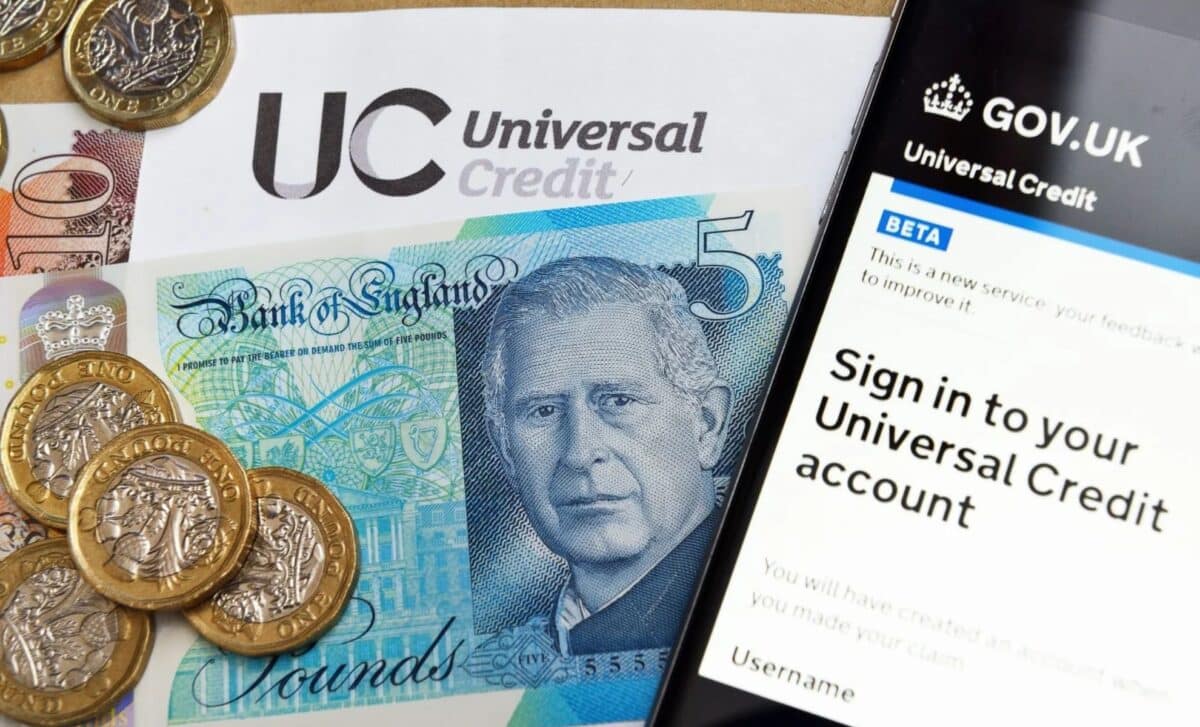
The number of people claiming Universal Credit and disability benefits is projected to rise sharply by the end of the decade, with combined claims expected to reach 12.4 million by 2031. New forecasts also put the UK’s total welfare bill at £431.3 billion by 2031, an increase of £78.6 billion compared with this year.
Universal Credit and PIP Spending Could Reach £144.2 Billion
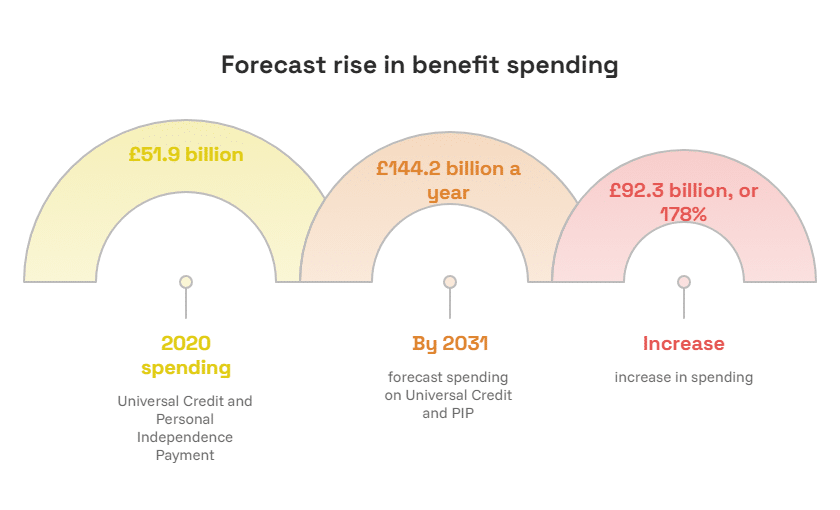
Spending on Universal Credit and Personal Independence Payment (PIP) is forecast to rise from £51.9 billion in 2020 to £144.2 billion a year by 2031. That represents an increase of £92.3 billion, or 178%.
Together, the two benefits would account for around a third of the projected UK welfare bill. Universal Credit experienced its sharpest expansion during the pandemic, while PIP is now forecast to account for much of the future rise in spending.
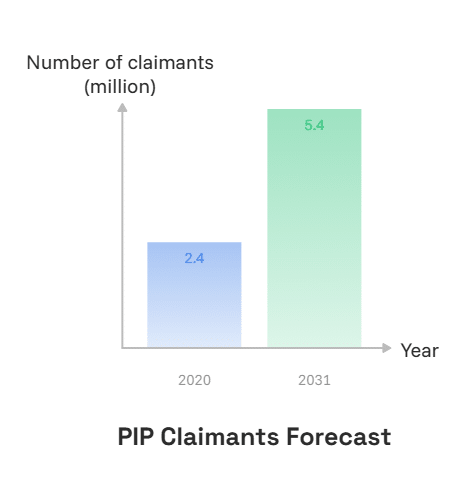
PIP Claims Could Reach 5.4 Million
The number of people receiving PIP is forecast to rise by 1.2 million over the next five years, reaching 5.4 million by 2031. That compares with around 2.4 million claimants in 2020.
Annual spending on PIP is projected to rise from £31.6 billion currently to around £47 billion by 2031.
Universal Credit Claims Could Reach 7 Million
Universal Credit claims are forecast to reach 7 million by 2031, with annual spending projected to reach £97.2 billion. The number of unemployed people receiving Universal Credit is also projected to reach 4 million.
That would represent more than half of all Universal Credit claimants, compared with 21% in 2020.
Timms Review Does Not Bring Immediate PIP Cuts
The forecasts were published on the same day the Government released its year-long Timms Review into PIP. The review did not produce immediate savings from changes to eligibility.
Instead, ministers agreed to fast-track claims involving serious conditions and reduce reassessments. Further decisions on eligibility are expected to be addressed in a White Paper next year.
The Institute for Fiscal Studies warned that making PIP easier to claim in the short term could increase the number of recipients and therefore raise spending.
Economists Question the Future Cost of Welfare
Dr Valetin Boboc, chief economist at the Institute of Economic Affairs, criticised the decision to rule out means-testing. He said: “Successive governments have failed to get welfare spending under control. Reforming welfare without addressing its affordability is a missed opportunity.”
The Government’s approach has also drawn criticism from the Conservatives. Shadow Work and Pensions Secretary Helen Whately described the review as a “complete farce” and argued that it could lead to higher spending and fewer checks.
The latest projections highlight the scale of the financial pressure expected from Universal Credit and PIP over the coming years, with combined annual spending forecast to reach £144.2 billion by 2031.