

Millions of British homeowners face higher mortgage payments in 2027 as the Bank of England signals that further interest rate increases may be needed to contain inflation, potentially pushing borrowing costs toward 5%.
Bank of England Signals More Rate Hikes Ahead
The warning comes from Huw Pill, the Bank of England’s chief economist, who expects further monetary tightening in December and early 2027.
According to The Guardian, Pill believes the central bank has more work to do despite raising its benchmark interest rate from 3.75% to 4% earlier in November. That increase marked another step in the bank’s effort to bring inflation back to its 2% target.
Pill told the Financial Times: “My view would be, we will see evidence that motivates further rises,” adding that the central bank would “do what is necessary to get inflation back to 2% through time.”
Financial markets now expect UK interest rates to approach 5% in 2027, a forecast Pill described as “not outrageous.”
His comments have strengthened expectations of another quarter-point increase in December, although the Bank’s Monetary Policy Committee has yet to make that decision.
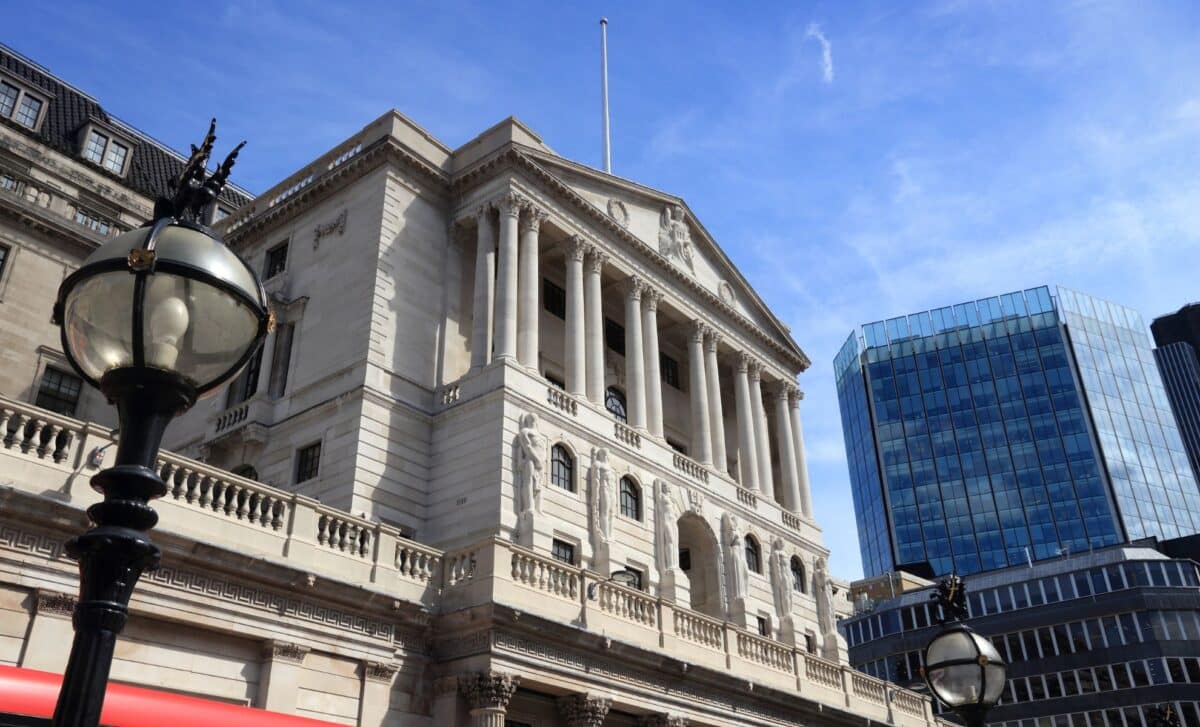
Why Inflation Could Reach 5% Next Spring
The prospect of sustained higher borrowing costs reflects growing concern about Britain’s inflation outlook.
Inflation is expected to climb to 5% in spring 2027, driven partly by elevated oil and natural gas prices linked to the US-Israeli conflict with Iran.
Pill considers a near-term resolution of the conflict, followed by a significant decline in energy prices, highly unlikely.
The economist is particularly concerned that expensive energy could trigger broader inflation through rising wages and business costs.
Workers facing higher household bills may demand larger pay increases. Employers could then pass those additional labor costs on to consumers, keeping prices elevated even if the initial energy shock begins to fade.
The Bank has not yet identified clear evidence of this cycle taking hold.
Pill said the absence of evidence was not evidence of absence.
“As we go into next year, we will begin to see some evidence, and it could play out in one direction or another – we’ll see.”
He also acknowledged concerns about the timing of previous monetary policy decisions, saying: “In my view, we waited too long.”
Stronger Economic Growth Complicates the Rate Outlook
Britain’s recent economic performance has given policymakers another reason to consider tighter monetary policy.
The UK economy expanded by 0.7% in the third quarter of 2026, placing its annual growth rate behind only the United States among G7 economies.
Some Bank of England officials believe this resilience has strengthened workers’ bargaining power, increasing the risk that wage demands will sustain inflation.
Yet the economy remains uneven.
Manufacturing and construction face mounting pressure from expensive financing, with the construction sector contracting for much of 2026.
Further interest rate increases could deepen those difficulties by raising borrowing costs for businesses and discouraging investment.
Millions of Households Face Higher Bills in 2027
For homeowners, the consequences could become particularly visible next year.
An estimated 2.3 million UK homeowners will need to refinance their mortgages in 2027, potentially moving from cheaper existing deals to loans carrying substantially higher interest rates.
The pressure will extend beyond mortgage payments.
The household energy price cap is expected to approach £2,000 annually for a typical home, while council tax bills are projected to increase by nearly 5% on average.
Together, those increases could squeeze household budgets just as borrowing becomes more expensive.
City analysts increasingly regard a December interest rate increase as highly likely, although policymakers remain divided over how much additional tightening the British economy can absorb.