
Millions of households could face higher gas bills as more homes leave the gas network and switch to heat pumps, according to energy regulator Ofgem.
Why Gas Bills Could Rise
Ofgem estimates that around seven million households could disconnect from the gas network by 2034-35 as households move towards low-carbon heating.
Under the current system, around three-quarters of gas disconnection costs are paid by energy network operators. Those costs are then recovered through charges on gas bills paid by households that remain connected.
At present, the cost adds around £1 a year to the average gas bill. Ofgem warns that this could become a much larger cost as more households leave the gas network.
Bills Could Reach £943 A Year
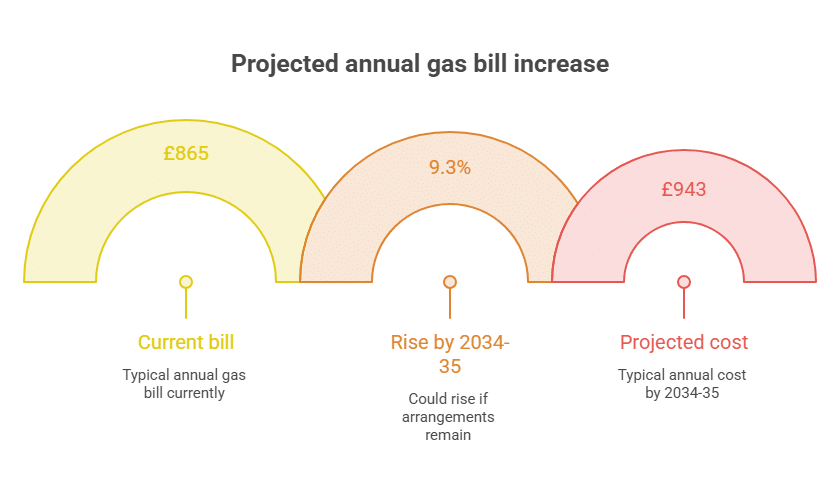
The typical annual gas bill is currently around £865. Ofgem estimates that the bill could rise by as much as 9.3% by 2034-35 if the current arrangements remain in place. That would take the typical annual cost to around £943, an increase of roughly £78.
Ofgem said that, without government intervention, most costs linked to disconnecting households from the gas network would be recovered through charges paid by the remaining gas consumers.
Government Wants More Heat Pumps Installed
The Government is encouraging households to replace gas boilers with heat pumps as part of its net zero plans. Its target is to reach 450,000 heat pump installations a year by 2030.
Heat pumps run on electricity and use heat from the surrounding environment to warm homes. Ofgem describes the technology as a low-carbon alternative to conventional gas heating.
The initial installation cost can be high, though. The average cost is around £5,408, according to the figures cited in the report.
Grants Can Help With Installation Costs
The Government’s Boiler Upgrade Scheme provides grants to help households replace certain fossil-fuel heating systems with heat pumps. Eligible households can receive grants of up to £9,000, depending on the type of heat pump installed.
The support is intended to reduce the upfront cost of switching from a gas boiler. Critics say the households most able to afford the technology are more likely to make the switch, while people who remain on the gas network could face higher charges.
Energy Industry Raises Fairness Concerns
Mike Foster, from the Energy and Utilities Alliance, questioned how the costs of gas network disconnections should be shared. He argued that households remaining on the network could end up paying for disconnections carried out for people who can afford to install heat pumps.
The concern is particularly focused on lower-income households that may not have the funds to replace their existing heating system.
Government Says The Transition Must Be Fair
A spokesperson for the Department for Energy Security and Net Zero said the Government was working with the energy sector as more households move towards low-carbon heating.
The department said the transition should be carried out in a fair and affordable way. The issue is likely to become more prominent as the number of homes leaving the gas network grows.
For households that continue using gas, the question is how the cost of running and eventually reducing the network will be shared as the UK moves towards lower-carbon heating.