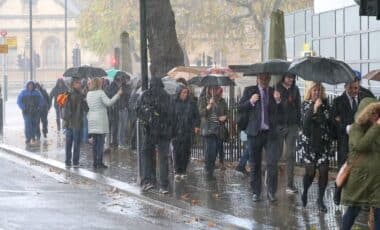
Thunderstorms and heavy showers are spreading across large parts of the UK, bringing a risk of flash flooding, difficult driving conditions and travel disruption after weeks of unusually hot and dry weather. Yellow weather warnings have been issued as low pressure replaces the high-pressure systems that dominated much of the summer.
The change is bringing noticeably cooler conditions, but the rainfall is not expected to reverse the drought affecting much of England and Wales. Very dry, compacted ground may also make some areas more vulnerable to surface flooding because intense rain can run off rather than soaking quickly into the soil.
Heavy Rain Raises Flooding and Travel Risks
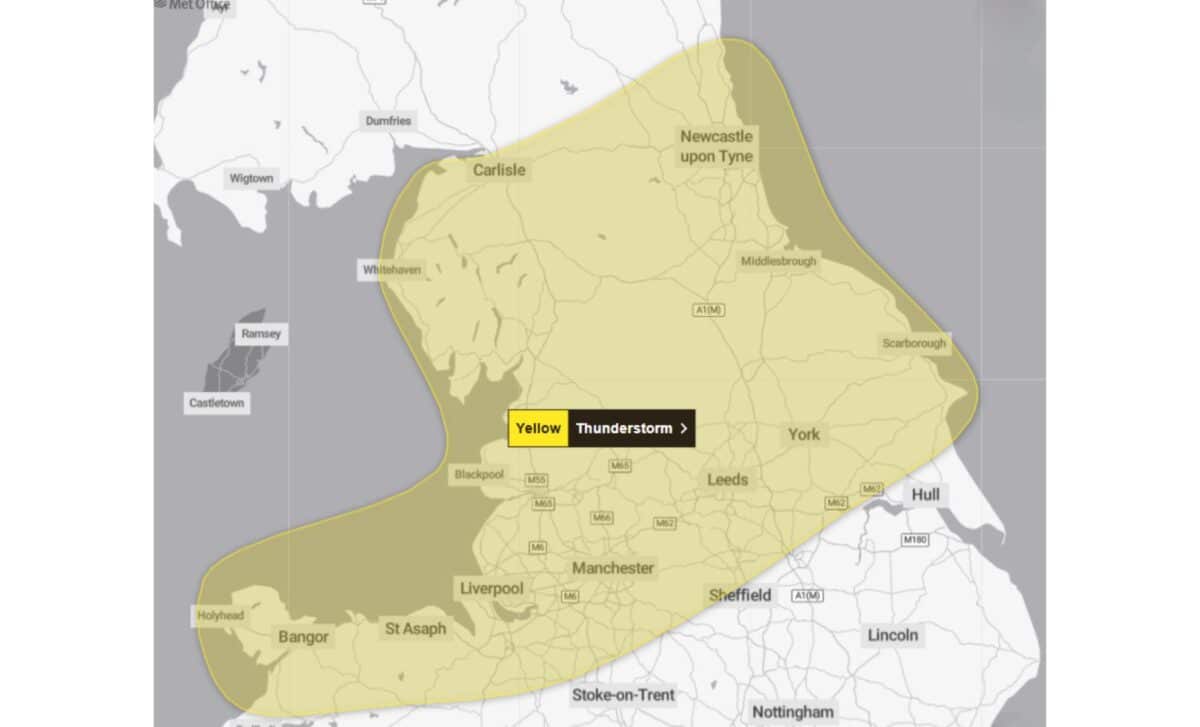
A Met Office yellow thunderstorm warning remained in force across northern England and north Wales until 10:00 BST on Thursday, with showers moving south and east during the day towards the Midlands, East Anglia and southern England.
According to BBC Weather, between 15mm and 20mm of rain could fall within an hour in the warning area, while totals of 30mm to 50mm were possible over six hours. Lightning and hail were also identified as hazards, particularly where thunderstorms developed more strongly.
Earlier warnings covered Northern Ireland and parts of eastern Scotland, including Aberdeen. Northern Ireland could see as much as 30mm of rain within a few hours, while parts of northern England faced the possibility of up to 50mm in six hours.
The return of rain after a prolonged dry spell is creating another problem on the roads. RAC road safety spokesman Rod Dennis said deposits of oil, fuel and rubber accumulated during dry weather could mix with light rain, leaving road surfaces greasy and increasing the risk of skidding.
Drivers have been advised to reduce their speed and leave more space between vehicles. Heavier bursts could also produce localised flooding, particularly where hard ground prevents water from draining away efficiently.
Rainfall Will Not Bring an Immediate End to the Drought
Despite the wetter conditions, forecasters and water authorities say much more rainfall will be required before the drought eases. England and Wales have experienced prolonged rainfall deficits, while large areas remain subject to water restrictions.
According to Sky News, all of Wales and nearly three-quarters of England were in drought following the hot, dry summer. More than 27 million people in England were also affected by hosepipe restrictions after Wessex Water introduced a ban for 1.4 million customers in Bath, Somerset, Dorset and Wiltshire.
The Environment Agency has said sustained and significant rainfall would be needed to improve water supplies. Short, intense downpours can cause flooding without making a substantial difference to reservoirs, rivers or deeply dried soils.
The contrast follows an exceptionally dry summer. According to the BBC, July 2026 was the driest July on record for England and Wales, while southern England recorded its driest month in records dating back to 1836.
Temperatures are also falling as northerly winds develop. Thursday was expected to bring highs of 13C to 23C, making it the first day since 29 June when nowhere in the UK was forecast to reach 25C. Friday was expected to be cooler still, with overnight temperatures falling into single figures across many areas and as low as 3C or 4C in parts of Scotland and northern England. The weather is expected to become somewhat drier over the weekend as high pressure begins to rebuild, although the underlying drought conditions will remain.