

The Department for Work and Pensions (DWP) has published details on the 12 medical conditions most likely to receive the maximum Personal Independence Payment (PIP) award length, typically five years or longer. The move offers clarity for claimants seeking long-term support for disabilities, chronic illnesses, or learning difficulties.
How PIP Works
PIP is designed to help people with long-term health conditions manage everyday tasks and maintain independence at home. It is split into two components: daily living and mobility.
The daily living component covers additional costs related to personal care. Claimants can receive a standard rate of £76.55 per week or an enhanced rate of £114.80 per week. The mobility component helps with challenges of moving around, with a base rate of £30.20 per week and an enhanced rate of £80.10 per week. Claimants qualifying for the enhanced daily living rate and a portion of the mobility support can see weekly totals reach £187, equivalent to £748 per month.
Award lengths vary depending on the claimant’s condition, ranging from nine months to up to ten years, though DWP data typically records awards of five years or longer. Decisions on award lengths are based on the impact of a claimant’s condition on their daily life and independence.
Long-Term Awards
Many claimants receive long-term awards, which are subject to periodic reviews to ensure the level of support remains appropriate. Some awards are limited to up to two years, particularly when a condition may reasonably improve.
According to DWP data, the 12 medical conditions most likely to result in five-year-or-longer awards include conditions affecting vision, neurological, hearing, musculoskeletal, respiratory, skin, endocrine, cardiovascular, psychiatric, gastrointestinal, and malignant diseases. Out of 3,926,015 claimants across these 12 conditions, 1,804,025 have been receiving PIP for five years or longer.
Conditions With the Highest Long-Term Awards
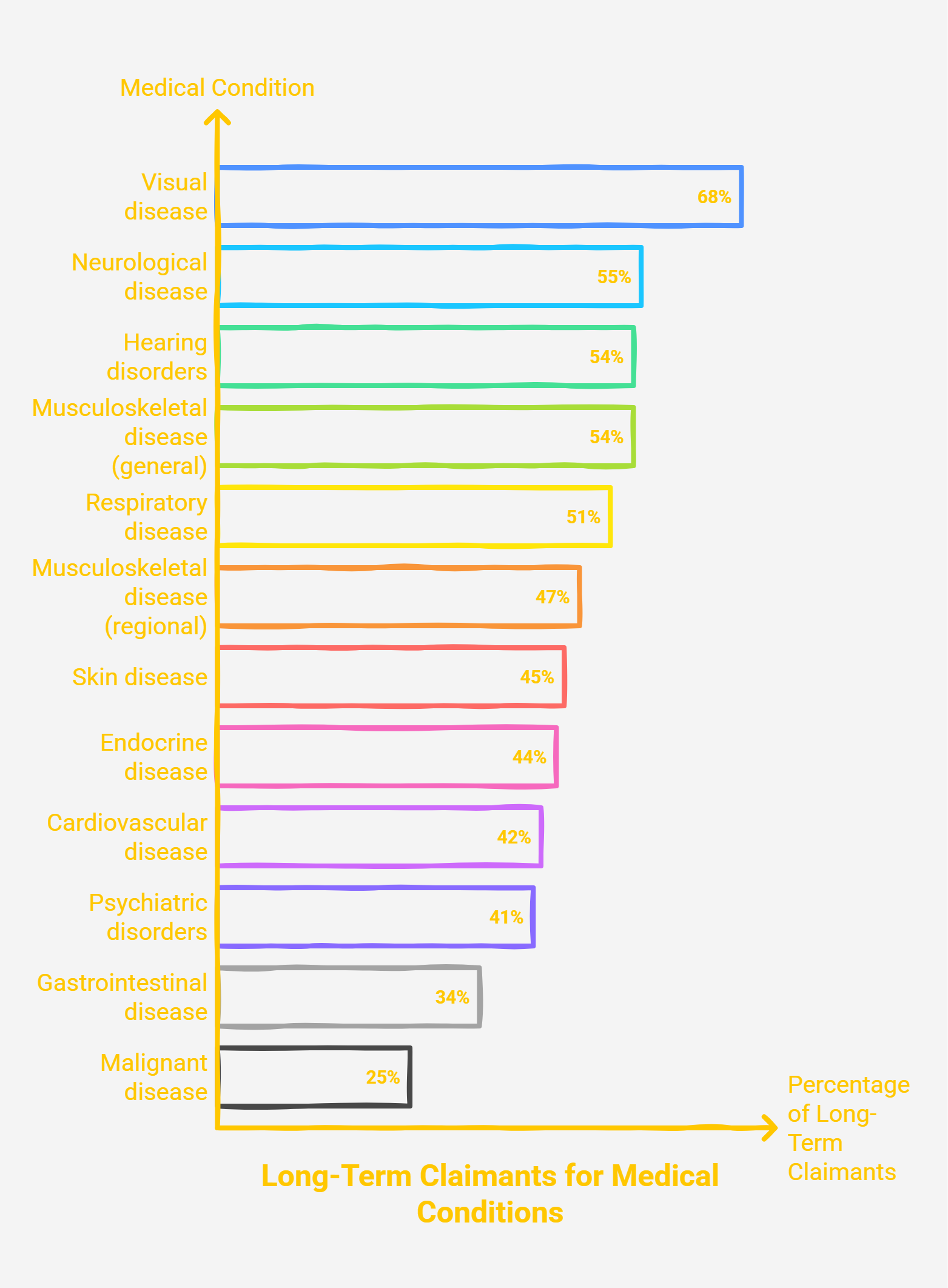
Visual disease tops the list, with 68% of claimants receiving long-term support. Neurological diseases follow with 55%, hearing disorders 54%, and general musculoskeletal diseases 54%. Respiratory conditions account for 51%, while regional musculoskeletal disease is at 47%. Skin conditions stand at 45%, endocrine disorders 44%, cardiovascular 42%, psychiatric disorders 41%, gastrointestinal diseases 34%, and malignant disease 25%.
The data underscores that long-term conditions with persistent effects on daily life are most likely to qualify for extended PIP awards.
Planning and Support
For prospective claimants or those reviewing existing PIP, understanding which conditions are more likely to qualify for long-term awards can help with financial planning and accessing support services. The DWP advises claimants that awards are tailored to individual circumstances and are reviewed regularly to ensure that support remains appropriate.
This update provides much-needed clarity for claimants navigating the PIP system and highlights the conditions that consistently receive long-term support.