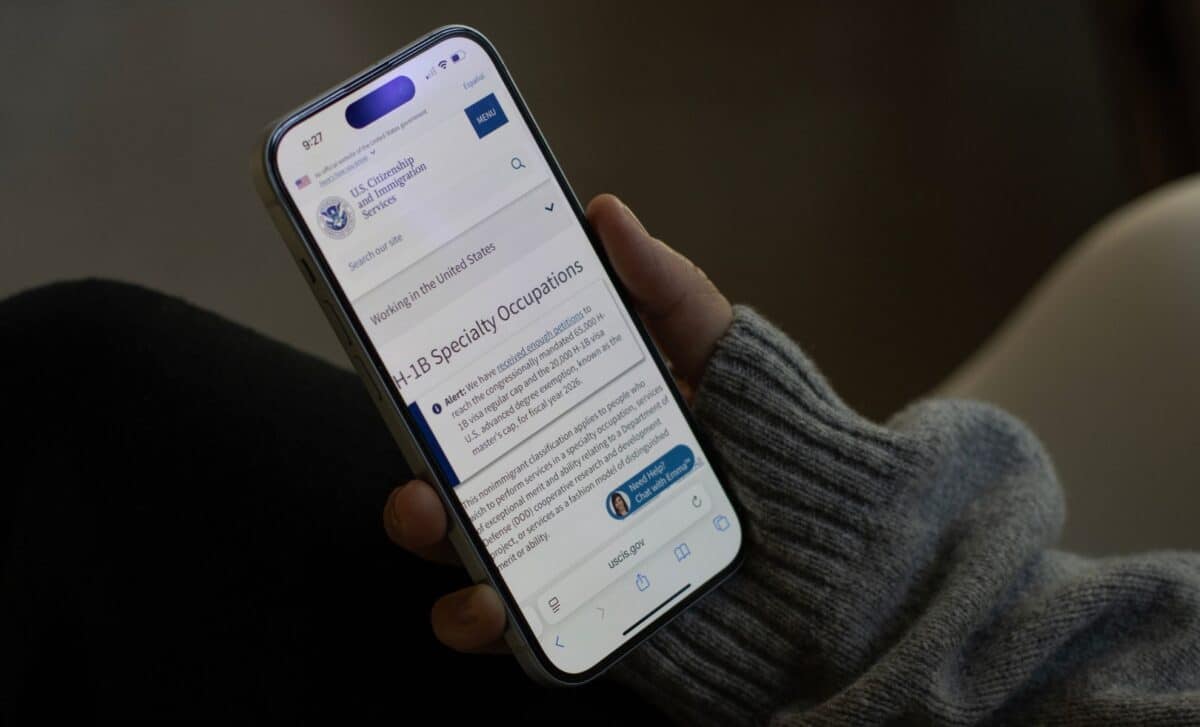
The Trump administration is advancing a proposal that would eliminate the 60-day grace period allowing many employment-based visa holders to remain in the United States after losing their jobs. The change would affect H-1B workers as well as people holding several other employment visas, reducing the time available to find a new sponsor, change immigration status or prepare to leave the country.
The Department of Homeland Security sent the proposal to the White House for regulatory review on Thursday, according to Newsweek, citing a federal government filing. The measure has not yet been published in full, and the existing 60-day grace period remains in force while the rulemaking process continues. If approved for publication, the proposal would appear in the Federal Register and be opened for public comment before any final rule is adopted.
The Current Grace Period Gives Workers Time After Layoffs
The 60-day period has been available since 2017 and applies to several categories of employment-based visa holders, including people on H-1B, H-1B1, L-1, O-1, TN, E-1, E-2 and E-3 visas. It was introduced during the final days of the Obama administration as part of broader changes intended to provide more flexibility to highly skilled foreign workers.
Under the current system, a worker who loses a job can remain in the United States for up to 60 days while looking for another employer, seeking another immigration status or arranging to leave. For H-1B holders, finding a new position is only one part of that process. A prospective employer must also agree to sponsor the worker and submit the required immigration filings.
Removing the grace period would shorten the amount of time available to complete those steps. According to Newsweek, workers could therefore face greater pressure to secure new sponsorship, obtain another legal status or leave the United States before falling out of status.
The number of people potentially affected is substantial. According to FWD.us, there are as many as 730,000 H-1B holders living in the United States, along with about 550,000 dependents. The organization estimates that H-1B holders and their spouses contribute $86 billion annually to the U.S. economy and pay about $24 billion in federal and payroll taxes, as well as $11 billion in state and local taxes.
H-1B Workers Already Face a Restrictive Employment System
The H-1B program is primarily used for workers in specialized occupations that generally require at least a bachelor’s degree or equivalent qualifications. In 2023, 65 percent of H-1B visas were issued for computer-related jobs, while 48 percent of sponsoring employers were in professional, scientific and technical services, according to FWD.us.
Other employers using the program include manufacturers, educational institutions, healthcare organizations and research institutions. The median wage for H-1B workers was $118,000 in 2023. More than a quarter of new H-1Bs that year went to people with a master’s, doctorate or professional degree.
The program also operates under a numerical cap. Federal law allows 65,000 new H-1B visas annually, with another 20,000 available to people holding advanced degrees from U.S. colleges and universities. For fiscal year 2025, about 442,000 people registered for the H-1B lottery for the available pool of 85,000 visas.
The proposed end of the 60-day grace period is still under review, and its full terms have not been released. Until the administration completes the regulatory process and adopts a final rule, laid-off workers covered by the current regulation can continue to use the existing grace period.