
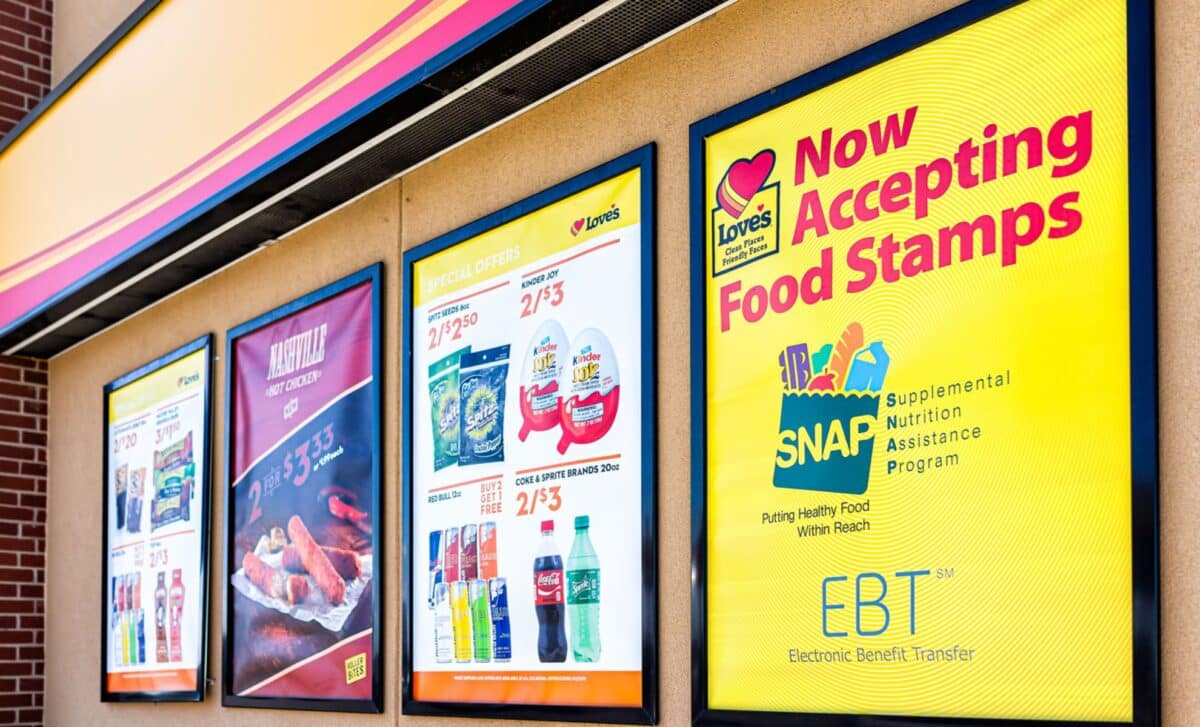
Federal changes to the Supplemental Nutrition Assistance Program (SNAP) will require many states to pay a share of food benefits beginning in 2027. Officials and advocacy groups say the new financial burden could reshape how states administer the nation’s largest food assistance program.
The changes stem from the One Big Beautiful Bill Act, which introduced new eligibility rules, work requirements, and a cost-sharing system tied to state payment error rates. According to Stateline, many state leaders and anti-hunger organizations are now urging Congress and the Trump administration to delay the policy’s implementation.
The new funding model arrives after more than 4 million Americans have already lost SNAP benefits under earlier provisions of the law. At the same time, food banks and community organizations are reporting increased demand as households lose access to assistance.
States Prepare for New Financial Obligations Tied to Payment Error Rates
Beginning in the fall of 2027, states with a SNAP payment error rate above 6% will be required to finance between 5% and 15% of their benefit payments. The federal government previously covered those costs. According to the U.S. Department of Agriculture, states collectively made $10.1 billion in improper SNAP payments during fiscal year 2025, although the agency reported that overall error rates improved slightly from the previous year.
The payment error rate measures both overpayments and underpayments identified through a sample of SNAP cases. It does not measure fraud. Agriculture Secretary Brooke Rollins said the latest figures demonstrate that “state accountability is severely lacking in SNAP.”
According to the Center on Budget and Policy Priorities (CBPP), as many as 36 states are expected to face the new cost-sharing requirement. Nearly half could owe at least $100 million annually. The organization estimates that Texas could pay about $725 million each year, New York more than $1 billion, and Michigan roughly $300 million based on current error rates.
New Jersey Human Services Commissioner Stephen Cha argued that the measurement system is “fundamentally flawed.” Although the state reduced its error rate from 14.33% to 6.86%, it could still face an estimated $100 million annual obligation. Cha called for the changes to be delayed or eliminated, saying the policy would increase financial and administrative pressure on state and county governments.
Officials and Advocates Warn of Effects on Services and Program Access
County and state organizations say the additional costs could extend beyond food assistance budgets. In states where counties administer SNAP, the National Association of Counties warned that absorbing the new expenses could reduce resources available for public safety, emergency management, and infrastructure.
According to Stateline, the National Conference of State Legislatures (NCSL) said states remain committed to improving payment accuracy but believe additional time is needed to implement meaningful improvements before the new funding requirements take effect.
A recent survey conducted by the Urban Institute and the American Public Human Services Association found that many SNAP agencies are increasing investments in staffing, technology, and automation to improve payment accuracy. The survey also reported that some states expect tradeoffs, including slower processing times, reduced staffing, or narrower eligibility policies. Eleven percent of responding states identified complete withdrawal from SNAP as a potential risk.
Advocates also argue that the current focus on payment error rates may create unintended consequences. Gina Plata-Nino of the Food Research & Action Center said states face penalties for payment errors but not for wrongly denying benefits, creating an incentive to slow or restrict approvals. Similar concerns have been raised in states including Massachusetts and Alabama, where officials and advocacy groups say staffing shortages and rising administrative demands are complicating efforts to maintain access while meeting federal performance standards.