The recall began on September 25, 2026, and received a Class II classification on October 2. The affected beverages were distributed across 37 states, raising questions about labeling accuracy and the potential health effects of ingredients that consumers may not know they are drinking.
Four Gatorade Varieties Affected by Nationwide Recall
According to the FDA‘s enforcement report, PepsiCo initiated the voluntary recall of 122,021 cases of Gatorade after discovering that certain products did not declare the presence of Yellow No. 5 and/or Yellow No. 6 on their labels.
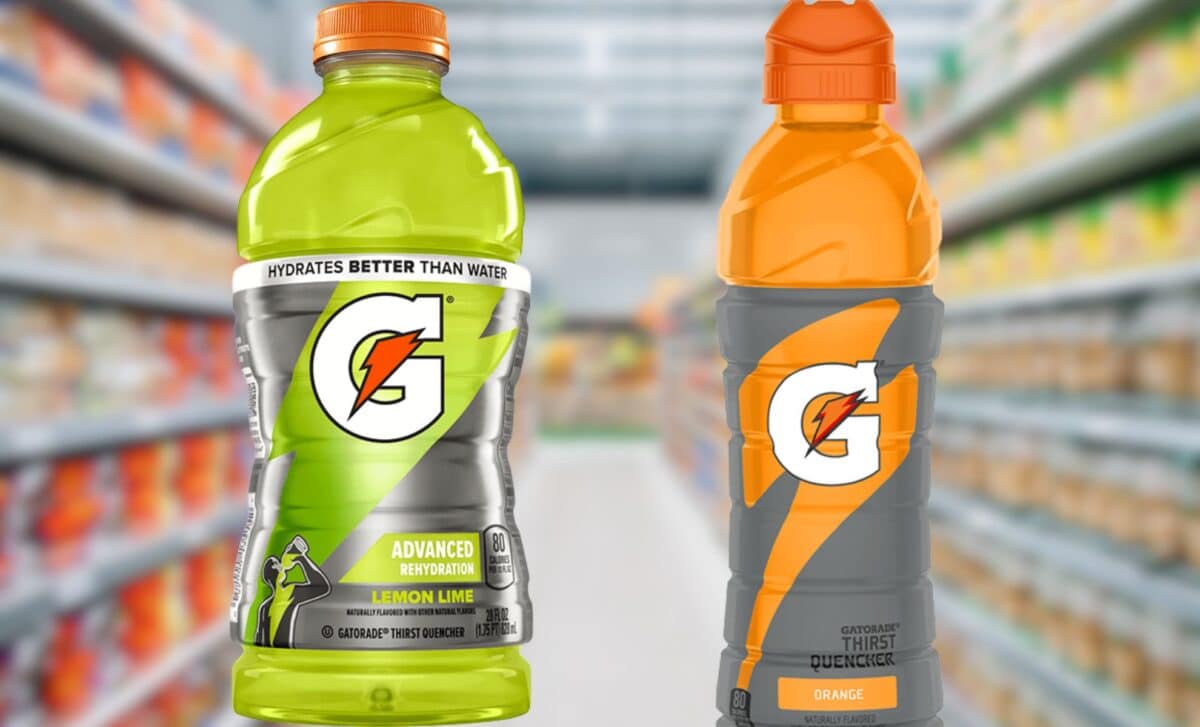
The affected products include Gatorade Lemon Lime, Gatorade Lemon Lime Zero, Gatorade Orange, and Gatorade Orange Zero. All four varieties were sold in 28-ounce bottles, with affected lot dates falling between April, May, and June 2027.
The FDA identified the recall under number H-0009-2027, with event identification number 99991. The agency’s records indicate that the recall remains ongoing, with no termination date reported.
Distribution extended across much of the country, including California, Texas, Florida, New York, Pennsylvania, Illinois, Georgia, Michigan, and Washington. Other affected states include Alaska, Hawaii, Arizona, Colorado, Nevada, Ohio, North Carolina, and Tennessee.
The full distribution list covers 37 states. Consumers can consult the FDA’s official recall database to review the affected lot codes and determine whether their bottles are included. PepsiCo, headquartered in Purchase, New York, is listed as the recalling company. The FDA’s record indicates that no press release was issued for this recall.
Why the FDA Classified the Gatorade Recall As Class II
The FDA classified the recall as Class II, a designation used when consuming or being exposed to a product may cause temporary or medically reversible adverse health consequences, or when the likelihood of serious health consequences is remote.
This classification differs from a Class I recall, which involves a reasonable probability of serious adverse health consequences or death. Class III recalls concern products whose use or exposure is unlikely to cause adverse health consequences.
According to ABC News, the FDA noted that reactions associated with the undeclared dyes could include mild skin rashes or allergic-type asthma. Such reactions are uncommon among the general population but occur more frequently among individuals who experience allergic reactions to aspirin.
The labeling issue also concerns federal ingredient disclosure requirements. The FDA explains that food manufacturers generally must list ingredients on product packaging, with limited exemptions for certain substances.
Certified color additives, including FD&C Yellow No. 5 and FD&C Yellow No. 6, must be identified by name on food labels.
These additives are commonly used in processed foods and beverages to enhance color, correct natural variations, or compensate for color changes caused by light, air, moisture, and temperature. The recall record identifies the undeclared dyes as the reason for the action. As of the information provided, the FDA continues to list the recall as ongoing.