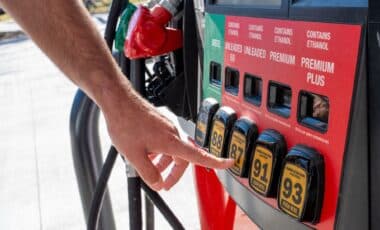
AAA studies found that 60 percent of American drivers would have difficulty paying for fuel if prices reached $4 per gallon at the pump. The threshold is viewed as a psychologically significant level that can influence consumer sentiment.
The national average reached $4.11 per gallon on Sunday, with several key midterm battleground states crossing the same mark. The situation has drawn attention because fuel prices remain closely connected to household expenses and election concerns.
Battleground States Face Higher Fuel Costs
According to AAA data reported by Newsweek, gas prices were above $4 per gallon in 28 states, including several competitive Senate battlegrounds. Michigan recorded an average price of $4.23, Maine reached $4.10, and New Hampshire stood at $4.06.
Michigan is an open Senate seat following the retirement of Democratic Senator Gary Peters, with the race considered one of the most competitive. In Maine, former state Senate President Troy Jackson became the Democratic Senate nominee for a race described as a must-win contest for the party.
New Hampshire is also facing an open Senate race after Democratic Senator Jeanne Shaheen announced her retirement. Donald Trump lost the state by fewer than 3 percentage points in the 2024 election.
Gas prices in other battleground states remained below the $4 level. Georgia recorded an average of $3.92 per gallon, while Ohio reached $3.89. In Georgia, Democratic Senator Jon Ossoff is seeking reelection in a state Trump carried in 2024, while Democrats are targeting Ohio as a Republican-held seat that could become competitive.
California had the highest average gas price in the country at $5.64 per gallon on Sunday, while Indiana had the lowest at $3.51 per gallon.
Tensions with Iran Drive Energy Market Disruption
The rise in fuel prices followed military actions involving the United States, Israel, and Iran. The United States and Israel launched airstrikes against Iran on February 28, targeting its military capabilities and its ability to develop a nuclear weapon.
Iran responded by blockading the Strait of Hormuz, a waterway through which one fifth of the world’s oil and gas transited before the conflict. The disruption pushed Brent crude oil, the global benchmark, above $100 per barrel.
The average price at the pump increased from $2.98 per gallon before the conflict. Gasoline prices crossed the $4 mark for the first time on March 31, just over a month after the start of the Iran war.
Prices later reached a four-year high of $4.56 per gallon in early May before declining as hopes grew that an agreement between Iran and the United States could reopen the waterway and allow oil tankers trapped in the Persian Gulf to move.
Shipping Routes Remain a Focus for Energy Markets
Fuel prices declined after Iran and the United States signed a memorandum of understanding on June 17, but prices began rising again after Tehran resumed attacks on ships in the Strait of Hormuz, leading to a U.S. military response.
The energy market situation has also been affected by concerns over possible Houthi attacks in the Bab el-Mandeb Strait, another major route for maritime oil shipments.
Taylor Rogers, a White House spokesperson, said this week that as the U.S. military reduces Iran’s ability to attack commercial vessels and disrupt energy flows through the Strait of Hormuz, “oil and gas prices will plummet back to pre-conflict levels.”
The latest fuel price data comes as the administration faces political pressure ahead of the midterm elections, with gasoline costs remaining a visible issue for American drivers.