

New data from the Bureau of Labor Statistics (BLS) indicates that certain jobs exposed to artificial intelligence are beginning to decline, even as overall employment continues to grow. While the drop is small, the trend highlights early signs of AI’s impact on routine, desk-based occupations.
Jobs Most Exposed to AI
The BLS identified 18 occupations particularly affected by AI adoption in a 2024 report. These include customer service representatives, sales roles, administrative assistants, paralegals, legal secretaries, technical writers, graphic designers, broadcast announcers, interpreters and translators, and models.
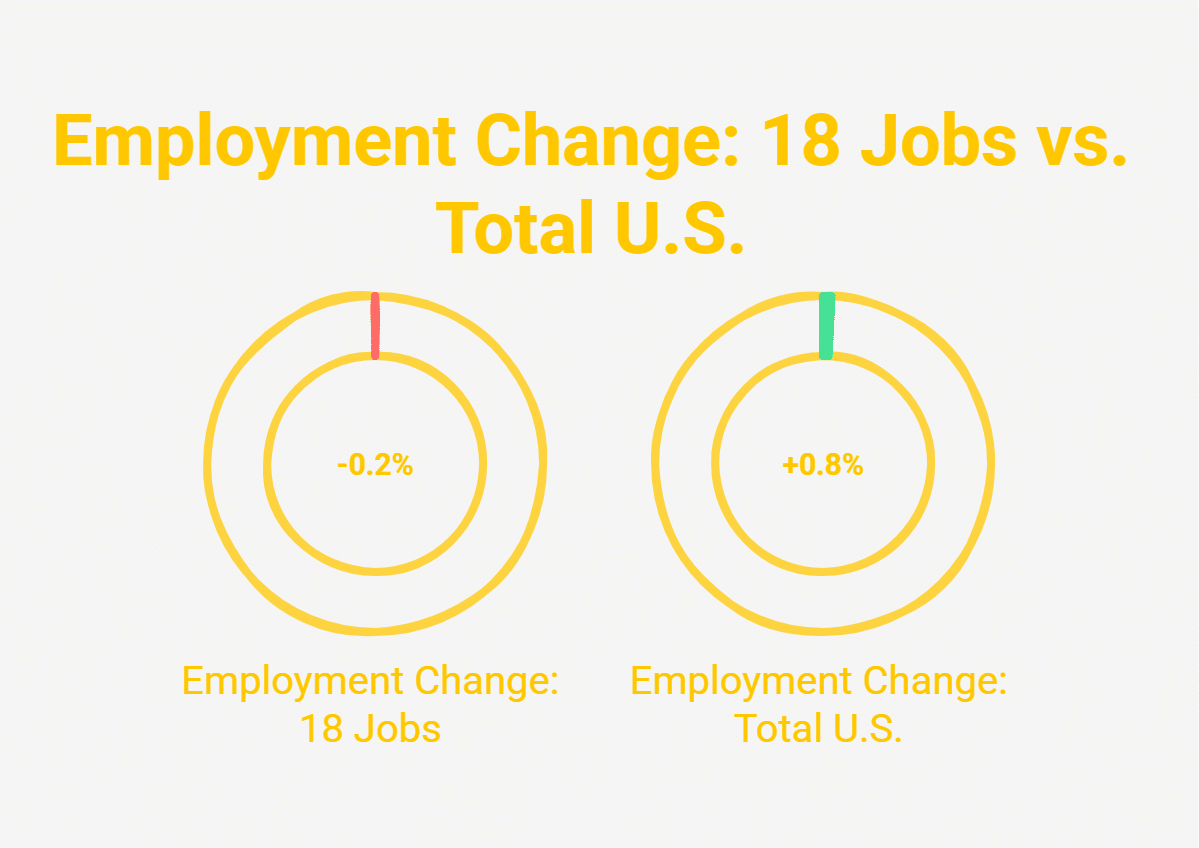
Between May 2024 and May 2025, the number of customer service representatives fell by 130,180, a 4.8% decline, marking the largest reduction among the AI-exposed occupations. Overall, employment across all 18 jobs dropped 0.2%, in contrast with a 0.8% increase in total U.S. employment during the same period.
Some roles, like medical secretaries and administrative assistants, saw growth, which may slightly mask the broader trend. When excluding these outliers, the average decline across AI-exposed occupations rises to 1.6%, signaling that AI is beginning to affect traditional service and administrative roles.
Early Signs of an AI-Driven Shift
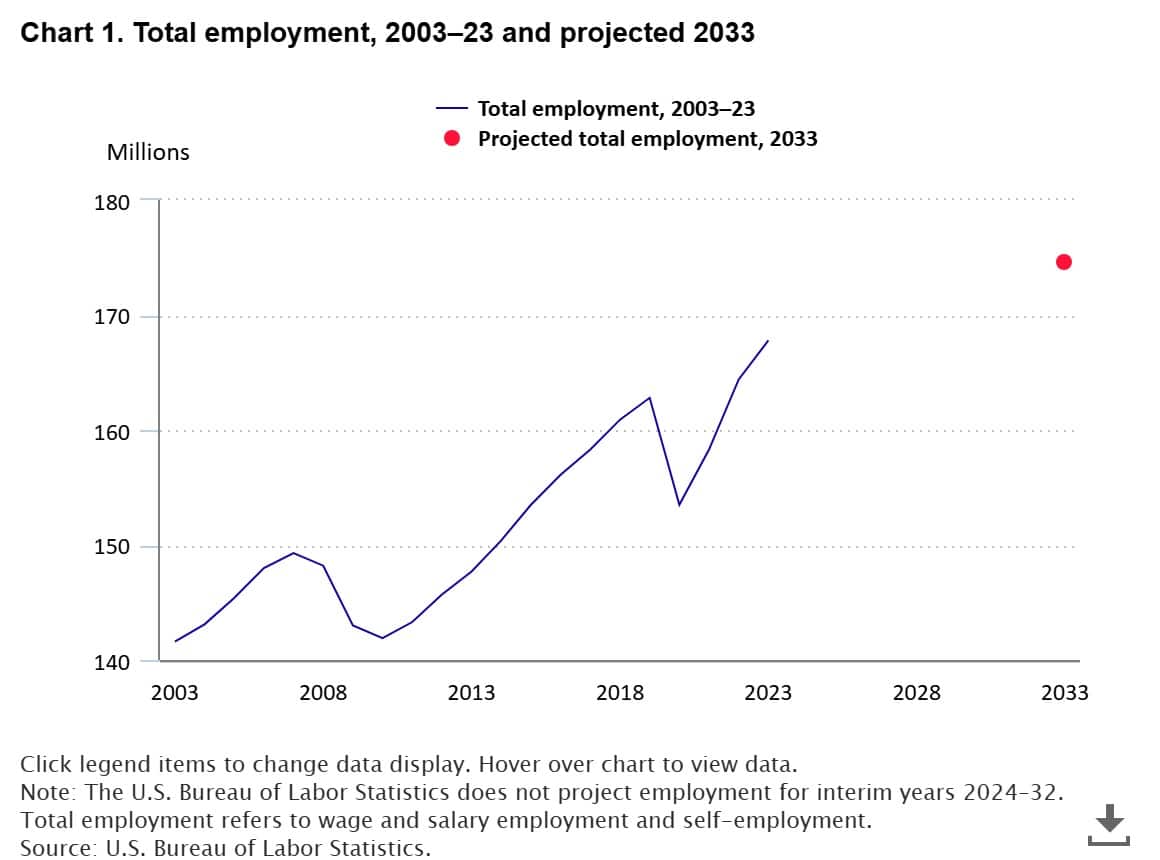
The 2014 BLS report projected mixed outcomes: some jobs would shrink due to AI automation, while others might benefit from new technology. Economists, including Ezra Klein, argue that AI could eventually create higher-quality positions to offset job losses.
However, the jobs created so far often involve managing or correcting AI outputs. For example, former graphic designers are now employed to fix errors in AI-generated designs, a role that differs significantly from the original creative work and may not provide the same level of stability or satisfaction.
Implications for Workers
These early changes suggest that routine, desk-based, and service-oriented roles are particularly vulnerable to AI. Workers in these fields may need to adapt, retrain, or transition to emerging roles as automation increases. While overall employment grows, the displacement in AI-exposed occupations underscores the need for policies, training programs, and workforce planning that prepare employees for a changing labor market.
The data also raises questions about the speed of AI adoption and whether the creation of meaningful new jobs will keep pace with the displacement of routine work. Even modest declines now could foreshadow broader, long-term trends in the workforce as AI technologies continue to expand.
What This Means Going Forward
Monitoring these early signs is crucial. Workers, employers, and policymakers must pay close attention to AI’s impact on employment and consider strategies to ensure the workforce can transition successfully into the AI-driven economy.