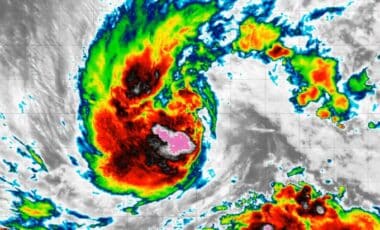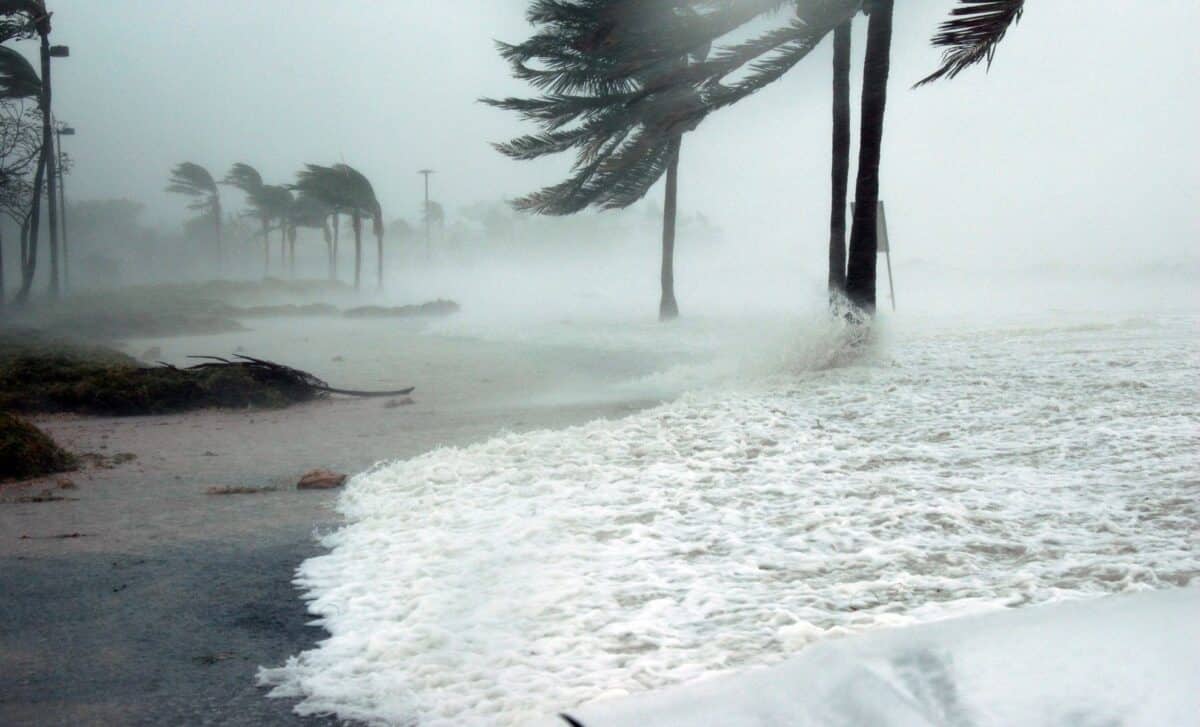
According to the National Hurricane Center (NHC), Isaias strengthened into a hurricane less than 20 hours after becoming a tropical storm. Its development comes more than four months into the Atlantic hurricane season, which has experienced limited hurricane activity under the influence of a strong El Niño.
The late arrival is particularly notable. The Atlantic’s first hurricane formed on October 8 in 1905, making this year’s October 7 formation just one day short of matching that 121-year-old record. Despite the delayed start, authorities are preparing for potentially life-threatening conditions across several coastal states.
Hurricane Isaias Intensifies As Forecasters Warn of Dangerous Coastal Flooding
As of 11:30 p.m. Eastern Time on Wednesday, Isaias was approximately 460 miles south-southwest of the mouth of the Mississippi River, carrying maximum sustained winds of 75 mph. The hurricane was moving east-northeast at 9 mph, according to the NHC.
Forecasters expect the system to strengthen further as it crosses unusually warm Gulf waters. The official forecast indicates that sustained winds could reach 110 mph by Friday afternoon, placing Isaias near the upper limit of Category 2 intensity.
Landfall is expected late Friday or early Saturday somewhere between the Mississippi coast and the Florida Panhandle. Its precise track and strength remain uncertain, with forecast models showing differences in both projected position and intensity.
Coastal flooding presents one of the most serious threats. According to the NHC, storm surge could produce 5 to 7 feet of inundation above ground level between Ocean Springs, Mississippi, and Indian Pass, Florida, including Mobile Bay.
Heavy rainfall poses another concern. AccuWeather forecasts 8 to 12 inches across portions of southern Alabama and Mississippi, while broader areas could receive 4 to 8 inches. The storm could also produce tornadoes as its outer rainbands move inland. NOAA‘s Storm Prediction Center has warned of an increasing tornado risk along the north-central Gulf Coast into early Saturday.
Emergency Declarations and Oil Shutdowns Reveal the Storm’s Wider Impact
Preparations have accelerated across the northern Gulf Coast as authorities respond to the approaching hurricane. Alabama Governor Kay Ivey declared a state of emergency covering 40 counties, while Florida Governor Ron DeSantis issued a similar declaration for 25 counties. Emergency personnel, rescue equipment and essential supplies are being positioned ahead of the storm.
The approaching hurricane has already disrupted energy production. According to the Associated Press, approximately 25% of offshore Gulf oil production, equivalent to 511,000 barrels per day, was temporarily halted Wednesday.
Eight of the region’s 371 manned oil platforms were evacuated. Major producers, including Shell and Chevron, also suspended operations at selected facilities. The Gulf accounts for nearly 15% of annual U.S. crude oil production, making interruptions potentially significant for energy markets.
Tourism has suffered disruptions as well. Organizers canceled Alabama’s National Shrimp Festival in Gulf Shores, an event that attracted an estimated 325,000 visitors last year. For coastal communities, immediate concerns remain more practical. Officials are urging residents to prepare emergency supplies, monitor evacuation instructions and remain alert to changing forecasts.
Isaias demonstrates that a quiet hurricane season can still produce a dangerous storm, particularly when favorable ocean conditions allow rapid intensification close to populated coastlines.