
For many recent graduates, moving home has become a practical response to a slower hiring environment. Lower living costs can provide more time to search for work that matches their qualifications instead of accepting the first available position. Researchers also point to evolving relationships between parents and adult children, which appear to have made returning home a more accepted choice than in previous decades.
The experiences of graduates interviewed by The New York Times illustrate how economic conditions and changing social attitudes are shaping early careers. While some described tensions associated with moving back into their childhood homes, most viewed the arrangement as a temporary step while looking for stable employment.
A Difficult Labor Market Is Pushing More Graduates Back Home
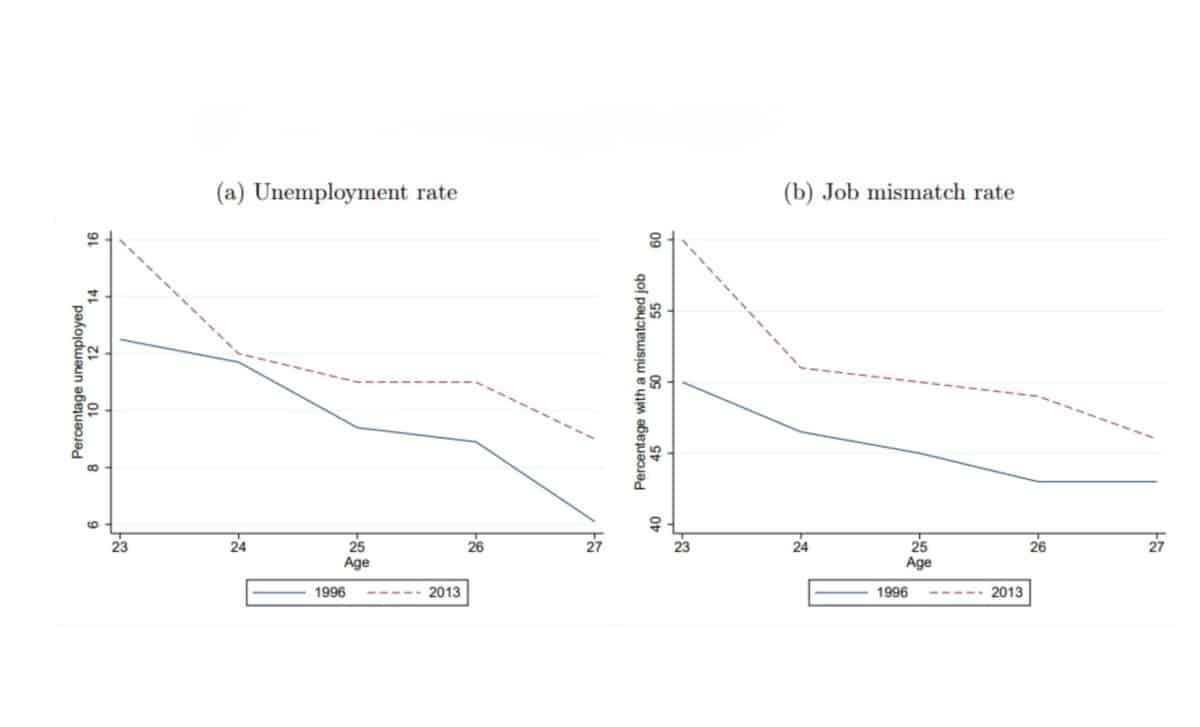
According to research by economists Stefania Albanesi, Rania Gihleb, and Ning Zhang, more than one-quarter of college graduates between the ages of 23 and 27 were living with their parents as of last year. Updated findings cited by The New York Times indicate that this represents a return to the high recorded during the pandemic, compared with a low of about 18% in 2001.
The trend comes as recent graduates face a weaker labor market than the broader workforce. According to data from the Federal Reserve Bank of New York reported by The New York Times, the unemployment rate for recent college graduates climbed to 5.6% during the first quarter of this year, increasing more rapidly than the national unemployment rate over the previous four years.
The slowdown has affected graduates across multiple fields, including occupations that have traditionally offered strong employment prospects. The New York Times reports that the unemployment rate for recently graduated chemical engineers more than doubled between 2022 and 2024, reaching 4.7%, while the rate for computer engineers more than tripled to 7.8%.
Several graduates interviewed described extended job searches despite relevant degrees and internship experience, with some choosing to remain at home while waiting for positions that better matched their qualifications.
Changing Family Relationships Are Reducing the Stigma of Returning Home
Economic conditions alone do not explain the increase. According to The New York Times, some researchers and mental health professionals believe cultural attitudes have also shifted, making it easier for graduates to return home without feeling the same level of embarrassment experienced by earlier generations.
Therapist Daniel Holland told the newspaper that broader recognition of economic pressures has reduced feelings of shame and guilt among many young adults living with their parents. Smartphones, video calls, the Great Recession, and the COVID-19 pandemic have also contributed to closer family relationships and normalized returning home after college.
Harvard labor economist Lawrence Katz also suggested that parenting styles have changed over time. As reported by The New York Times, he noted that young adults today generally maintain much closer relationships with their parents than previous generations did.
Graduates interviewed for the report said that living at home often provided financial stability while they searched for suitable employment. Some also found reassurance in seeing many friends make the same decision. Although sharing space with family sometimes created friction over privacy or job-search expectations, several said the arrangement ultimately helped them transition from college into the workforce without feeling isolated or stigmatized.