
Consumer inflation in the United States rose at its fastest pace in three years, driven largely by surging energy prices amid tensions with Iran. The data sparked concern over possible Federal Reserve rate hikes in the coming months, while Americans feel the pressure at the pump and in everyday expenses.
Energy Costs Drive Inflation
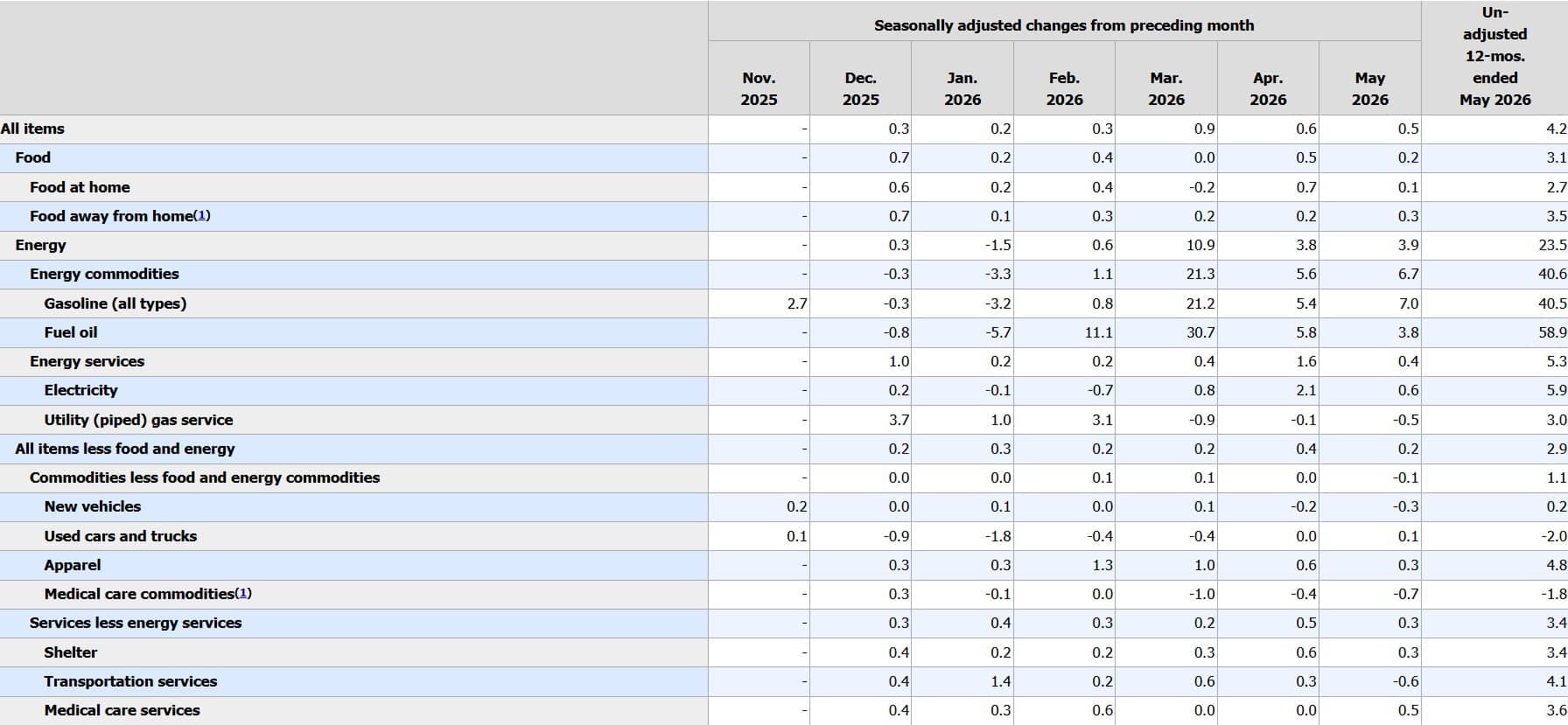
In May, inflation increased 0.5 percent month-on-month, following a 0.6 percent rise in April, and was 4.2 percent higher than last year, according to the US Labor Department’s Bureau of Labor Statistics. Energy prices surged by 3.9 percent in May after a 3.8 percent increase in April. Petrol prices jumped 7 percent month-on-month and are more than 40 percent higher than a year ago, reaching $4.15 per gallon, according to the American Automobile Association.
Brent crude futures climbed to $92.90 a barrel, while West Texas Intermediate crude hit $90 a barrel, reflecting ongoing volatility in global energy markets.
Wages Lag Behind
While prices rise, wages have not kept pace. Real wage growth fell 0.1 percent in May, marking the second straight month of decline. Economists warn that middle-class and lower-income households are feeling squeezed, struggling to cover rising costs for energy, housing, and essentials.
Shelter costs rose 0.3 percent, while food prices increased by the same amount, slowing slightly compared with prior months. These increases compound the financial pressure on everyday Americans.
Federal Reserve Faces Pressure
The surge in inflation coincides with heightened expectations for interest rate adjustments by the US Federal Reserve. Although the Fed is expected to hold rates steady at 3.5–3.75 percent at its June meeting, market trackers forecast a growing likelihood of rate hikes by October.
Goldman Sachs predicts that rate cuts are unlikely before mid-to-late 2027, meaning households may face prolonged financial pressure from higher borrowing costs alongside rising prices.
Geopolitical Tensions Fuel Costs
US President Donald Trump highlighted oil supply concerns in the Strait of Hormuz, a factor contributing to higher energy prices. He stated that efforts to move oil safely through the region could help prices drop over time, but analysts warn that disruptions are expected through 2026, potentially keeping fuel costs elevated.
Implications for Consumers
Even with some insulation compared with other nations, Americans are beginning to adjust spending habits due to higher fuel and energy costs. Economists emphasize that inflation is not just a statistic but a real burden on households, influencing consumption, savings, and overall financial stability.
The combination of rising energy prices, housing costs, and stagnant wages underscores the challenges for the US economy and the Federal Reserve as it balances growth with inflation control.