
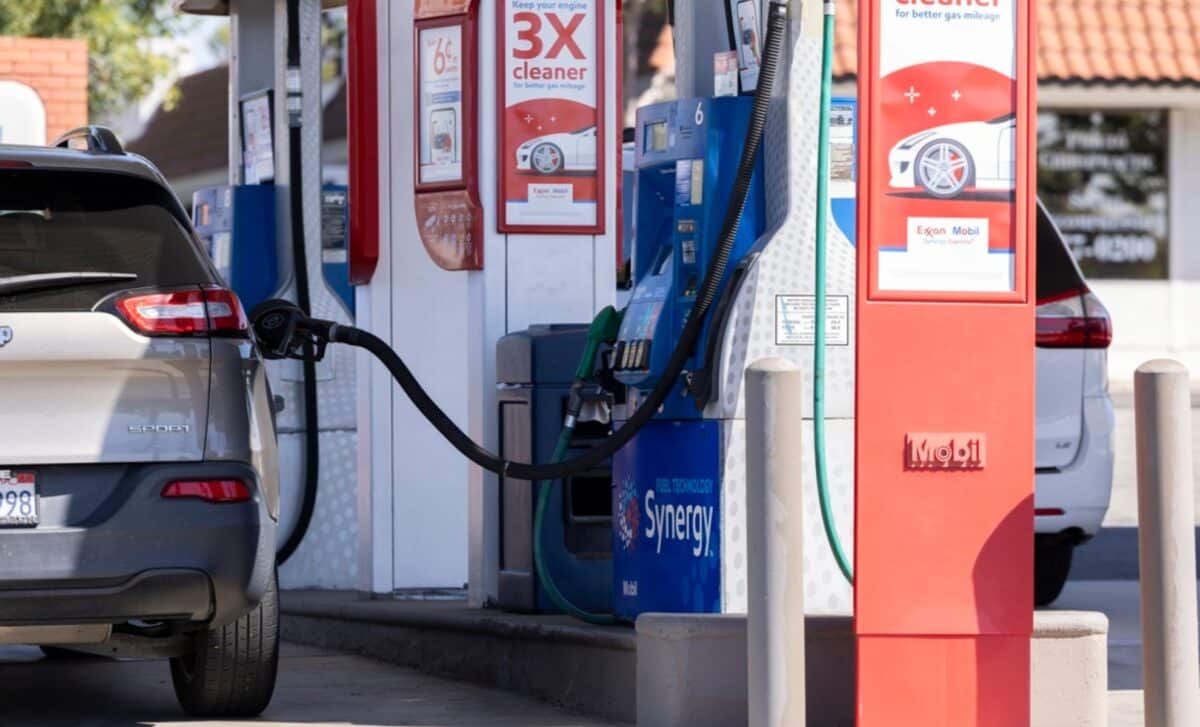
Gas prices across the United States have climbed to an average of $4.18 per gallon, marking the highest level in four years. The increase reflects rising oil prices linked to ongoing geopolitical tensions and uncertainty around key energy routes.
A Sharp Rise in Gas Prices Compared to Last Year
The latest figures show a clear jump compared to recent levels. Just one year ago, average gas prices stood closer to $3.15 per gallon, meaning drivers are now paying roughly $1 more per gallon.
The last time prices reached similar levels was in April 2022, during the early phase of the Ukraine conflict, when global oil markets experienced a major shock.
Oil Prices Driving the Increase
The surge in fuel costs is closely tied to rising oil prices. Brent crude, the global benchmark, recently reached around $111 per barrel, while WTI crude in the US approached $100 per barrel.
These levels remain well above pre-conflict averages and reflect ongoing instability in global energy supply. One of the key factors is the situation around the Strait of Hormuz, a critical route through which a large share of the world’s oil passes.
Supply Uncertainty Adds Pressure
Efforts to reopen the strait have stalled, adding further uncertainty to the market. Negotiations remain unresolved, and any disruption to this route can quickly affect global supply and pricing.
The situation is compounded by broader geopolitical tensions in the region, which continue to influence oil production and transport. Even the possibility of disruption is enough to push prices higher.
Prices Vary Widely Across States
While the national average stands at $4.18, the actual price paid by drivers varies significantly depending on location. In oil-producing states such as Texas, prices are closer to $3.72 per gallon.
In contrast, states that rely more heavily on imports, such as California, are seeing much higher averages, with prices approaching $5.96 per gallon, reports The Guardian. These regional differences highlight how supply chains and local factors influence fuel costs.
A Mixed Impact on the Energy Sector
Higher oil prices are creating contrasting effects across the energy industry. Western oil companies have reported stronger financial results, benefiting from higher margins. Some firms have seen profits rise sharply in recent months.
At the same time, producers in regions affected by the conflict face operational challenges, particularly when it comes to exporting oil through key routes.
What This Means for Consumers
For households, the rise in gas prices adds pressure to everyday expenses. Fuel remains a significant cost for many drivers, and higher prices can influence travel, commuting and overall budgets.
The outlook remains uncertain, as future price movements will depend largely on developments in global energy markets and geopolitical negotiations.