

The US trade balance has shifted significantly at the start of 2026. A sharp reduction in the deficit is drawing attention across markets. The change reflects both policy decisions and temporary factors.
Trade Deficit Drops as Tariffs Curb Imports
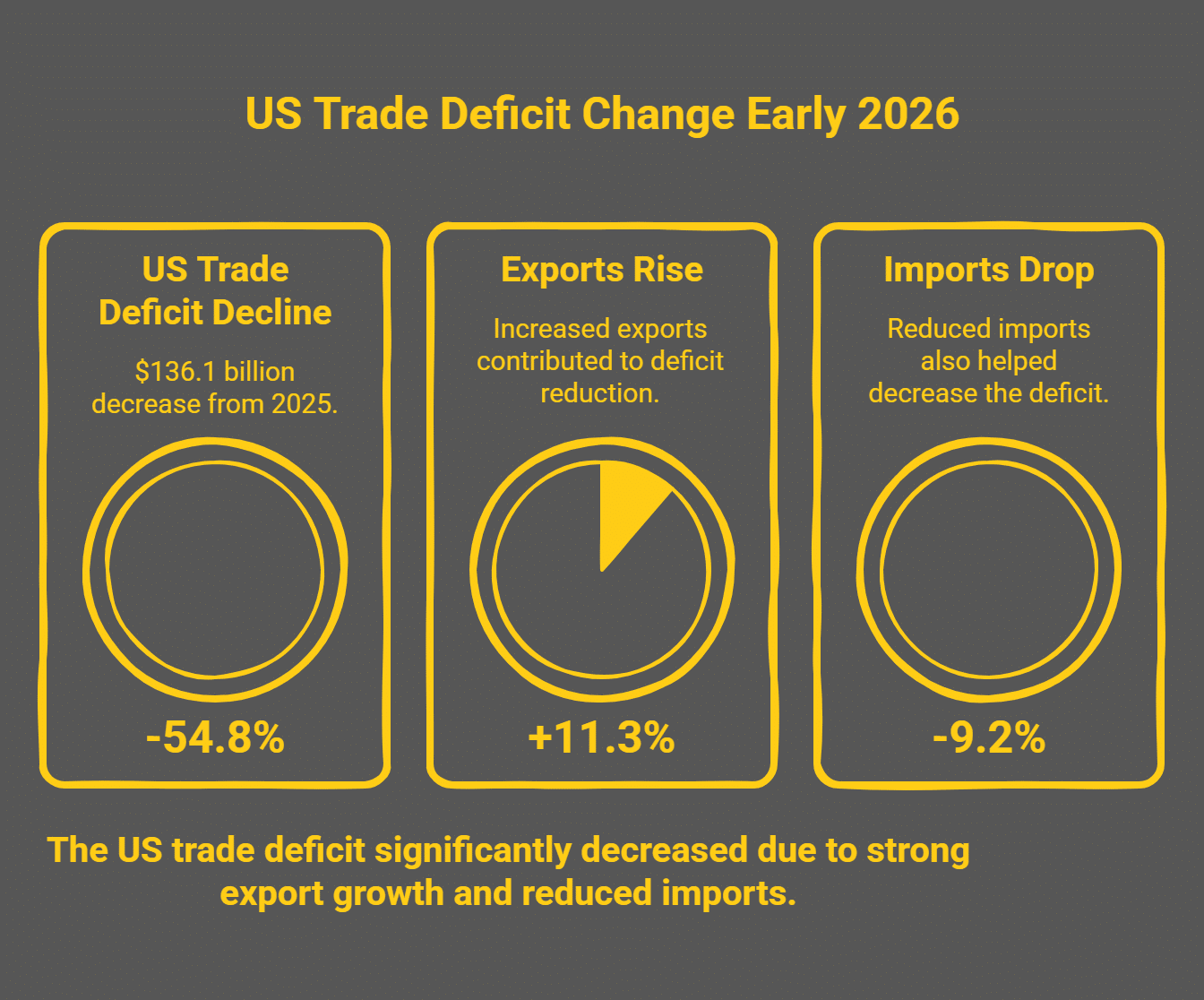
The US trade deficit fell by 54.8% in early 2026 compared to the same period in 2025, a decline of $136.1 billion. This movement was driven by an 11.3% rise in exports alongside a 9.2% drop in imports. The scale of the change marks one of the most notable adjustments in recent years.
Tariffs have played a direct part in this shift by increasing the cost of imported goods. This has reduced demand for foreign products while supporting domestic production. As a result, the balance between imports and exports has moved more in favour of the US.
A Decline Shaped by Earlier Import Surges
The sharp fall in the deficit is partly linked to conditions in early 2025. At that time, businesses accelerated imports ahead of expected tariff measures. This created a high comparison base, making the year-on-year decline appear more pronounced than underlying trends might suggest.
Monthly data highlights a more mixed picture. In February, the deficit widened by 4.9% to $57.3 billion, with both imports and exports increasing. This indicates that trade flows remain volatile despite the broader downward trend, explains Yahoo Finance.
Tariffs Bring Mixed Economic Effects
Tariffs can support domestic industries by limiting foreign competition and encouraging local production. This can strengthen certain sectors and reduce reliance on imports. These effects are often cited as key policy objectives.
At the same time, tariffs increase costs within the domestic economy. Businesses may pass these costs on to consumers through higher prices. Research suggests that a large share of tariff-related costs is absorbed within the US rather than by foreign producers.
Rising Prices Reflect Tariff Pressures
Data indicates that prices for imported goods increased by around 1.5% in 2025, reflecting the influence of tariffs. The extent of price transmission varies, but a significant portion reaches consumers. This adds to broader inflation pressures already present in the economy.
Higher energy prices linked to geopolitical tensions are reinforcing this trend. The combination of rising fuel and import costs is affecting household budgets. These pressures are contributing to a more complex inflation environment.
Tariff Revenue Increases but Outlook Remains Uncertain
Tariffs have generated substantial revenue for the US government, reaching $264 billion in 2025. This represents a sharp increase compared to previous years. Discussions around redistributing part of this revenue to households have emerged but remain unresolved.
Future trade policy remains uncertain as tariff levels continue to evolve. The long-term effects on growth, inflation and trade balances are still unfolding. Current data reflects a shift, but its durability is not yet clear.
A Trade Shift with Ongoing Questions
The recent contraction in the trade deficit signals a change in US economic dynamics. It highlights the influence of tariffs alongside temporary factors affecting trade flows. The overall picture remains complex and subject to change.
While the headline figures are striking, underlying trends are less straightforward. The coming months will help clarify whether this shift represents a lasting adjustment or a short-term fluctuation.