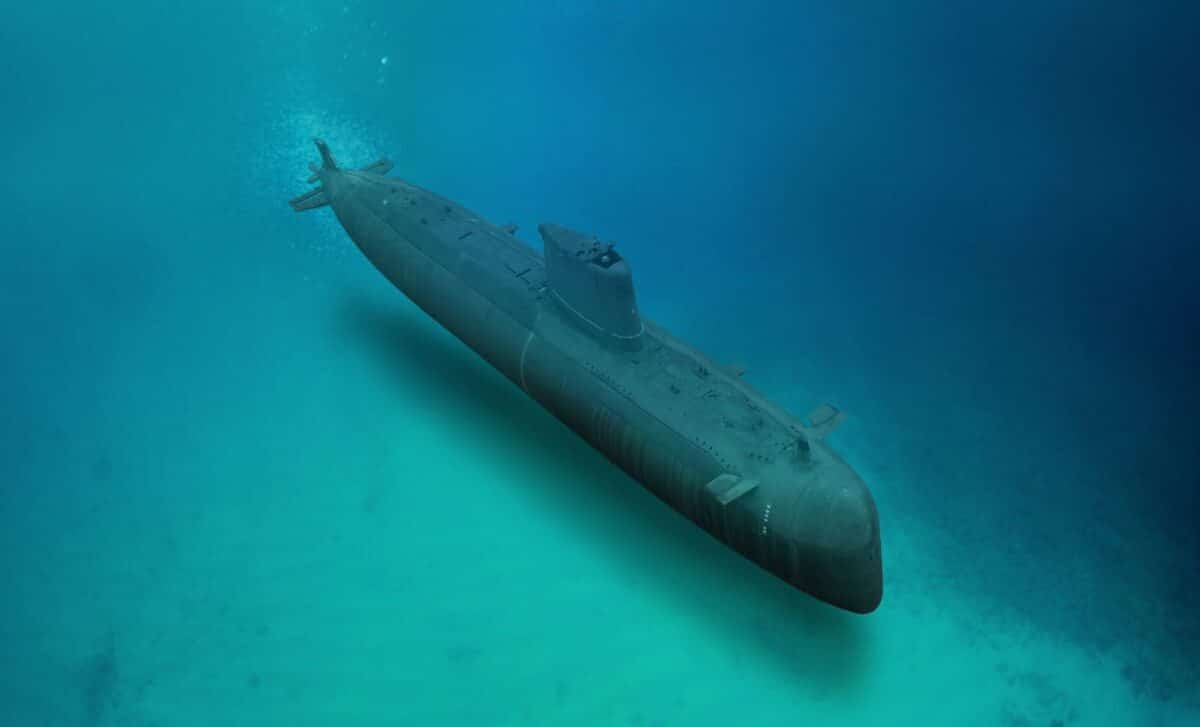
The U.S. Navy has awarded a $55.06 million contract to General Dynamics Mission Systems to upgrade the AN/BYG-1 Tactical Control System, a core component used across its submarine fleet. The effort focuses on improving how submarines process sensor data and execute targeting decisions during operations.
Announced on April 8, the contract supports design, integration, and delivery work through July 2027. According to Naval News, the upgrade is intended to enhance the speed and precision with which submarines employ weapons such as the Mk 48 torpedo and Tomahawk cruise missile.
A Central System Linking Sensors to Weapons
The AN/BYG-1 system plays a central role in U.S. submarine operations, functioning as an open-architecture combat control platform rather than a single piece of equipment. It integrates tactical control, payload management, and information systems across multiple submarine classes, including Virginia, Los Angeles, Ohio, Seawolf, and the future Columbia class.
Within this architecture, the Tactical Control System acts as the command-and-control layer that translates raw sensor inputs into actionable targeting data. According to U.S. Navy documentation cited by Naval News, this subsystem enables crews to track contacts, fuse multiple data streams, and generate firing solutions. It also supports functions such as target motion analysis, voyage management, and tactical networking.
The system operates downstream from sonar inputs, particularly the AN/BQQ-10 A-RCI sonar, which processes acoustic signals and forwards detected tracks for further refinement. According to the U.S. Department of Defense’s Director of Operational Test and Evaluation, this interaction allows submarines to build a coherent operational picture from complex underwater environments, including areas with dense or overlapping contacts.
The upgrade focuses on accelerating this process. By improving how quickly and accurately data is converted into targeting solutions, the Navy aims to reduce the time between detection and engagement. In operational terms, that interval can determine whether a submarine maintains concealment or gains a tactical advantage.
Fleet-Wide Modernization and Allied Integration
The contract also reflects a broader effort to standardize combat systems across the submarine force. The AN/BYG-1 is already deployed on a wide range of U.S. platforms and is designed to support ongoing updates through incremental software and hardware improvements. According to General Dynamics Mission Systems, the system relies on commercial off-the-shelf computing and is updated through regular processor builds and technology insertions.
This approach allows new capabilities to be distributed across multiple submarine classes rather than remaining limited to a single platform. The Navy has emphasized that such commonality reduces training complexity and supports faster implementation of upgrades across the fleet.
The system’s role extends beyond U.S. operations. AN/BYG-1 is part of a joint program with Australia and has been demonstrated to the United Kingdom in support of the SSN-AUKUS initiative. This shared framework contributes to interoperability among allied submarine forces by aligning combat system architectures and operational practices.
The contract includes requirements for integrating software from multiple vendors, maintaining cybersecurity standards, and ensuring compatibility with Submarine Warfare Federated Tactical Systems. These elements point to a broader objective: sustaining a flexible and upgradable combat system capable of adapting to evolving operational demands.
In practical terms, the investment targets what military planners often describe as decision advantage. While submarine stealth, propulsion, and weapons capacity remain central, the ability to process information quickly and act on it reliably is just as significant. According to Naval News, the Navy treats sonar, combat control, and weapons systems as an interconnected chain, where improvements in one area directly affect overall performance.
This latest upgrade, while limited in scale compared to major shipbuilding programs, reflects that priority. It focuses on the internal systems that determine how effectively submarines interpret their environment and respond under pressure, shaping outcomes in undersea operations.