
Thousands of workers in Michigan are set to receive higher pay as the state’s minimum wage increases to $15 an hour from January 1, 2027. The change follows a series of increases introduced under legislation designed to raise earnings for low-paid employees.
Minimum Wage Will Increase From $13.73 To $15
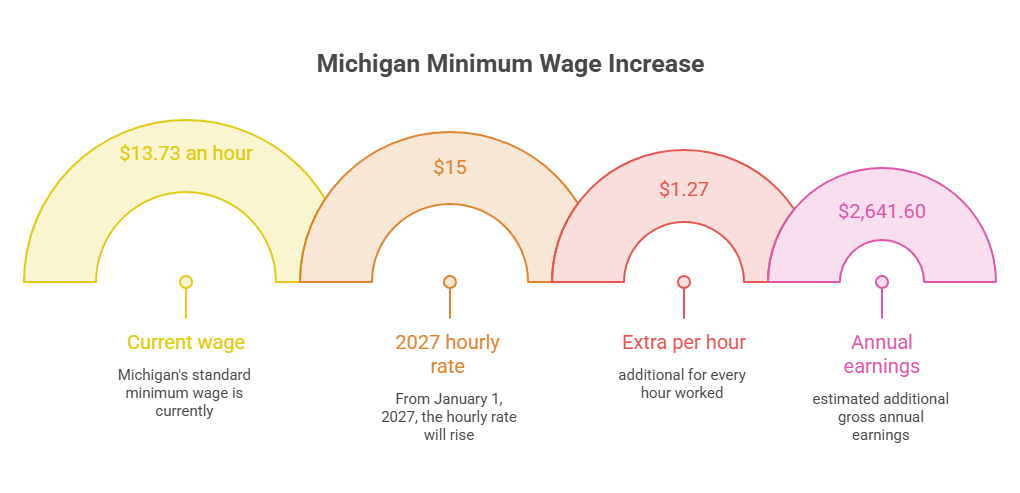
Michigan’s standard minimum wage is currently $13.73 an hour, following an increase introduced on January 1, 2026. From January 1, 2027, the hourly rate will rise to $15, giving eligible workers an additional $1.27 for every hour worked.
For someone working 40 hours a week throughout the year, this represents an estimated additional $2,641.60 in gross annual earnings, before taxes and other deductions.
Younger Workers Will Also Receive Higher Pay
The new rules will also affect employees under the age of 18. Their minimum hourly wage will increase from $11.67 to $12.75 on January 1, 2027.
The rate for workers undergoing training will remain unchanged at $4.25 an hour between 2026 and 2027.
Legislation Behind The Wage Increase
The legislation was sponsored by Democratic Senator Kevin Hertel, who supported accelerating increases to Michigan’s minimum wage. He previously argued that higher wages benefit both employees and businesses by giving households more money to spend in the local economy.
Hertel said: “Not only are higher wages beneficial for workers, but they’re good for businesses and our economy as a whole.” He also said the changes would help workers support their families and participate more fully in the economy.
What The New Minimum Wage Means For Workers
The increase to $15 an hour represents another step in Michigan’s minimum wage reform.
For full-time employees earning the standard minimum rate, the change could mean more than $2,600 in additional gross pay per year compared with the current hourly rate.
The new rates are scheduled to take effect on January 1, 2027, giving employers and employees time to prepare for the change.