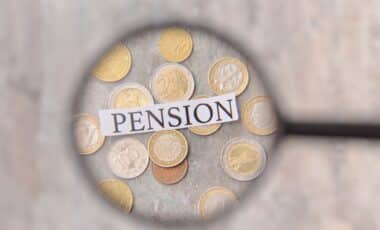

The proposal would change how annual increases in the state pension are calculated, replacing the existing wage growth measure with a different link to average earnings. While ministers say the revised arrangement will protect pensioners’ incomes, financial analysts warn that future payments could be nearly 5% lower than under the current system.
How the Triple Lock Changes Could Affect Pension Payments
The existing triple lock guarantees that the state pension rises each year by whichever is highest: average wage growth, inflation or 2.5%. Introduced by the coalition government in 2011 and first implemented in 2012, the policy has substantially increased pension payments. Since its introduction, the basic state pension has risen by 81%, while the new state pension, introduced in 2016, has increased by 55%.
Under Burnham’s proposed reforms, the wage growth component would be replaced by a mechanism designed to maintain the state pension’s value relative to average earnings. Annual increases would still be determined by the highest of inflation, 2.5% or the amount required to preserve that relationship.
The Department for Work and Pensions (DWP) has indicated that the earnings benchmark will be at least 30%, although its precise value has not been confirmed. According to analysis by pensions consultancy Hymans Robertson, a full new state pension would reach £35,100 annually by 2050 under the existing triple lock. Under the revised arrangement, the equivalent payment would be £33,500.
The Telegraph reported that the difference could reach £1,614 a year, representing a reduction of almost 5% compared with the existing policy. Calum Cooper, of Hymans Robertson, said the adjusted system would preserve the relationship between pensions and earnings while reducing financial pressure on taxpayers. He also warned that greater reliance on private retirement savings could expose existing inequalities, noting that pensioner poverty remains a problem across Britain.
Government Savings and the Cost of a National Care Service
The reforms form part of the Government’s plans to establish a National Care Service, with savings from state pension spending expected to contribute towards its funding. According to the DWP, the adjusted triple lock could save £15bn by 2039-40 and £50bn by 2049-50.
Hymans Robertson has questioned whether those savings will materialise in full. Its analysis suggests that economic volatility could reduce the projected £50bn saving to £25bn.
William Nixon, of the think tank Policy Exchange, warned that the revised mechanism might generate no savings if inflation consistently exceeded wage growth. He also questioned whether the changes could finance the proposed care system, which is expected to cost approximately £18bn annually.
The Government maintains that pensioners will continue receiving annual increases under the revised formula. A DWP spokesman said the existing triple lock would remain in place for the rest of this parliament, with the new state pension expected to rise by more than £2,000 and reach a record high by April 2029. The revised system is scheduled to begin in 2030, leaving the existing guarantees unchanged until then.