UK households face rising pressure on their grocery bills, as industry experts warn that food prices are likely to remain elevated until 2028. Families with children may need to spend an extra £203 on food and drink this year alone, with a further £207 expected next year.
Food Prices to Peak at 5.5% in 2026
The Institute of Grocery Distribution (IGD) predicts that food inflation will peak at 5.5% in the second half of this year. Although a peace deal between the US and Iran has eased some geopolitical tensions, the effects on food prices are still being felt.
James Walton, chief economist at the IGD, said the combination of energy costs, supply chain disruption, and policy pressures, along with climate-related risks, continues to push prices higher. This sustained inflation is expected to last longer than previously predicted.
Impact on Households and Businesses
For UK shoppers, particularly those in lower-income households, the rising cost of groceries is a growing concern. The IGD reports that worries about food prices are now at their highest level in three years, surpassing anxiety levels seen during the peak of the cost-of-living crisis.
Food prices are already around 40% higher than pre-Covid levels, highlighting the long-term nature of this inflationary pressure. Families are facing not only higher bills but also mounting stress over managing everyday expenses.
Businesses are also affected, as retailers and suppliers navigate the continued cost increases for ingredients, transport, and energy. The uncertainty makes planning and budgeting difficult, with pressures expected to continue well into 2028.
Forecasts for 2027 and 2028
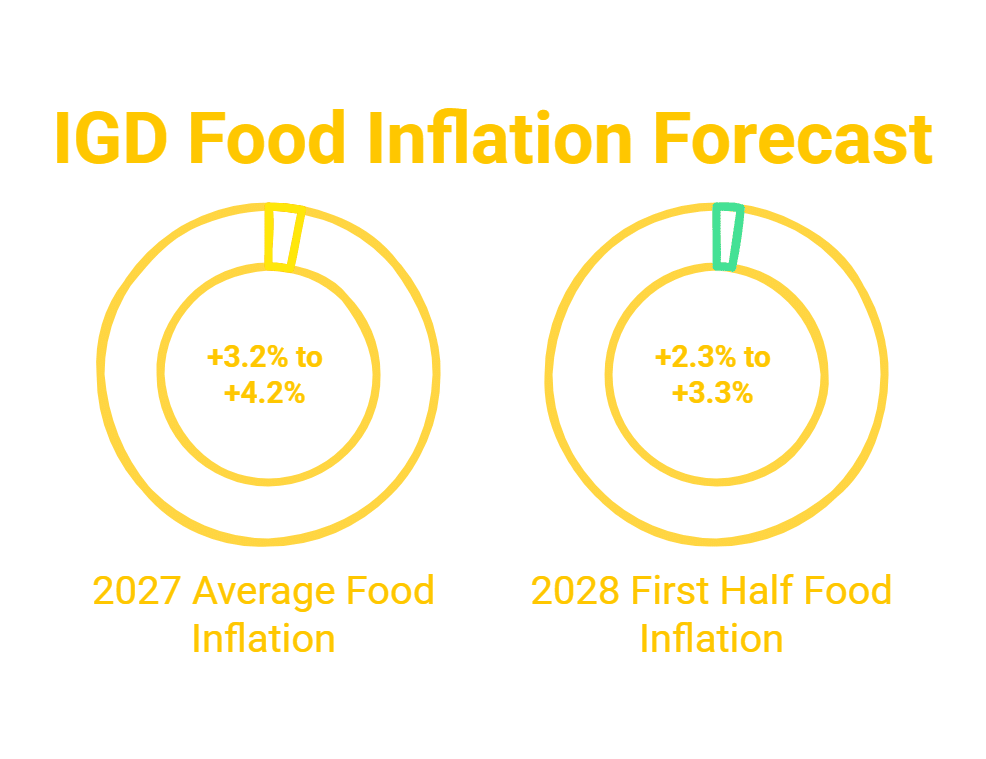
The IGD expects food inflation to average 3.2% to 4.2% in 2027 and then gradually ease to 2.3% to 3.3% in the first half of 2028. Despite this slight reduction, prices are likely to remain above pre-pandemic levels for several years.
Walton emphasised that the effects of earlier geopolitical conflicts, alongside ongoing economic pressures, will continue to filter through to household bills. “Even with peace agreements in place, the inflationary shock we’ve seen will take years to fully ease,” he said.
For UK consumers, this forecast signals a prolonged period of elevated grocery costs, with food prices forming a persistent challenge to household budgets.