
Homebase, a major UK garden centre and DIY retailer, plunged into administration in late 2024, leaving around 2,300 employees without jobs and owing a total of £803 million. The company’s stores were largely closed, and its assets were sold to various buyers as part of the administration process.
Collapse Hits DIY Retailers
The company, which operated 135 stores across the UK and employed 3,446 workers, cited the cost of living crisis, high inflation, and declining consumer spending as key reasons for its financial struggles. Administrators also highlighted broader issues affecting DIY retailers, including high interest rates, freight costs, shipping delays, poor weather during peak seasons, and declining consumer confidence.
Gavin Park, Gavin Maher, and Adele MacLeod of Teneo Financial Advisory were appointed as joint administrators following the collapse. They noted that these combined pressures had left the company financially unsustainable.
Sale and Job Transfers
After administration, 70 stores were sold to CDS (Superstores International) Limited, owned by Chris Dawson and trading as The Range and Wilko, for £25.6 million. This transaction saw 1,150 employees transferred to the new business, while the remaining stores were permanently shut by March 2025.
The sale allowed the brand to continue operating online, even as most physical locations closed.
Debt and Creditor Claims
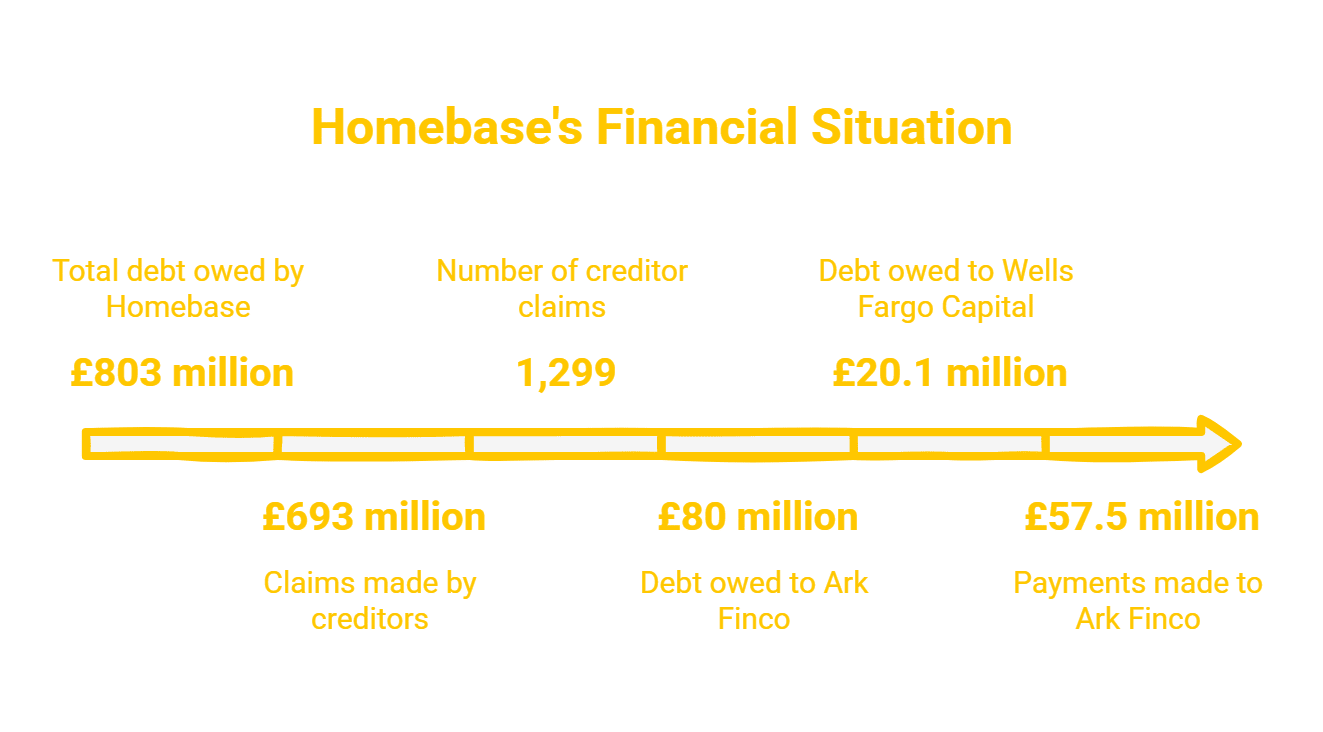
Homebase owed a total of £803 million, with £693 million claimed by creditors across 1,299 claims. Major creditors included Ark Finco (£80 million owed) and Wells Fargo Capital (£20.1 million owed). Payments of £57.5 million have already been made to Ark Finco.
The administrators reported receiving £10.2 million in unpaid PAYE and national insurance contributions. However, unsecured creditors are unlikely to recover much, with only a maximum prescribed part fund of £800,000 expected to be available for distribution.
Employee Compensation
Employees who lost their jobs made claims totaling around £938,000. Administrators have worked to ensure some of these claims were covered, although the scale of the collapse meant many workers faced financial uncertainty.
The Homebase collapse highlights the vulnerability of DIY retailers to economic pressures, inflation, and operational challenges, particularly in sectors heavily reliant on consumer spending and seasonal sales. While some jobs were saved through the sale to CDS, the closure underscores the ongoing pressures facing UK retail in a challenging economic climate.