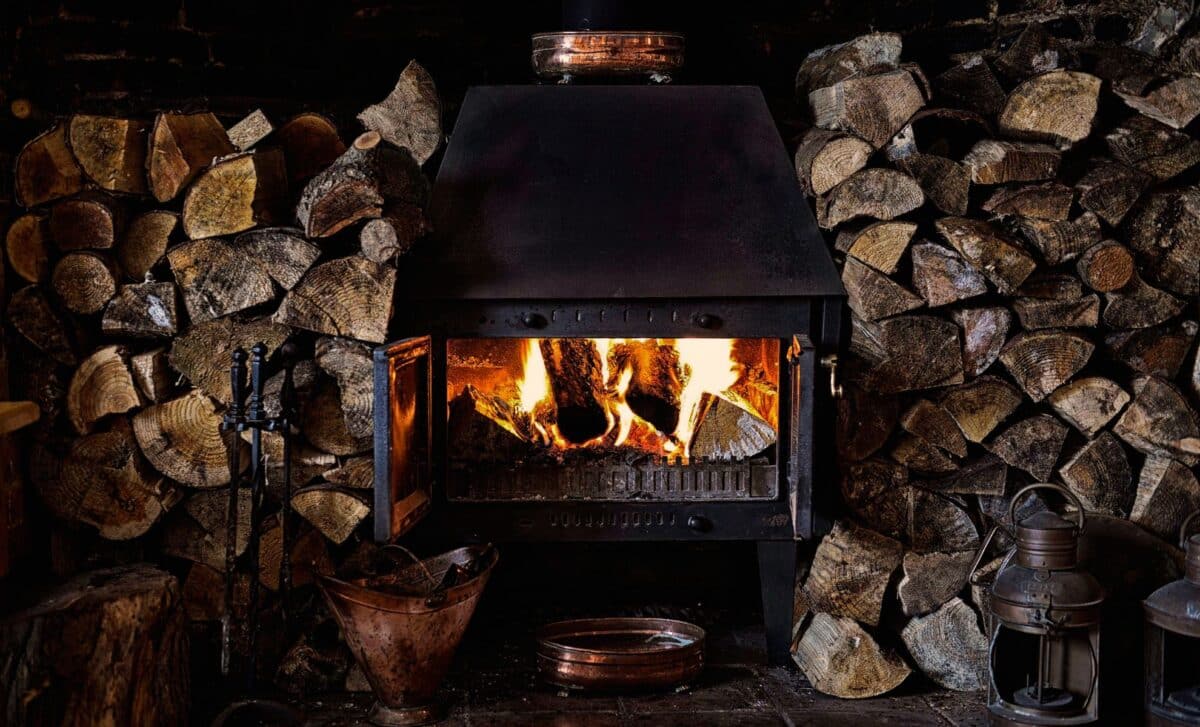
New rules could tighten emissions limits for wood burners, increase penalties for selling wet wood and impose stricter controls on solid-fuel heating under the government’s Environmental Improvement Plan (EIP).
The proposals are aimed at cutting PM2.5, a fine-particle pollutant associated with serious health risks, while leaving existing wood burners outside any immediate ban. Industry representatives are now calling for stronger action against older stoves and open fires already operating in homes.
New Limits Could Target Wood Burners Sold In England
The government has announced a consultation on measures to reduce pollution from domestic burning, including log burners, fireplaces and bonfires.
Under the proposals, manufacturers could be prevented from selling older wood-burning stove models unless they meet updated emissions standards. Existing appliances would not be retrospectively outlawed, meaning homeowners would not automatically have to remove a stove already installed in their property.
The plans also include possible changes to Smoke Control Areas, where restrictions already apply to the fuels that can be burned in certain fireplaces, chimneys and solid-fuel appliances.
According to the Express, industry representatives expect the consultation to receive renewed attention under Prime Minister Andy Burnham.
HETAS, which represents and certifies solid-fuel heating equipment, told the Express:
“With Andy Burnham as prime minister, the government’s consultation on solid fuel burning, which stems from the new Environmental Improvement Plan (EIP), is expected to be back in the spotlight – proposals for stricter stove emissions limits, higher fines for selling wet wood, and new warning labels.”

Credit: Shutterstock
Industry Calls For Action On Older Stoves
HETAS argues that tighter standards for newly manufactured stoves will take years to affect pollution levels because many existing appliances remain in service for long periods.
Calvin May, HETAS head of technical & certification, said: “A wood burner isn’t a fashion accessory you swap out each season – stoves can sit in a home for fifteen years or more. Tightening smoke limits for new log burners is welcome, but this is going to take over a decade to filter through to most homes.
“If the government wants cleaner air sooner, it needs a serious plan for the open fires and outdated stoves in homes right now – not the advanced ones coming onto the market. Until there is a proper plan for these this proposal is only a partial fix.”
The comments put the focus on the gap between regulating new appliances and reducing emissions from equipment already installed in homes.
PM2.5 Target Puts Domestic Burning Under Scrutiny
The government has tightened its target for reducing PM2.5 emissions, seeking a 30% reduction by 2030 compared with 2018 levels.
Official figures cited in the government’s EIP indicate that domestic combustion accounted for one-fifth of PM2.5 emissions in 2023.
The plan identifies solid-fuel burning as a major contributor to fine-particle pollution, particularly in urban areas. It also points to evidence linking PM2.5 exposure with conditions including cardiovascular disease and asthma.
The EIP states: “These particles can enter the bloodstream and internal organs, and there is a growing body of evidence linking exposure with a range of debilitating health conditions, including cardiovascular disease and asthma. We will consult on further measures to reduce emissions from domestic burning… Consult on new measures that cut emissions from domestic combustion, whilst minimising the impact on those that need to burn and respecting traditional celebratory festivals such as Bonfire Night and Diwali.”
The government has said any new measures will be developed with consideration for people who rely on wood burning, while also taking account of traditional events including Bonfire Night and Diwali.
Fines For Wet Wood Sellers Could Rise
The consultation could also bring tougher penalties for businesses selling wet wood, which produces more pollution when burned than properly dried firewood.
Woodsure director Helen Bentley-Fox welcomed plans for a potential £2,000 fine for non-compliance.
She said: “We regularly hear from genuine, law-abiding firewood suppliers who are frustrated that competitors selling dirty, non-compliant wood seem to face little more than a slap on the wrist. £2,000 is a real step forward, because for the first time it makes staying on the wrong side of the law meaningfully expensive. But raising the fine only works if it’s enforced, and that needs to be a priority otherwise we’ll keep seeing the same problems.”
The proposed penalty would therefore target suppliers rather than automatically forcing households to replace existing stoves.
Existing Burners Would Not Be Retrospectively Banned
For homeowners, the distinction between new and existing appliances remains significant.
The proposals described in the EIP would set tighter requirements for products entering the market rather than immediately outlawing older wood burners already installed in properties. Any further restrictions on domestic burning would be subject to the government’s consultation process.
The government’s stated PM2.5 target is a 30% reduction by 2030 from 2018 levels, while domestic combustion accounted for a fifth of PM2.5 emissions in 2023.