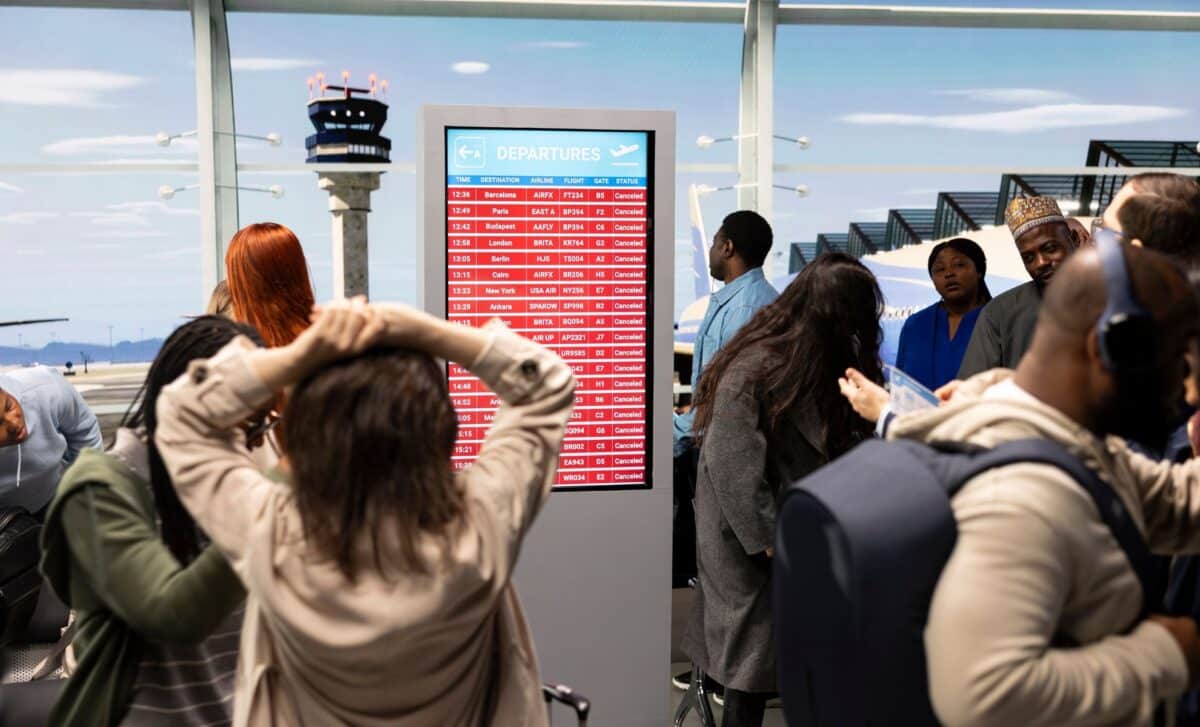
Airports including Heathrow, Gatwick, Manchester and Stansted warned that disruption would continue as airlines worked through the impact of cancelled services. The failure has also prompted questions from government officials and the aviation sector about the resilience of air traffic control systems.
Flights Cancelled After Air Traffic Control System Issue
The disruption began after a technical issue affected Nats, which provides air traffic control services to 15 UK airports. According to flight tracking website Flightradar24, around 1,300 flights to and from UK airports were cancelled on Tuesday, with a further 279 cancellations recorded on Wednesday.
The majority of Wednesday’s cancelled flights involved departures from London Heathrow, although airports across the UK reported continued effects from the previous day’s disruption. Passengers were advised to check their flight status directly with airlines before travelling.
Nats said engineers identified and fixed the problem several hours after the disruption began. The organisation apologised for the delays and said its focus was on restoring normal operations and supporting airlines, airports and passengers.
Several airlines reported significant impacts. Ryanair said more than 65,000 passengers had been affected, with more than 50 scheduled services cancelled. British Airways said it had been forced to cancel or divert more than 100 flights on Tuesday, affecting tens of thousands of customers.
Some passengers reported being held on aircraft on runways for extended periods, with complaints about limited access to food, drinks and toilet facilities. Nats chief executive Martin Rolfe accepted responsibility for the disruption, telling Sky News that his role was to ensure safety and provide the best service possible during the incident.
Investigation Begins as Authorities Seek Answers
The disruption has led to calls for further explanations about what caused the failure and how similar incidents can be avoided. According to The Independent, Transport Secretary Heidi Alexander summoned Martin Rolfe to answer questions about the incident and Nats’ response.
Foreign Secretary Ed Miliband described the disruption as “frankly unacceptable” in comments reported by The Independent, saying that UK airports needed to operate smoothly without such problems affecting passengers.
Nats chief executive Martin Rolfe said the organisation had ruled out a cyber attack and that engineers were continuing to examine the cause of the failure. Speaking on the Today programme, he said the incident would be subject to a full investigation.
According to The Independent, Rolfe said Nats had not previously experienced an incident of this type during its 50 years of operation. He added that the organisation’s attention would turn to understanding what happened while managing the remaining disruption.
The UK’s largest travel trade association, Abta, also called for answers. Its director of public affairs, Luke Petherbridge, said travellers affected by cancellations or delays would have rights depending on how their trips were booked. He added that the industry and passengers would want to understand what went wrong and what measures would be taken to improve resilience.
By Wednesday morning, some airports reported a return towards normal operations. Stansted said it was operating as normal, while Manchester Airport reported normal services with some departure delays. Heathrow and other major hubs continued to experience the effects of the previous day’s cancellations.