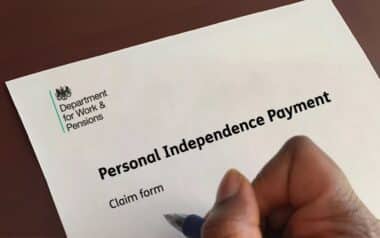

If you or someone you know is claiming Personal Independence Payment (PIP), understanding how points are awarded can make a big difference. Get the facts on scoring, daily living, and mobility to know what you might receive.
PIP Points System: How It Works
Personal Independence Payment (PIP) isn’t about your medical condition per se—it’s about how your condition affects daily life. Right now, over 3.9 million adults in England and Wales claim PIP. The award depends on a points-based system: enough points, and you could get the enhanced rate, which is currently £778 a month.
There are two components: daily living and mobility. Each is assessed separately. In Scotland, new claims go through Adult Disability Payment (ADP), but the scoring remains almost identical.
Daily Living Component
To qualify for the daily living part, the DWP looks at tasks like preparing food, managing medicines, washing and bathing, dressing, reading, socialising, and handling finances. Points are awarded based on how much assistance you need.
For example, “dressing and undressing” can score up to 8 points, while “communicating verbally” can earn up to 12 points. Even if you use aids—like a walking stick or a stool for cooking—points are calculated as if you’re using them, which can help raise your score.
Mobility Component
The mobility part considers whether you can plan and follow a journey and physically move around independently. Both tasks can score up to 12 points each. This includes difficulties from mental health or cognitive conditions, such as anxiety, not just physical impairments.
How Descriptors Affect Your Award
Each activity has a descriptor. For instance, “can dress unaided” scores zero points, while “cannot dress at all” scores full points. Health professionals report which descriptor applies, and the DWP uses this to calculate your points and determine whether you qualify for the standard or enhanced rate.
Maximising Your Points
Using reasonable aids, highlighting all challenges, and providing clear evidence of difficulties can improve your points. Remember, the daily living and mobility components are independent: you could receive the enhanced rate for one and standard for the other, depending on your abilities.
PIP provides essential financial support for those whose conditions limit everyday activities. Knowing how points are awarded, which tasks are assessed, and how aids help can make a big difference. For eligible claimants, the enhanced rate could mean £778 a month, helping to cover living costs and additional care needs.