
Thousands of households in London could face higher council tax bills next year, with three councils seeking permission to raise charges beyond the usual 5% limit. Barnet, Bromley and Lambeth have all asked the Government for permission to increase council tax as they deal with substantial funding gaps.
Barnet Could Raise Council Tax By 32%
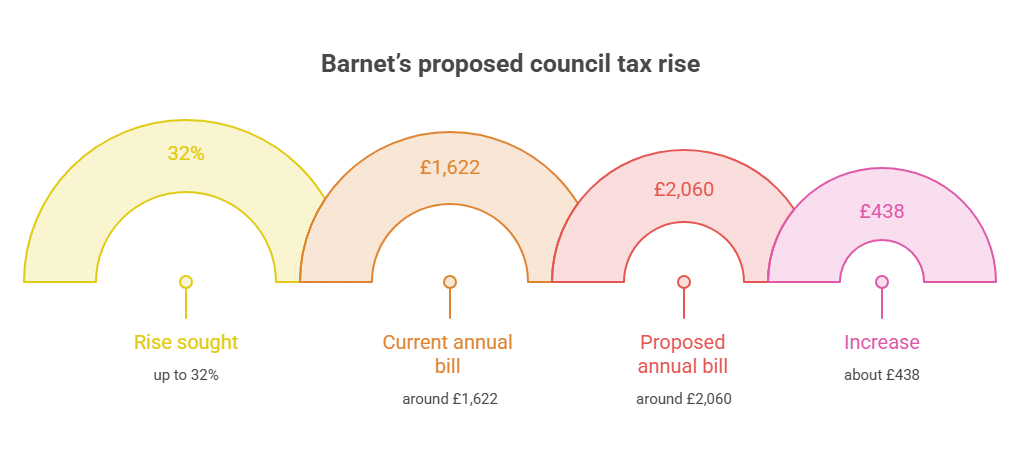
Barnet is seeking permission for a rise of up to 32%. For an average Band D property, the annual bill would rise from around £1,622 to £2,060, an increase of about £438.
The council faces a projected £200 million funding gap by 2030, which it attributes to reduced government funding and higher social care costs.
Bromley And Lambeth Also Want Higher Bills
Bromley has asked to increase council tax above the standard 5% limit but has not yet said how large the rise could be. The council says a reduction of more than £30 million in funding has left it with few alternatives.
Lambeth is also seeking permission for a rise above 5%. The council faces a projected £130 million funding gap, although the size of any increase has not yet been decided.
Thousands Of Homes Could Be Affected
Research from estate agent Hamptons estimates that around 3,600 homes in Barnet, 1,300 in Bromley and nearly 3,000 in Lambeth could be affected by the proposed increases, reports The Sun.
The councils would need government approval before introducing rises above the usual limit.
Some Councils Are Planning Much Larger Increases
The proposed increases come after warnings from other London authorities. Hammersmith and Fulham has warned that council tax could rise by between 100% and 150%. The upper end of that range would add around £1,508 a year to the average Band D bill.
Wandsworth is considering a 94% increase, which could add around £958 to the average Band D bill. Kensington and Chelsea, Westminster and the City of London are also considering double-digit increases.
Outside London, Windsor and Maidenhead is considering a rise of around 25%.
Why Councils Are Seeking Higher Tax Revenue
Council tax is normally subject to a 5% annual limit, although councils can request additional flexibility from the Government in exceptional circumstances.
The councils seeking larger increases say changes to local government funding have created financial pressure. Higher social care costs have also contributed to the funding gaps faced by several authorities.
The Government says its updated funding system is designed to direct more money towards areas with greater need while supporting councils during the transition.
Government Says London Is Receiving More Funding
The Ministry of Housing, Communities and Local Government said £11.5 billion is being made available to London councils.
It said this represents an increase of more than 38% since 2024-25, with the funding taking account of pressures including the cost of temporary accommodation.
The final council tax increases will depend on government decisions and the individual councils’ budget processes. For residents, the proposed changes could mean very different bills depending on where they live.