
The decision also introduces additional valuation reductions for certain corporate bonds exposed to climate transition risks. According to the Bank of England, the changes are designed to protect its balance sheet while updating the collateral rules used within its Sterling Monetary Framework.
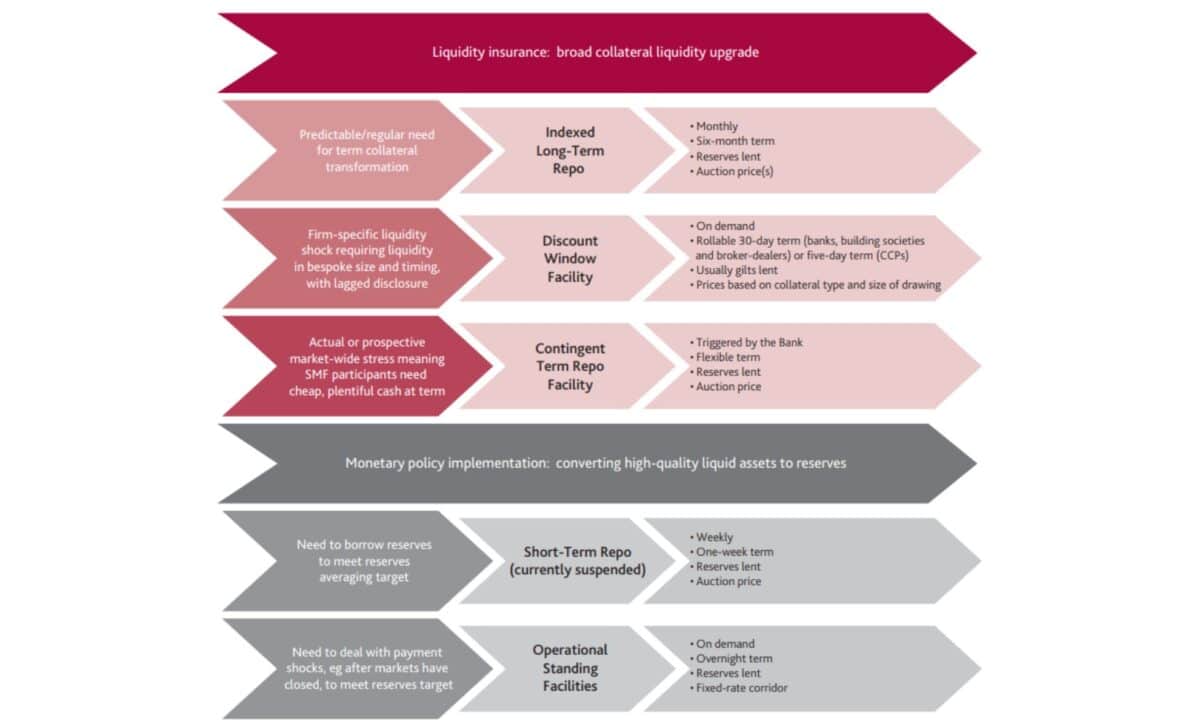
The move affects the assets that commercial banks can pledge when borrowing from the central bank to support day-to-day liquidity needs. Although the policy was announced in June, it received relatively little public attention until campaign groups highlighted its significance.
New Collateral Rules Target Thermal Coal Exposure
According to the Bank of England, corporate bonds issued by companies that generate revenue from thermal coal mining will no longer qualify as eligible collateral under the Sterling Monetary Framework from 31 October 2026. Commercial banks rely on this framework to obtain liquidity from the central bank, using eligible assets as security for loans.
The policy also applies additional “haircut” adjustments to corporate bonds issued by companies considered exposed to risks arising from the transition towards net zero. These valuation reductions are intended to account for financial risks that could affect the assets accepted by the central bank.
This is not the Bank’s first restriction on fossil fuel-related assets. Its Corporate Bond Purchase Scheme already limits exposure to coal-linked bonds, and the latest decision extends that approach to the broader collateral framework used in routine lending operations.
According to the Guardian, the Bank said companies involved in thermal coal “can be exposed to potential financial risks connected to the adjustment of the economy towards net zero“. The central bank also stated that it would apply valuation discounts to bonds in other relevant sectors to protect itself against financial risks.
Commercial banks holding thermal coal-linked bonds for collateral purposes will need to replace those assets with eligible alternatives before the October deadline if they wish to continue using the Sterling Monetary Framework under the new rules.
Campaigners Welcome the Decision While Seeking Broader Action
Climate campaigners described the policy as an important step because they believe it sends a clear signal to financial markets. According to the Guardian, Ellie McLaughlin, senior policy and advocacy manager at Positive Money, said the decision represented “a strong signal from a central bank, and to the market as well“.
Campaign groups also hope the measure will encourage commercial banks to reconsider holding thermal coal-linked assets on their balance sheets. Reclaim Finance reported in September that around 150 of the world’s largest financial companies had already introduced some form of restriction on business linked to the thermal coal industry.
McLaughlin also noted that the effectiveness of the policy would depend on how the Bank calculates the additional valuation reductions applied to climate-related risks. She argued that exclusions should extend beyond thermal coal to include other activities considered consistently harmful, including fossil fuel expansion and deforestation.
According to the Guardian, she said the measure was significant while adding that there remained further areas where the Bank of England could strengthen its approach. The Bank’s policy is described as stricter than those currently adopted by several western counterparts, including the European Central Bank, although the announcement itself was made with little public attention following its publication in June.