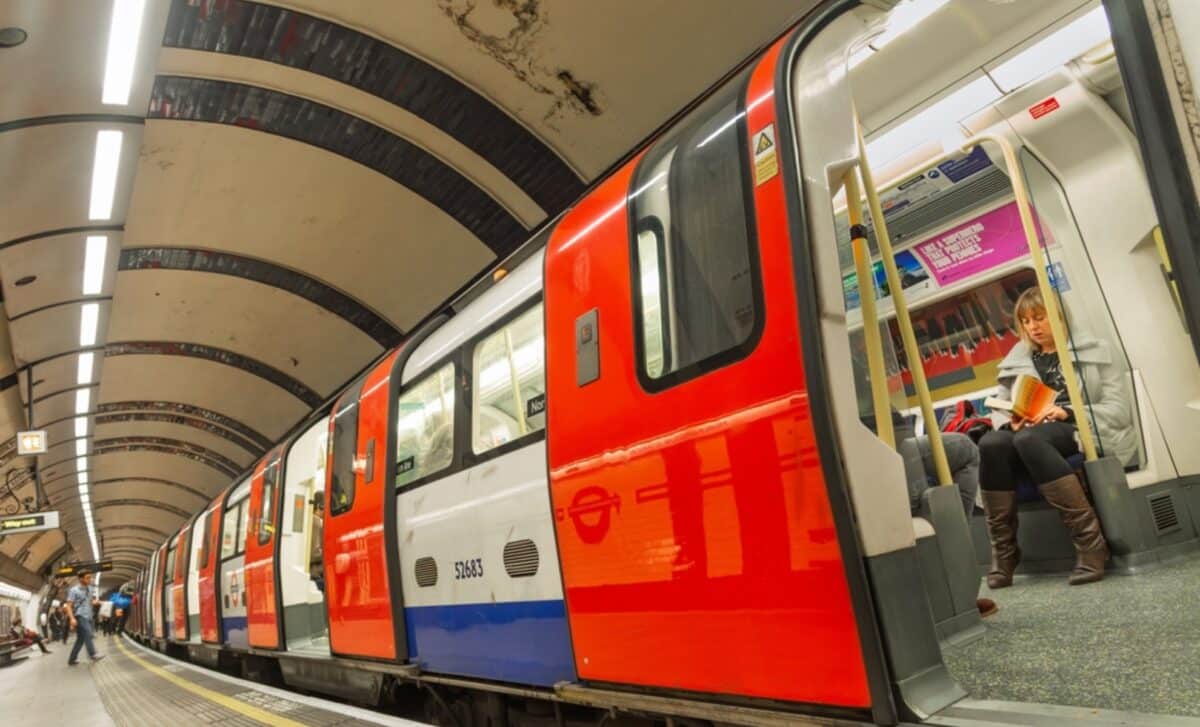
London Underground’s first in a series of 24-hour strikes has ended, but seven further walkouts are planned for December, January, and February, threatening to disrupt Christmas travel and one of the busiest trading periods for businesses across the capital.
Christmas Trading Faces Further Disruption
Members of the Rail, Maritime and Transport (RMT) union returned to work at noon on Friday after a 24-hour walkout. Six Underground lines were suspended or partially suspended on Friday, while five others experienced delays. Disruption was expected to continue until 6 p.m. GMT as services recovered.
According to the BBC, hospitality businesses reported a significant decline in foot traffic during the industrial action, with growing concerns over the financial consequences of the upcoming December strikes.
Simon Mitchell, chief executive at hospitality organization Kerb, which operates Seven Dials Market in Covent Garden, said the upcoming strikes in December were “planned for the best week of trading in the whole of Christmas and what would be our best week of the whole year”.
Mitchell explained that although the walkout lasted only 24 hours, it affected two trading days. He urged the union to cancel its upcoming strikes, describing an already difficult situation for hospitality businesses.
A Dispute Over Drivers’ Working Conditions
The industrial action stems from a disagreement between the RMT and Transport for London (TfL) over employment conditions attached to a new working framework allowing Tube drivers to choose between a four- and five-day working week.
The RMT supports the framework in principle but opposes changes to existing employment terms. The union has also raised concerns that drivers who retain their current arrangements could face changes to working practices, including depot transfers.
RMT general secretary Eddie Dempsey warned that the introduction of a four-day working week should not come at the expense of jobs or employment conditions.
TfL maintains that the proposed changes are voluntary and would give drivers more time off while improving operational efficiency.
The other union representing Underground drivers, Aslef, has accepted the compressed four-day working week and did not participate in the walkout.
Underground Services Perform Better Than Expected
Despite widespread disruption, TfL reported higher driver attendance than during previous industrial action. More than 55% of the Tube network operated on Thursday.
The Jubilee and Victoria lines began operating at their usual times on Friday. Network-wide service levels stood at just over 40% during the morning up to 9 a.m., with limited Piccadilly line services and the suspension of the Waterloo & City line affecting overall performance.
Passenger numbers across London’s transport network reached 90% of normal levels on Thursday, while Underground ridership stood at approximately two-thirds of its usual volume.
Alternative transportation providers benefited from the disruption. E-bike operator Forest recorded a 17% increase in Thursday evening rides compared with the previous week, while Uber also reported higher demand.
Commuters and Small Businesses Feel the Impact
Passengers faced delays, missed appointments, and difficulties reaching workplaces and schools. At Finsbury Park, commuters struggled to board available Underground services and buses.
Aya, a student waiting for a bus, expressed concern about missing her A-level mock exam. Other passengers reported difficulties making everyday journeys across the capital.
Small businesses near King’s Cross station also experienced reduced customer numbers. Ollie, a local stall trader, reported slower sales at a time when Christmas visitors would normally provide additional income.
Amelia, an employee at a bakery stall outside the station, told the BBC that the consequences extended beyond commuters traveling to and from work, affecting businesses that depend on daily passenger traffic.
Seven further strikes are planned across December, January, and February.