

Britain’s welfare spending is forecast to reach £430 billion by 2031, as the number of people claiming Universal Credit remains at a record 8.4 million, according to official figures. The latest statistics have renewed debate over benefit spending, employment requirements and the financial pressure on taxpayers.
Universal Credit Claimants Reach Record 8.4 Million
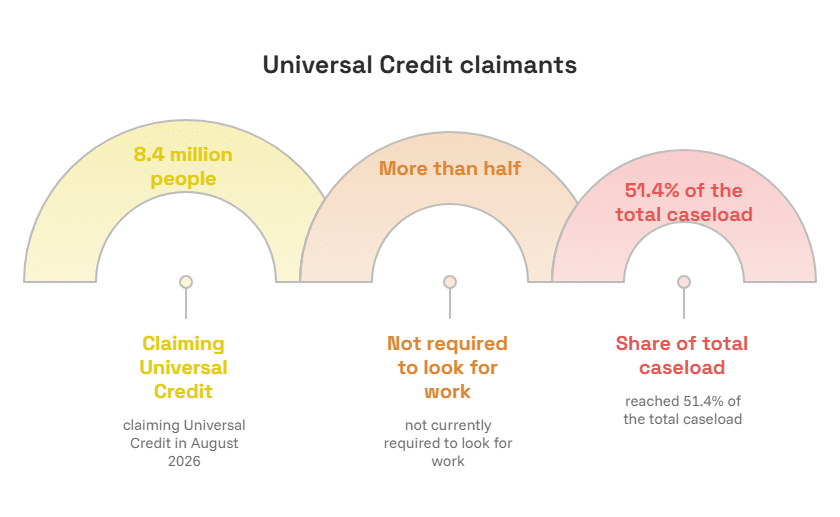
Department for Work and Pensions (DWP) figures show that 8.4 million people were claiming Universal Credit in August 2026. More than half of claimants are not currently required to look for work. The proportion in this category reached 51.4% of the total caseload.
Meanwhile, just 37.6% of Universal Credit claimants were in some form of employment. This means that more than five million claimants were not in employment, according to the figures.
The statistics highlight the scale of the benefit system and the number of households relying on financial support.
Welfare Spending Could Reach £430 Billion by 2031
Forecasts from the Office for Budget Responsibility (OBR) point to a substantial increase in welfare expenditure over the coming years. The total bill is projected to reach £430 billion by 2031.
Universal Credit alone is forecast to cost £110.7 billion annually by the beginning of the next decade. Disability benefits are also expected to account for a growing share of public spending, with annual expenditure approaching £70 billion.
The state pension and Pension Credit bill is projected to reach almost £210 billion over the same period. These figures highlight the financial commitments facing the Government as benefit spending continues to rise.
More Than Half of Claimants Have No Work Requirements
One of the main findings in the latest DWP statistics concerns the proportion of Universal Credit recipients who face no work-related requirements. At 51.4%, this group now represents more than half of the entire caseload.
By comparison, 37.6% of claimants are currently in employment. The figures have prompted renewed calls for changes to eligibility rules and employment conditions. John O’Connell, chief executive of the TaxPayers’ Alliance, criticised the figures and called on ministers to take action.
He said: “These numbers expose the scale of Britain’s broken welfare system. With over half of claimants facing no work requirements, millions risk being trapped in dependency at taxpayers’ expense“.
“Ministers must tighten eligibility, toughen work requirements and get the spiralling benefits bill under control.“
Average Universal Credit Payment Reaches £1,090 a Month
The latest figures also reveal how much households receive through Universal Credit. The average monthly payment currently stands at £1,090 per household. This provides an indication of the financial support being distributed through the system as claimant numbers remain at record levels.
The amount received varies depending on individual circumstances and entitlement.
Growing Pressure Over Britain’s Welfare Spending
The combination of record Universal Credit claims and rising projected expenditure has brought welfare spending back into the political debate. With the overall bill forecast to reach £430 billion by 2031, ministers face growing pressure to explain how the system will be financed in the coming years.
The figures also raise questions about employment requirements, disability support and the long-term cost of the state pension. For taxpayers, the central issue is how the Government intends to manage rising welfare expenditure while supporting households that depend on financial assistance.
The latest statistics underline the scale of the spending challenge facing Britain’s public finances over the remainder of the decade.